LHRD · Hydraulic Turbine Cooling Tower · 100–1,000 m³/h

Explosion-proof compliance costs. Fan electricity bills. Motor failures.
The LHRD Series eliminates all three — with hydraulic turbine drive.

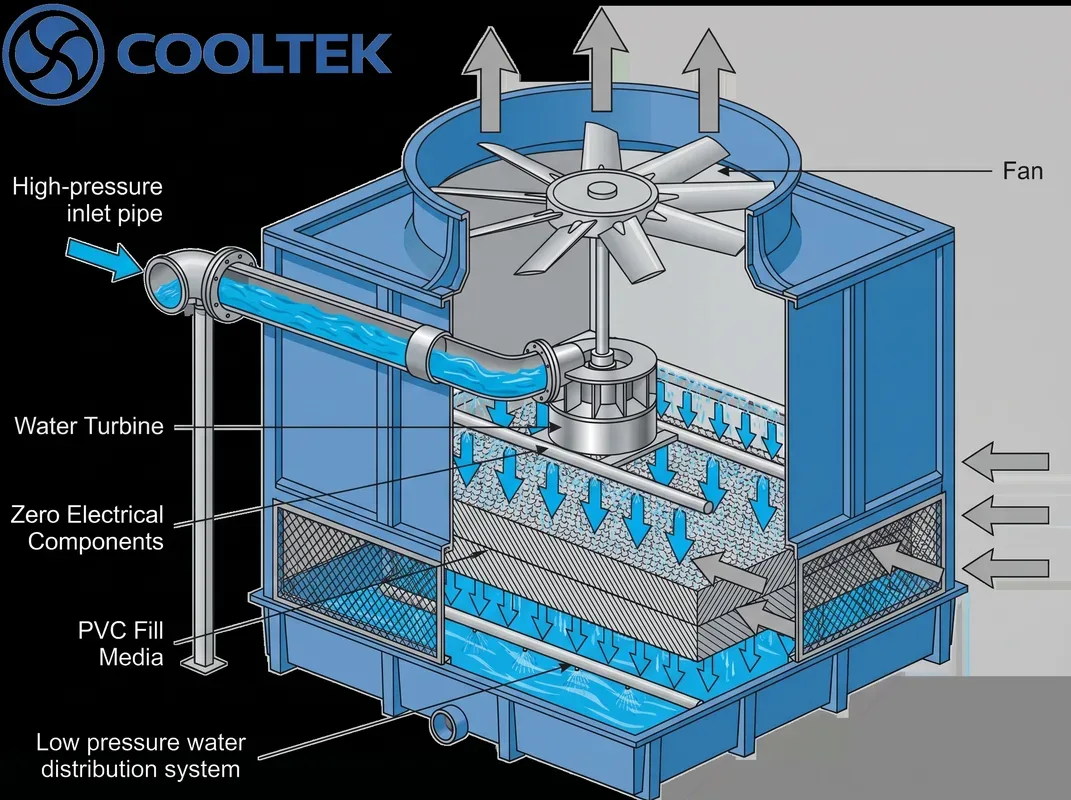
Residual system pressure (≥36 kPa) drives a hydraulic turbine to spin the fan — fan operating power is 0 kW. No motor, no cable, no control panel on the tower top. Inherently compliant with TCVN 10888 (IEC 60079) Zone 1/2 hazardous area requirements, with zero electrical ignition risk.

Fan Power 0 kW Intrinsically Safe Zone 1/2 Min. Residual Pressure ≥36 kPa FRP Shell 15–20 Years
Three Engineering Challenges in Petrochemical Facilities

Explosion-Proof Costs, Fan Energy Bills, Motor Downtime

Three pressures simultaneously draining your safety budget and operating margin

Zone 1/2
Hazardous Area

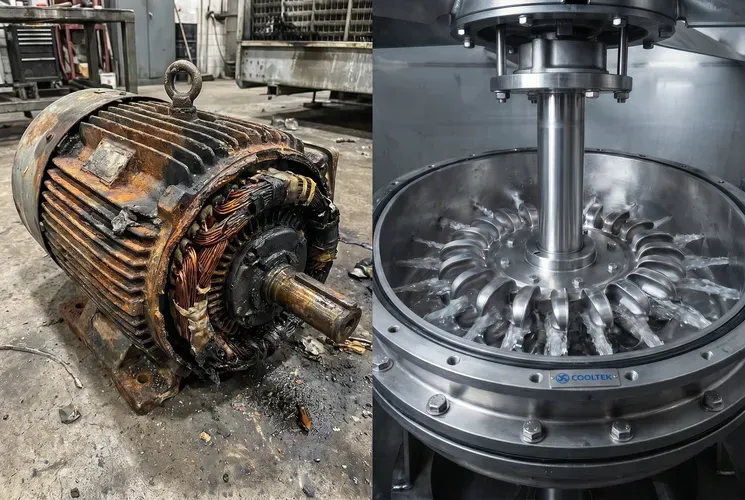
Electrical Equipment in Hazardous Zones Is a Persistent Liability

Cooling towers in petrochemical plants often sit within Zone 1/2 explosive-atmosphere boundaries. Conventional towers require IECEx/ATEX-certified explosion-proof motors, explosion-proof control panels, and armoured conduit wiring — all of which substantially inflate capital cost. The deeper risk: electrical insulation degrades under sustained heat, humidity, and corrosive gas exposure, creating ignition sources. A single incident can trigger plant-wide shutdown and criminal liability.
2,204
VND/kWh

24/7 Fan Operation: A Steady Drain Under Rising EVN Tariffs

Vietnam's EVN industrial tariff has reached 2,204 VND/kWh, with tiered pricing and mandatory energy audits for high-consumption facilities. Conventional cooling tower fan motors — often tens to hundreds of kilowatts — run continuously at full load. For large plants, annual fan electricity costs alone can reach billions of VND. Vietnam's 2024 Electricity Law requires large industrial users to pass energy audits; cooling system power consumption directly affects expansion approval.

Heat &
Corrosion

Tower-Top Motor Burnout Is the Leading Cause of Cooling System Downtime

In the hot, humid, corrosive atmosphere at the top of a chemical plant cooling tower, bearing failure and winding burnout are the primary causes of unplanned cooling system shutdowns. Each motor replacement requires elevated-access work and explosion-proof electrical installation within the hazardous zone — long downtime, high risk, high cost. Meanwhile, residual system pressure is simply wasted across a throttle valve, generating no commercial value whatsoever.

LHRD Series Core Advantages

Three Challenges, Three Physical Solutions

Resolved at the structural level — not patched with certification paperwork

01

Intrinsic Safety — No Electrical Source Means No Explosion Risk

The LHRD tower top carries no electrical components whatsoever — no motor, no gearbox, no control cable, no junction box. The sole power source is a purely mechanical hydraulic turbine. Without electricity, there is no physical mechanism for generating sparks, arcs, or dangerous heat.

When facing inspection under Vietnam's TCVN 10888 (IEC 60079), the LHRD bypasses the entire complex IECEx/ATEX certification process. In environments containing natural gas, toluene, or other explosive atmospheres, the absence of electrical equipment represents the highest achievable safety level — what chemical engineers call intrinsic safety: eliminating the hazard source rather than containing it.

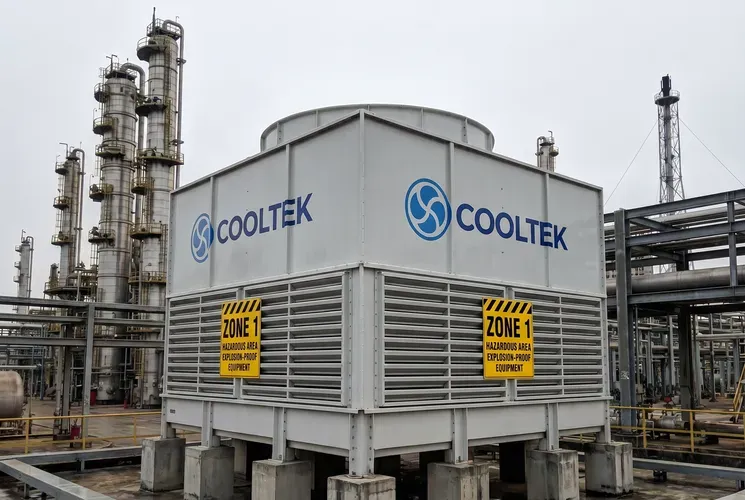
Zero Electrical Components on Tower TopNo ignition risk, no IECEx certification required, inherently suitable for Zone 1/2 hazardous areas
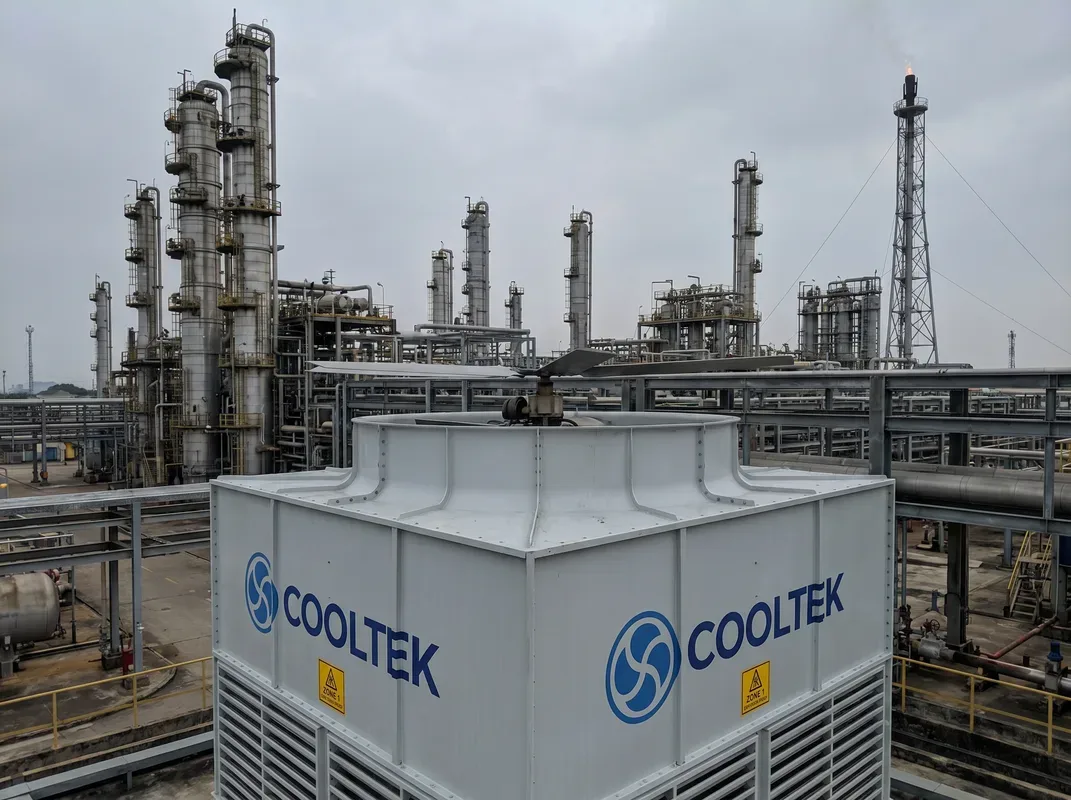
COOLTEK LHRD cooling tower installed in a Zone 1 hazardous area at a Vietnamese petrochemical plant — no motor, no cable on tower top
Fig. 1 — LHRD tower top: no motor, no cable. Intrinsically safe structure, inherently suited to Zone 1/2 hazardous areas.
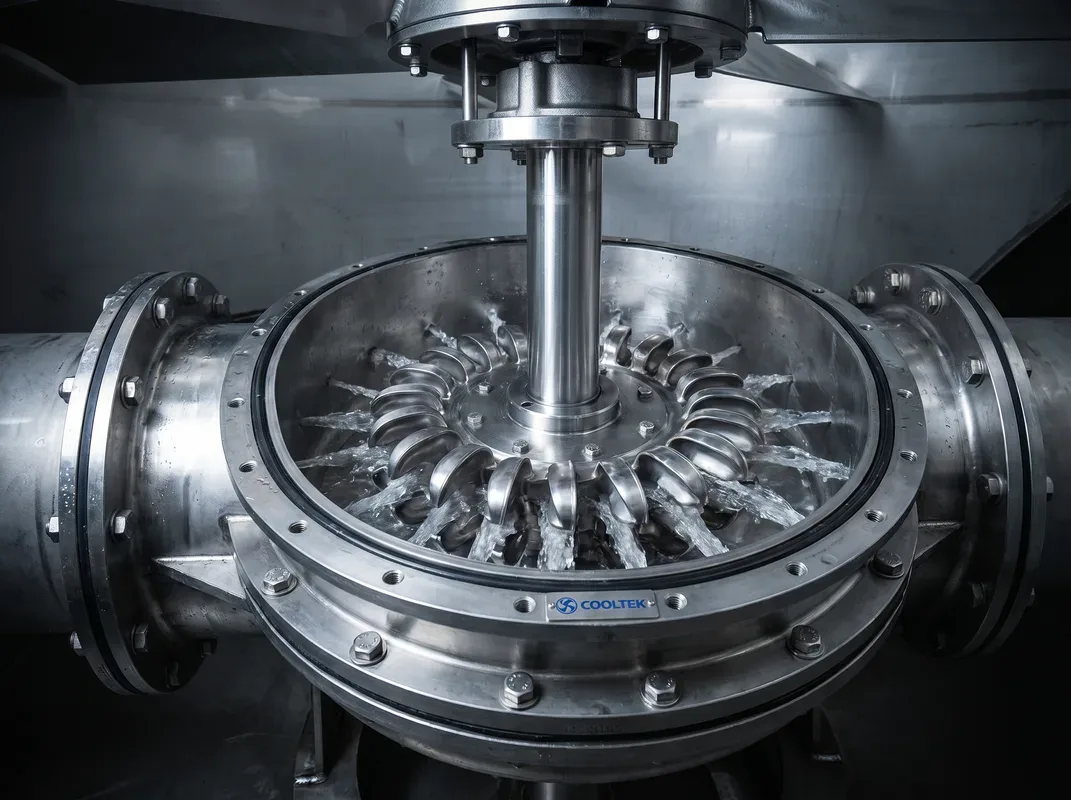
LHRD hydraulic turbine converts residual system pressure into fan drive power — 0 kW fan electricity consumption
Fig. 2 — The LHRD hydraulic turbine converts residual water pressure into mechanical fan drive. Fan operating power: 0 kW.
02

Turning Wasted Head Into Useful Work — Fan Power Consumption: 0 kW

The LHRD incorporates a high-efficiency hydraulic turbine. Circulating water strikes the turbine impeller before entering the distribution system, spinning the fan. The water then flows at reduced pressure into the fill media for heat exchange. Provided the system delivers ≥36 kPa of residual pressure at the tower inlet flange, the LHRD operates at full design performance.

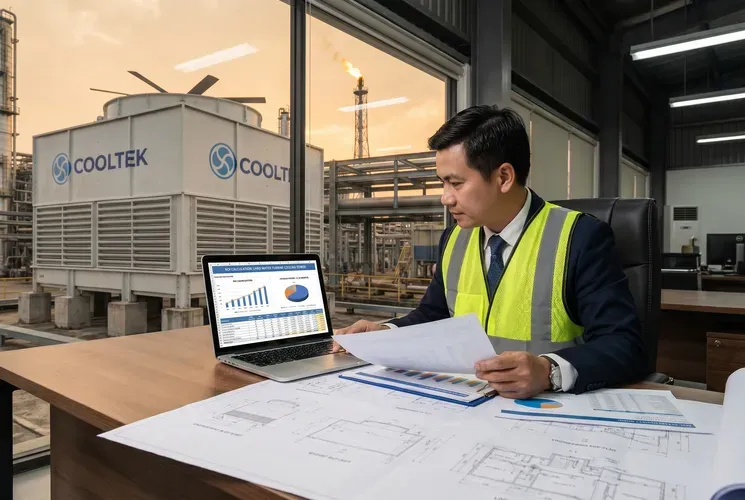
This is not a perpetual motion machine. The commercial value is straightforward: pressure that would otherwise be throttled away is converted into fan work. Over a 15-year service life, you pay EVN nothing for fan operation. Every 10 kW of fan motor replaced saves approximately 193 million VND per year at current Vietnamese industrial tariffs (8,760 operating hours).

Fan Operating Power: 0 kWConverts wasted head into useful work — the definitive hedge against EVN tariff increases and energy audit requirements
03

No Motor Means No Motor Burnout — Downtime Risk Eliminated at Source

The LHRD replaces the motor and gearbox with a hydraulic turbine. The turbine is fully submerged in circulating water, providing inherent water-cooled lubrication and eliminating motor burnout entirely. Routine maintenance is limited to bearing lubrication checks — maintenance workload and cost are dramatically reduced.

In the hot, humid, corrosive environment at the top of a chemical plant cooling tower, bearing failure and winding burnout are the primary causes of unplanned shutdowns. The LHRD breaks this failure chain at the root: no motor, no burnout; no gearbox, no oil leaks; no cables, no insulation degradation.

Motor Burnout Risk EliminatedTurbine self-cooled by circulating water, dramatically extended service life in high-corrosion chemical environments
COOLTEK LHRD stainless steel hydraulic turbine impeller — fully submerged, self-cooled, no electrical maintenance
Fig. 3 — LHRD stainless steel turbine impeller, fully submerged in circulating water. Self-cooling, zero electrical maintenance.
Model Selection

LHRD Series — All 17 Models at a Glance

Match your flow rate to a model; turbine sizing requires 1-to-1 hydraulic matching against actual system pressure

Standard design conditions: inlet 37 °C, outlet 32 °C, wet-bulb 27 °C, atmospheric pressure 99.4 kPa. The LHRD is a highly engineered product — fan speed and cooling output depend critically on actual supply pressure. The dimensions below are reference values under standard conditions.

Model Flow (m³/h) Length (mm) Width (mm) Height (mm) Fan Dia. (mm) Drive Min. Residual Pressure (kPa) Dry Weight (kg)
LHRD-100L/SB1001,9403,1903,7001,500Hydraulic Turbine≥36860
LHRD-125L/SB1252,2803,6003,7001,800Hydraulic Turbine≥361,080
LHRD-150L/SB1502,5603,7903,7002,100Hydraulic Turbine≥381,120
LHRD-175L/SB1752,8903,7903,7002,100Hydraulic Turbine≥381,280
LHRD-200L/SB2002,9904,2203,7002,400Hydraulic Turbine≥401,580
LHRD-225L/SB2253,2604,2203,7002,400Hydraulic Turbine≥401,680
LHRD-250L/SB2503,0005,3204,2002,400Hydraulic Turbine≥421,980
LHRD-300L/SB3003,1405,4304,2002,800Hydraulic Turbine≥442,450
LHRD-350L/SB3503,3805,6804,2002,800Hydraulic Turbine≥442,850
LHRD-400L/SB4003,7806,0904,2003,180Hydraulic Turbine≥483,250
LHRD-450L/SB4504,2506,0904,2003,180Hydraulic Turbine≥503,660
LHRD-500L/SB5004,2506,0904,8003,180Hydraulic Turbine≥523,960
LHRD-600L/SB6004,5806,0905,4003,180Hydraulic Turbine≥544,680
LHRD-700L/SB7004,5806,7005,4003,700Hydraulic Turbine≥545,100
LHRD-800L/SB8005,0007,3005,5004,050Hydraulic Turbine≥546,100
LHRD-900L/SB9005,5007,8005,5004,250Hydraulic Turbine≥546,880
LHRD-1000L/SB1,0006,0008,3005,5004,250Hydraulic Turbine≥547,660

LHRD Models ≥250 m³/h: Footprint Is Wider Than Equivalent LHR

The hydraulic turbine assembly requires additional internal space. LHRD-250 and above are noticeably wider than LHR models of equivalent flow rate. Use the dimensions above for installation planning and allow at least 600 mm clearance on all sides for maintenance access.

Turbine Selection Requires 1-to-1 Hydraulic Matching

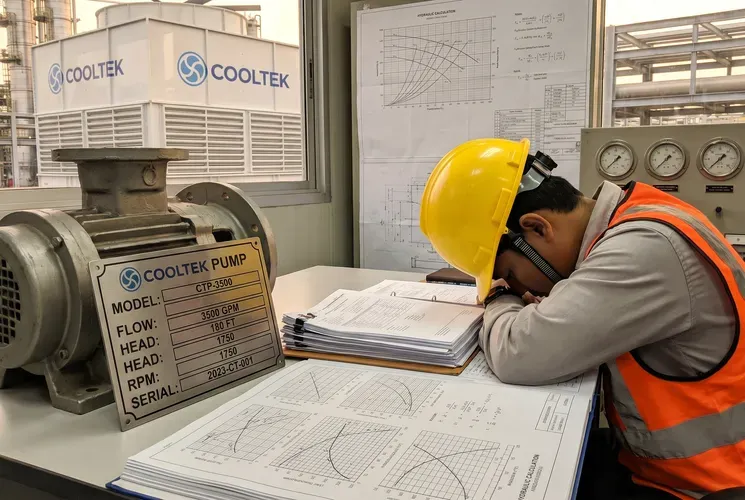
Please provide your pump nameplate data (rated flow, head, speed) to a COOLTEK engineer. We will perform a precise hydraulic matching calculation to confirm whether your system's residual pressure is sufficient to drive the turbine at the required fan speed.

Send Pump Nameplate for Hydraulic Matching
Before You Specify

4 Site Conditions to Confirm Before Ordering an LHRD

The LHRD is not a universal solution. The selection decision is fundamentally an engineering calculation — both hydraulic and financial. Confirm these four conditions before submitting a specification request.

① Does the system have sufficient residual pressure?

Water pressure at the tower inlet flange must be ≥36 kPa (higher for larger models, up to ≥54 kPa). Insufficient pressure means the fan cannot reach design speed, compromising heat rejection. This is a non-negotiable physical prerequisite.

② New project or existing tower retrofit?

For new projects, the turbine head loss must be included in the total system head during pump selection. For retrofits, verify whether the existing pump is oversized — i.e., whether the discharge valve is partially throttled under normal operation, indicating available residual pressure.

③ Is there a mandatory explosion-proof requirement?

Confirm whether the installation site falls within a Zone 1 or Zone 2 explosive atmosphere classification, and whether the project must satisfy Vietnam's TCVN 10888 (IEC 60079) hazardous area inspection. If so, the LHRD is the most direct and unambiguous compliance path.

④ Is the low-load flow management plan defined?

Turbine speed is proportional to water flow. When actual circulation flow drops below approximately 60% of rated capacity, fan speed decreases significantly. Evaluate whether reduced cooling output at winter or night-shift low-load conditions still meets your minimum process requirement.

An Honest Assessment

Stop Evaluating the LHRD If Any of These 3 Conditions Apply

The LHRD obeys the laws of thermodynamics. It converts energy; it does not create it. In the following three situations, another series is the correct choice.

Pump head fully utilised, no residual pressure

Consider the LHR Crossflow Tower

Installing an LHRD on a system with no head margin will result in insufficient fan speed and reduced cooling capacity. The LHR series is the standard crossflow solution, with only 4–6 kPa head loss — no residual pressure required.

Learn about LHR →
Extremely strict noise limits apply

Consider the LHR-U Ultra-Low Noise Model

The turbine generates mechanical water-flow noise and cannot be slowed via a VFD. If the site must meet QCVN 26:2025 Area A limits (40 dBA), evaluate the LHR-U ultra-low noise series first.

Learn about LHR-U →
Process water must not contact ambient air

Consider the AWA Closed-Circuit System

The LHRD is an open cooling tower — process water contacts ambient air directly. If absolute purity is required and external contamination must be prevented, the AWA closed-circuit system is the correct choice.

Learn about AWA →
Frequently Asked Questions

Engineers Answer the 6 Most Common Questions

Do I need a larger pump to drive the LHRD turbine?

Not necessarily. For new projects, the turbine head loss (36–54 kPa) is factored into the total system head during design. The additional pump shaft power required is far less than the power that would be consumed by a conventional fan motor, so overall energy savings remain substantial. For retrofit projects, most existing systems are designed with a 10–20% head margin, meaning the pump discharge valve is partially throttled. The LHRD simply recovers that wasted pressure — no pump replacement is typically required.

Will explosion-proof authorities accept the LHRD design?

Yes. Vietnam's TCVN 10888 (aligned with IEC 60079) governs electrical equipment that may generate ignition sources. The LHRD tower top contains no electrical junction boxes, motors, or sensors — it is a purely mechanical assembly. Without an electrical source, it falls outside the scope of electrical explosion-proof standards. In chemical engineering, this is called intrinsic safety: eliminating the hazard source itself rather than containing it with a protective enclosure.

Is the LHRD truly zero power? Does it violate the laws of physics?

The LHRD is not a perpetual motion machine. Fan power consumption is genuinely 0 kW, but the energy source is the pressure work performed by the main circulation pump. Conservation of energy still holds. The commercial value lies in recovering pressure that would otherwise be wasted across a throttle valve, and converting it into useful fan work. Ground-level pumps typically achieve 85%+ efficiency, whereas tower-top motors lose energy through gearboxes and belts. Replacing inefficient tower-top drive with efficient pump work reduces total operating costs.

Will cooling capacity drop during low-load periods?

Turbine speed is proportional to water flow rate. When circulation flow drops below approximately 60% of rated capacity, fan speed decreases noticeably and cooling output falls accordingly. If your plant operates at sustained low loads during winter or night shifts, confirm with a COOLTEK engineer that the reduced fan speed still meets your minimum process cooling requirement.

How long does the FRP shell last in a highly corrosive chemical environment?

The LHRD uses the same FRP (fibreglass-reinforced plastic) shell as the LHR series — corrosion-resistant and UV-stable, with a 15–20 year service life in Vietnam's hot, humid climate. In aggressive chemical environments (e.g. H₂S or chlorine-bearing atmospheres), FRP outperforms steel tower structures significantly. The stainless steel turbine impeller is fully submerged in circulating water, providing self-cooling and eliminating the need for additional corrosion protection.

Which has a higher initial investment — LHRD or a cooling tower with an IECEx explosion-proof motor?

LHRD typically costs more than a standard cooling tower but is comparable to or less than a tower equipped with IECEx-certified explosion-proof motors (which cost 3–5× more than standard motors, plus explosion-proof control panels and conduit wiring). More importantly, the LHRD consumes 0 kW of fan power over its 15-year life. At Vietnam's industrial tariff of 2,204 VND/kWh, every 10 kW of fan motor replaced saves approximately 193 million VND per year — typically recovering the cost premium within 1–2 years.

What the LHRD Solves

Three Problems Resolved by One Physical Decision

When a project faces a hazardous area safety inspection or an EVN electricity bill that cannot be sustained, the LHRD is the physical mechanism that breaks the deadlock.

Absolute Compliance Confidence

No electricity on the tower top means inherent alignment with TCVN 10888 (IECEx) explosion-proof logic — no expensive explosion-proof motor procurement, no annual inspection obligations. The LHRD is the most direct and unambiguous compliance path when facing a hazardous area safety authority review.

Immediate Financial Return

Fan power: 0 kW. For retrofit projects recovering existing residual pressure, the electricity savings typically cover the tower purchase cost within 1–2 years. The financial benefit compounds over a 15-year service life.

Maintenance Burden Fundamentally Reduced

No motor burnout, no belt failure, no gearbox oil leaks. The turbine is self-cooled by circulating water, dramatically extending service life in high-temperature, corrosive environments. Routine maintenance is limited to bearing lubrication checks.

A Hard Asset for Energy Audits

Fan power consumption on the government energy audit report: zero. Straightforward compliance with Vietnam's 2024 Electricity Law energy efficiency requirements, clearing the path for capacity expansion approvals.

Further Reading

Go Deeper on the LHRD Series

Cooling tower selection for Zone 1/2 hazardous areas

SAFETY & COMPLIANCE

Cooling Tower Selection for Zone 1/2 Hazardous Areas: Why "No Electricity" Is Safer Than "Explosion-Proof Motor"

Intrinsic safety vs. explosion-proof protection: eliminating the hazard source vs. containing it. A cost, risk, and compliance certainty comparison of both approaches.

Read More →
How to measure available residual pressure for cooling tower energy retrofit

SELECTION GUIDE

The Essential Calculation for Cooling Tower Energy Retrofits: How to Measure Your System's Hidden Residual Pressure

Pump discharge valve partially throttled? That's a signal your system has residual pressure. Use one pressure gauge to determine LHRD feasibility in 5 minutes.

Read More →
EVN tariff rise and hydraulic turbine cooling tower energy savings analysis

ENERGY ANALYSIS

EVN Tariffs Approaching 2,300 VND: How Paper Mills and Steel Plants Save Billions Annually with Hydraulic Turbine Towers

Real data: what switching a 500 m³/h cooling tower from motor drive to hydraulic turbine drive saves over a 15-year service life.

Read More →
Why cooling tower motors burn out in chemical plants

MAINTENANCE

Why Conventional Cooling Tower Motors Burn Out So Readily in Chemical Plants — And Why Hydraulic Turbines Are Physically Immune

Heat, humidity, corrosive gas: the tower top is a hostile environment for motors. A failure mechanism analysis explaining why turbines are naturally immune to all three.

Read More →
Pump head calculation guide for hydraulic turbine cooling towers

ENGINEER'S GUIDE

How to Calculate Pump Head When Specifying a Hydraulic Turbine Cooling Tower (Engineer's Selection Guide)

How to include turbine head loss in total system head for new projects. How to verify existing pump head margin for retrofit projects. Complete hydraulic calculation procedure.

Read More →
LHRD cooling tower ROI and payback period estimation

FINANCIAL ANALYSIS

ROI Estimation: How Quickly Does Replacing a Motor-Driven Tower with an LHRD Pay Back?

A payback period model based on Vietnam's industrial tariff of 2,204 VND/kWh: comparison table across different flow rates and original motor power ratings.

Read More →

How Much Residual Pressure Is Your System Wasting Right Now?

Provide your circulation flow rate and the actual operating pressure at your main pump outlet. A COOLTEK engineer will prepare a hydraulic matching calculation and ROI assessment report specific to your site.