AWA · Closed-Circuit Cooling Tower · 6–500 m³/h

Scale build-up, acid-wash downtime, equipment burnout — three water-quality threats
Solved by the AWA Closed-Circuit Cooling Tower with one sealed coil

Sealed stainless-steel coils keep process fluid in a fully closed loop — never in contact with external air, spray water, dust or micro-organisms. Eliminate scale in induction furnace coils, injection-mould water channels and semiconductor cooling jackets at the physical root cause.

Process fluid zero air contact Acid-wash downtime eliminated Flow range 6–500 m³/h FRP shell 15–20 years
Three water-quality crises threatening precision industrial equipment

Scale blockage, acid-wash downtime, hazardous waste discharge

Three simultaneous risks threatening your core production equipment and regulatory compliance

Scale
blockage

Open-tower evaporation concentrates minerals — narrow cooling channels are the first casualties

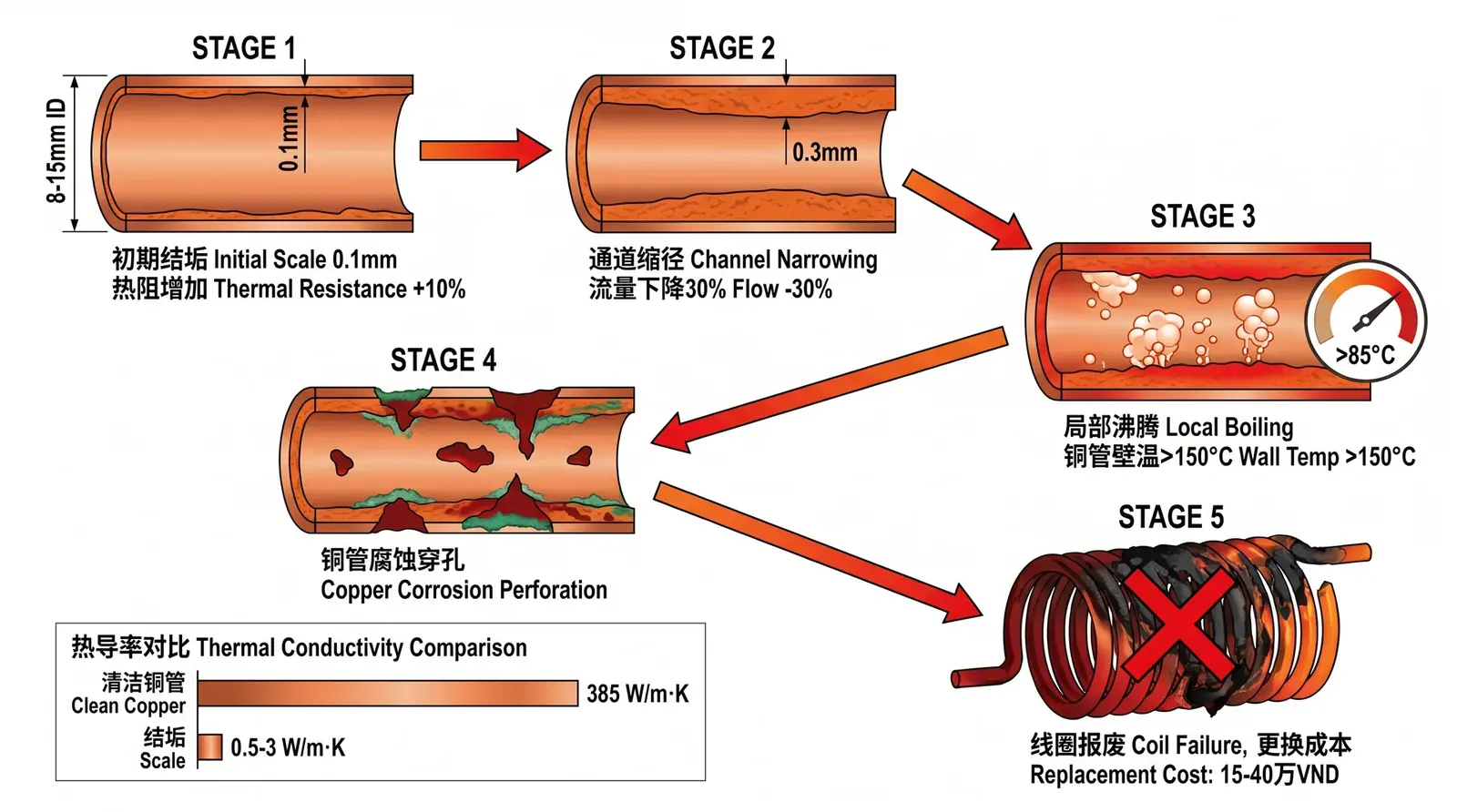
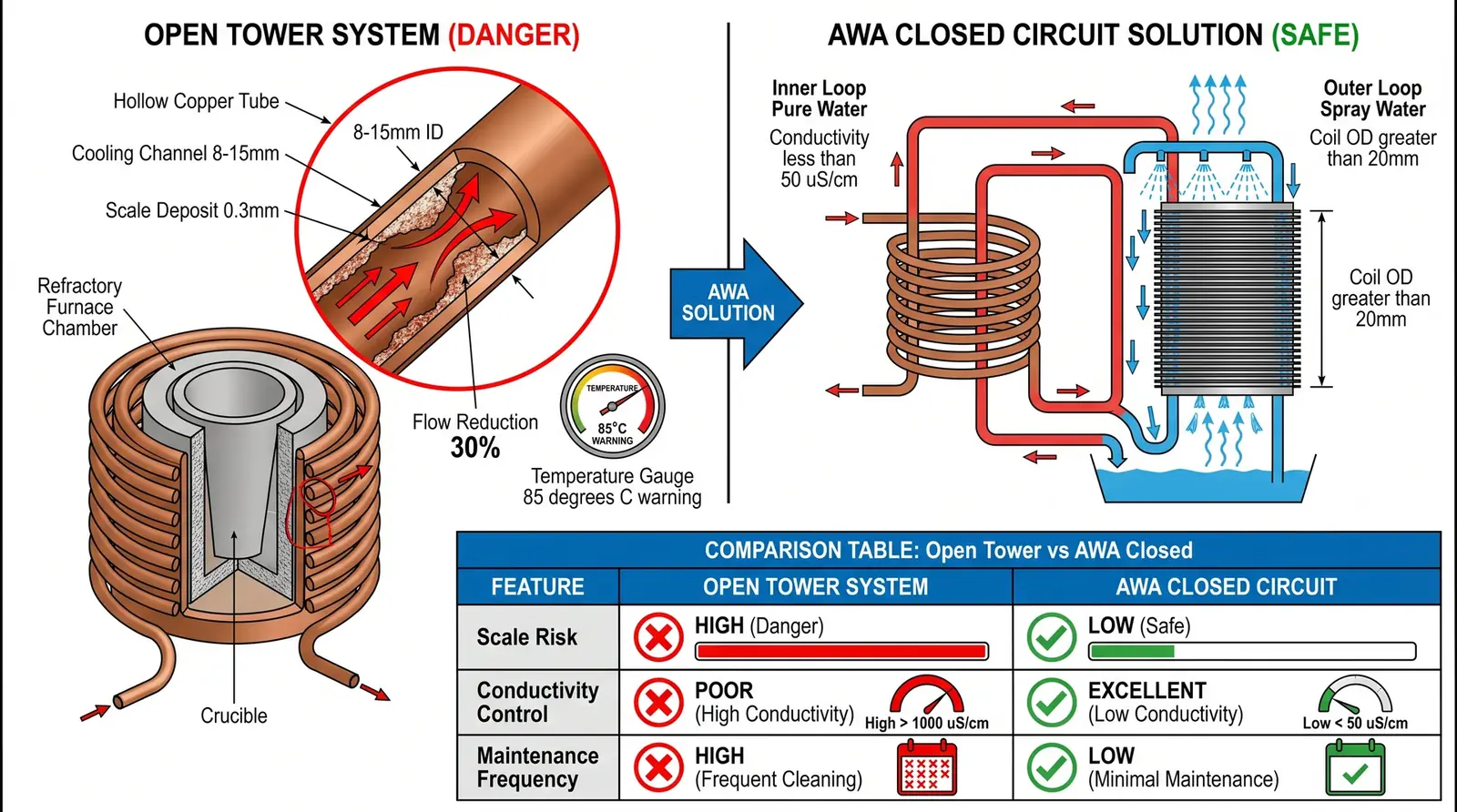
Open cooling towers dissipate heat through evaporation, continuously concentrating calcium and magnesium ions in the circulating water. For induction furnace coils (bore typically under 8 mm), injection-mould water channels (bore under 6 mm) and semiconductor cooling jackets (bore under 4 mm), scale deposits far faster than in ordinary industrial pipework. Once the channel cross-section shrinks by 20%, heat-transfer efficiency drops by roughly 30% — triggering overheating, product rejects and, ultimately, coil burnout. Replacement costs for these core assets routinely run into the millions.
Acid-wash
downtime

Repeated acid-wash shutdowns: the hidden productivity black hole

To remove scale from cooling jackets, plants must schedule periodic acid-wash shutdowns. Each cycle requires preparation (2–4 h), acid circulation (4–8 h), neutralisation rinse (2–4 h) and restart commissioning (1–2 h) — totalling 9–18 hours of lost production per event. For 24-hour continuous-production facilities, this translates directly into 9–18 hours of lost output per wash cycle. Acid-wash effluent is classified as hazardous waste, incurring high disposal costs and compliance exposure under Vietnam's QCVN 40:2025/BTNMT industrial wastewater standard.

GMP
compliance

Open-tower air exposure is a hard compliance line for pharma and semiconductor cleanrooms

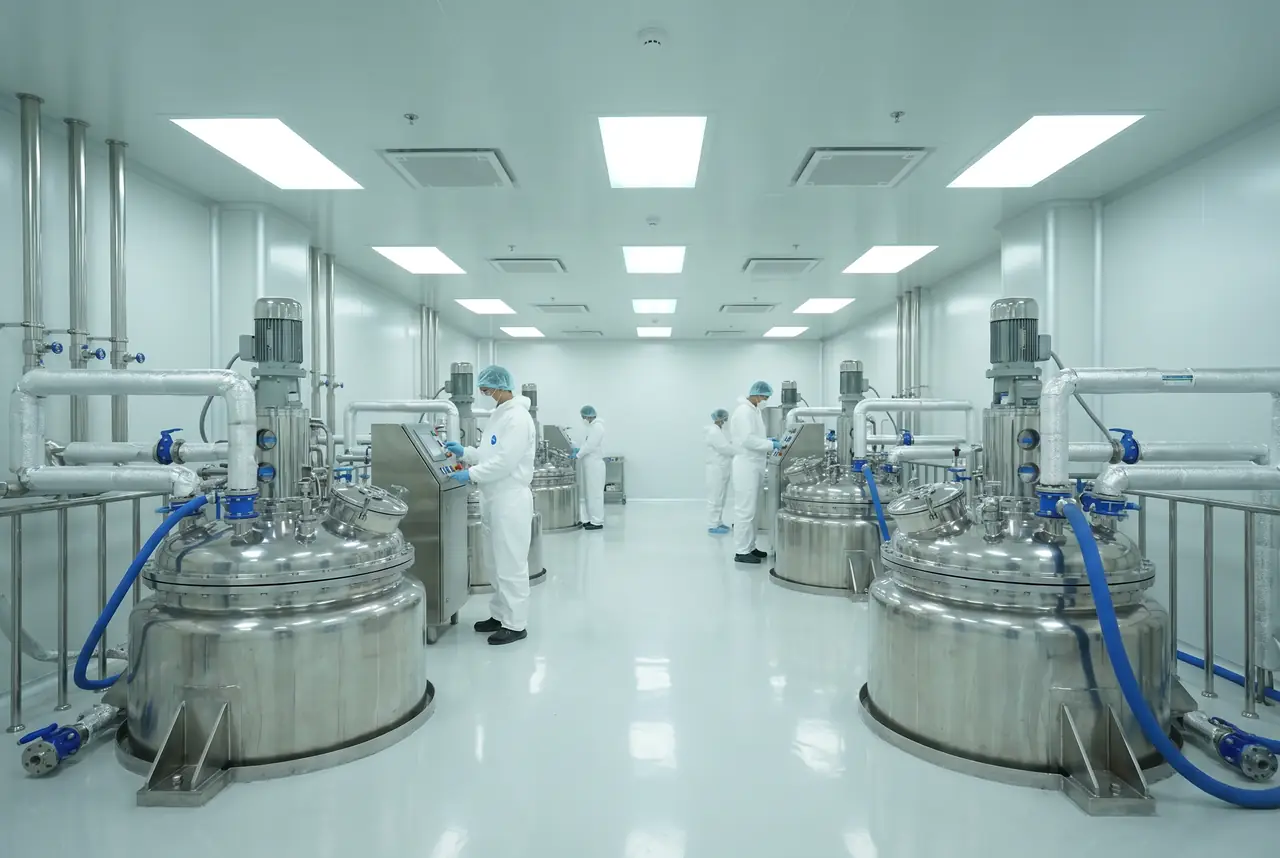
For GMP-certified pharmaceutical plants, semiconductor packaging facilities and precision electronics manufacturers, microbial control in the cooling-water system is a core validation requirement. The open water surface of an open tower is a natural breeding ground for Legionella, Pseudomonas and other micro-organisms. Once microbial contamination enters production equipment via cooling water, the consequences range from batch rejection to GMP certification suspension — losses far exceeding the cost of the cooling system itself.

AWA Series — Core Advantages

Three water-quality crises. Three physical solutions.

Structural fixes, not chemical additives or filters

01

Sealed stainless-steel coils — physical isolation at the root cause

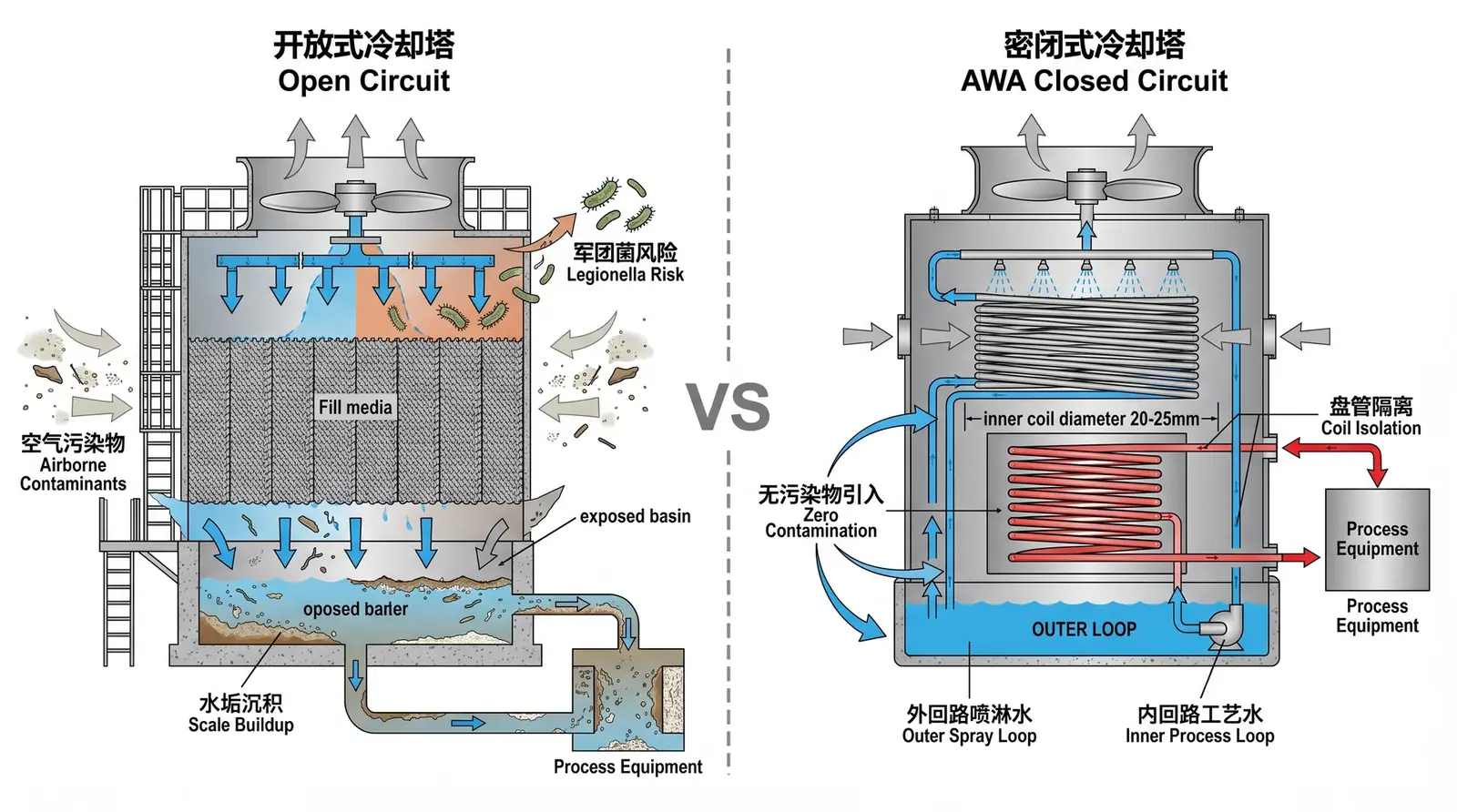
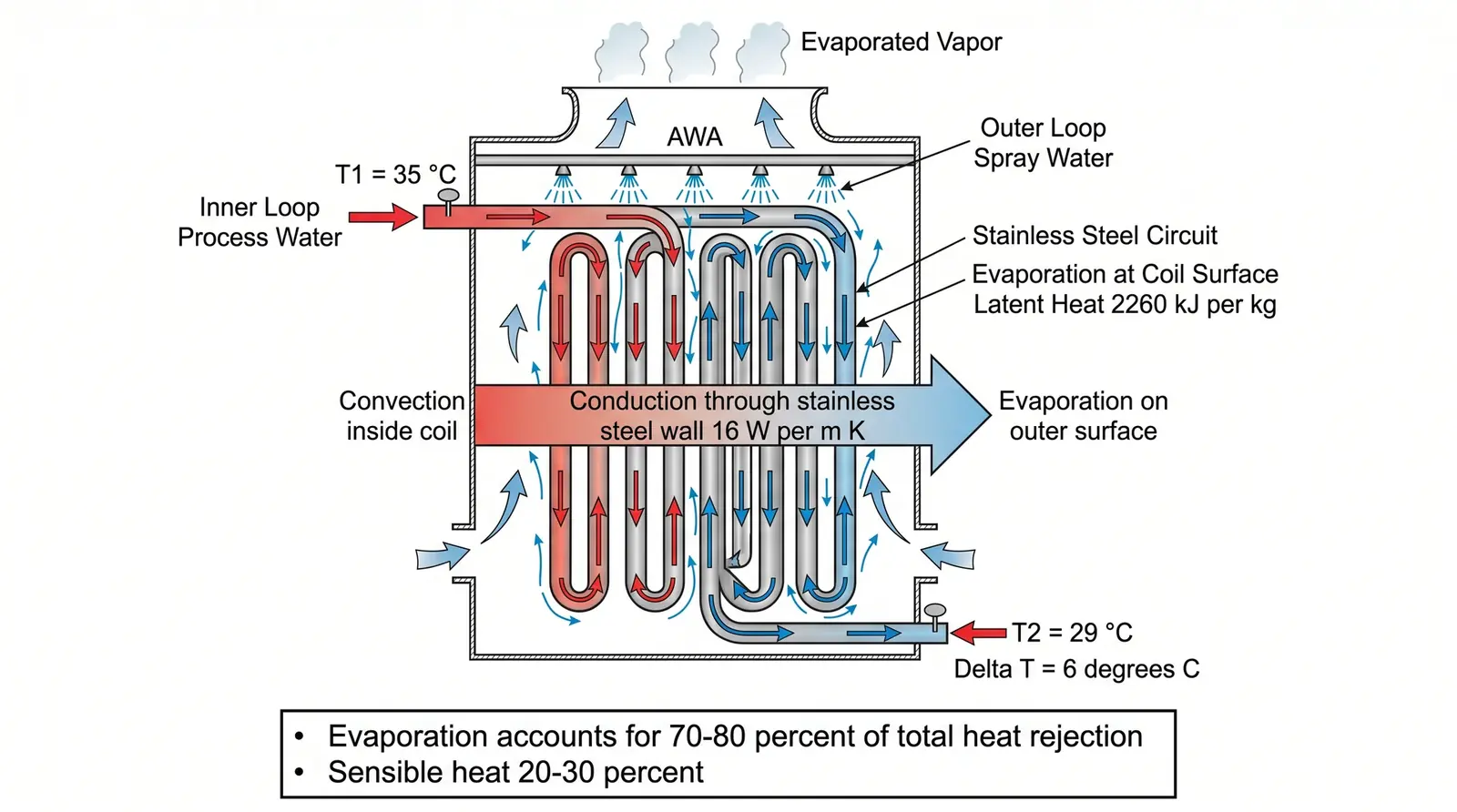
The core of AWA is a sealed stainless-steel (or copper) coil. Process fluid circulates inside the coil in a fully closed loop, separated from external spray water, air, dust and micro-organisms by a permanent physical barrier — the coil wall. This is not a chemical additive, not a filter; it is a permanent physical seal.

External spray water evaporates on the outer coil surface, carrying away the heat from the process fluid. Throughout this process, the process fluid remains entirely within the sealed circuit, never contacting any external medium. The three contamination pathways — evaporative concentration, dust ingress and microbial growth — are simultaneously severed at the physical level.

Process fluid: zero air contactCoil physical isolation eliminates scale, corrosion and microbial contamination at the root, protecting critical equipment cooling jackets
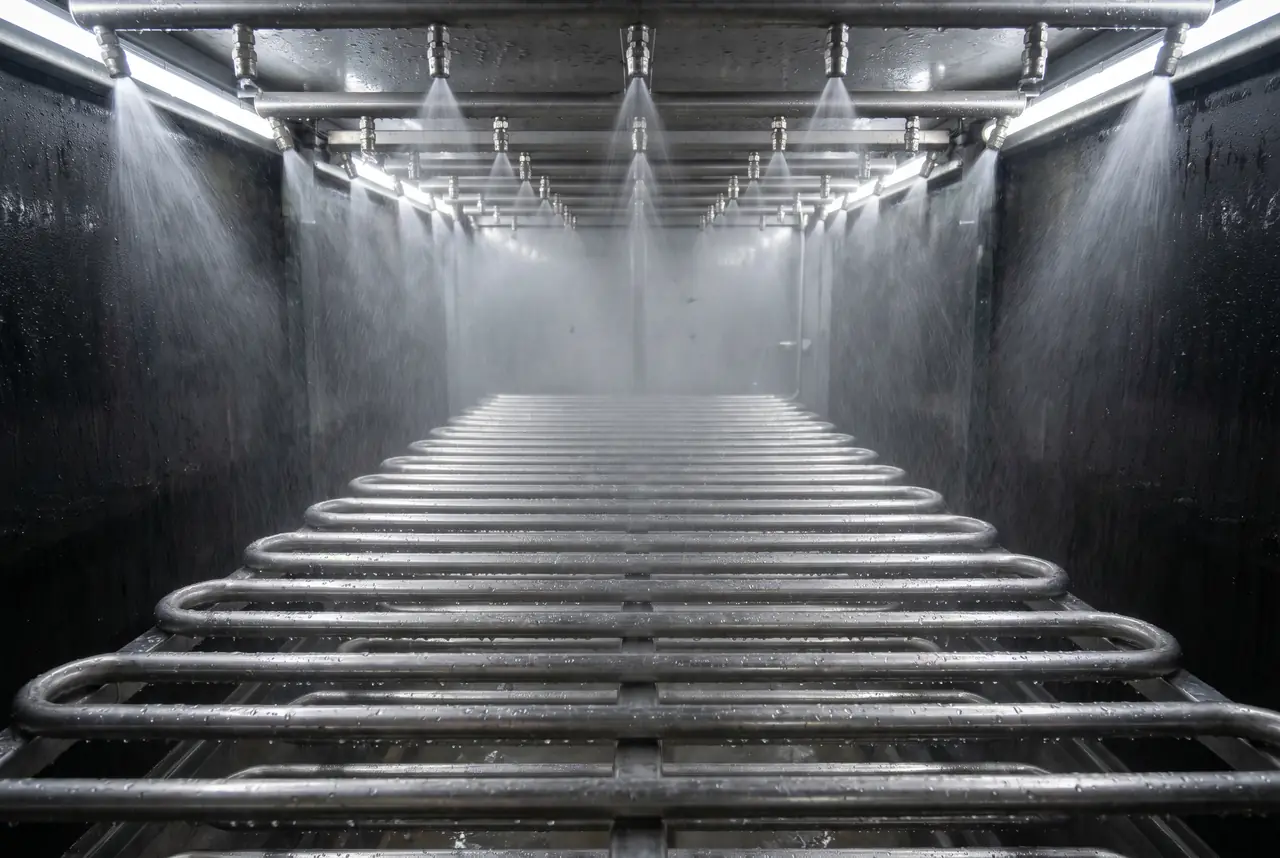
COOLTEK AWA closed-circuit cooling tower internal stainless-steel coil — spray water evaporates on the exterior while process fluid circulates in a sealed loop
Fig. 1 — AWA internal stainless-steel coil. Spray water evaporates on the outer surface; process fluid remains fully sealed inside. The two water circuits are physically isolated.
AWA closed-circuit cooling tower eliminates acid-wash downtime
Fig. 2 — AWA's closed process-fluid circuit degrades extremely slowly, permanently eliminating the recurring acid-wash shutdown cycle.
02

Acid-wash downtime eliminated — recover tens to hundreds of production hours per year

Process fluid circulates in a sealed coil: no evaporation, no concentration, no calcium or magnesium build-up. The driving force for scale formation disappears at the source. This means you no longer need to schedule multiple acid-wash shutdowns per year.

Eliminating acid-wash downtime delivers multi-dimensional benefits: direct recovery of lost production capacity; elimination of acid-wash chemical procurement costs; elimination of hazardous acid-wash effluent disposal fees; elimination of operator exposure to strong acids; and compliance with Vietnam's QCVN 40:2025/BTNMT industrial wastewater discharge standard, avoiding environmental penalties.

Acid-wash downtime: zeroSealed process fluid cannot concentrate — scale has no driving force. Eliminates hazardous chemical use and wastewater compliance risk.
03

One AWA replaces "open tower + plate heat exchanger" — simpler system, fewer failure points

The traditional process-fluid protection approach is an open cooling tower in series with a plate heat exchanger. This arrangement has two problems: the plate heat exchanger itself scales and requires periodic disassembly for cleaning; two devices in series means more pipework, valves, instruments and potential failure points.

AWA combines both into one unit: process fluid circulates directly inside AWA's sealed coils, and external spray water evaporates directly on the coil surface. The plate heat exchanger is eliminated, heat-transfer efficiency is higher (no intermediate transfer loss), the piping system is simpler, maintenance requirements are reduced, and the plant footprint is smaller.

One unit replaces twoNo plate heat exchanger needed — higher heat-transfer efficiency, simpler piping, maintenance workload halved
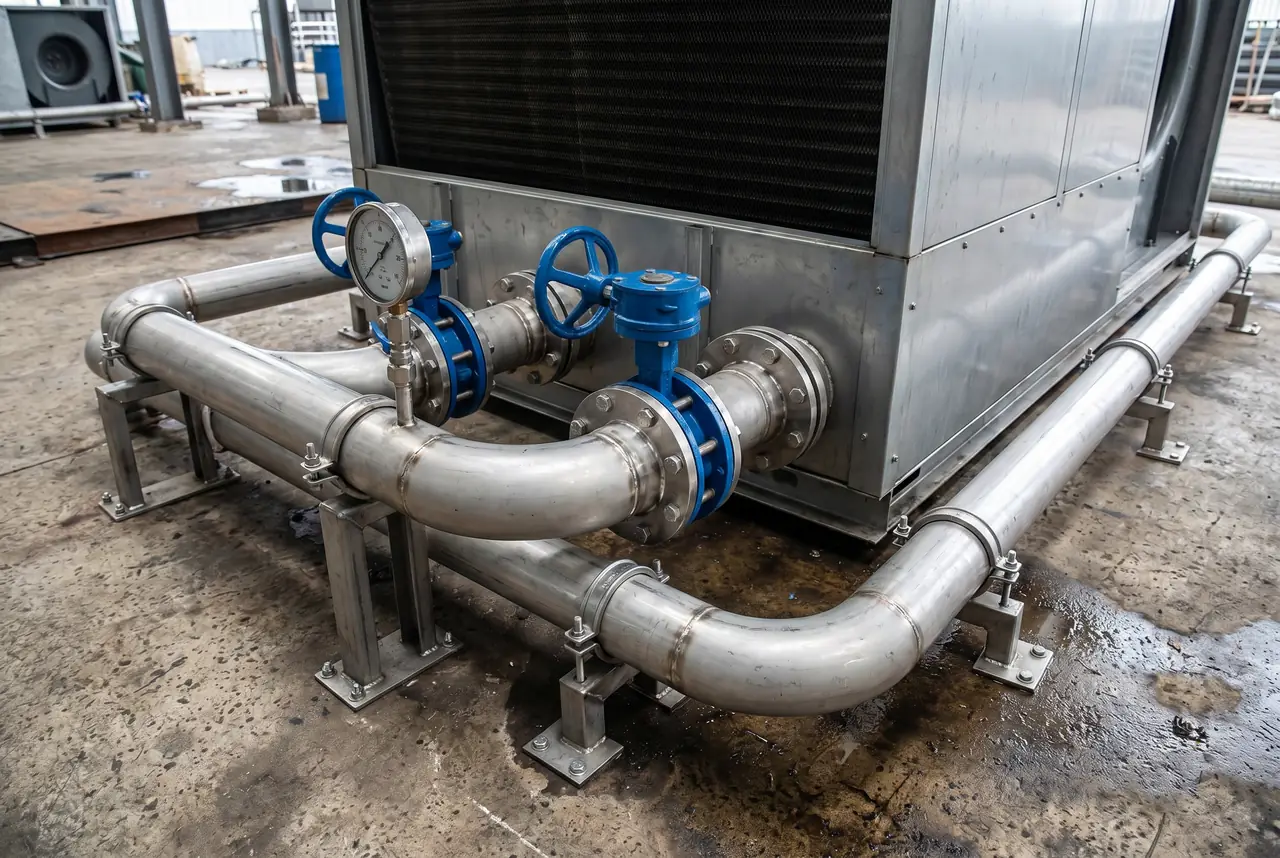
AWA closed-circuit cooling tower process-fluid connections — one unit replaces the open-tower-plus-plate-heat-exchanger system
Fig. 3 — AWA process-fluid inlet and outlet connect directly to production equipment, eliminating the plate heat exchanger and simplifying the entire piping system.
Quick Model Selection

AWA Series — Match your flow rate to the right model

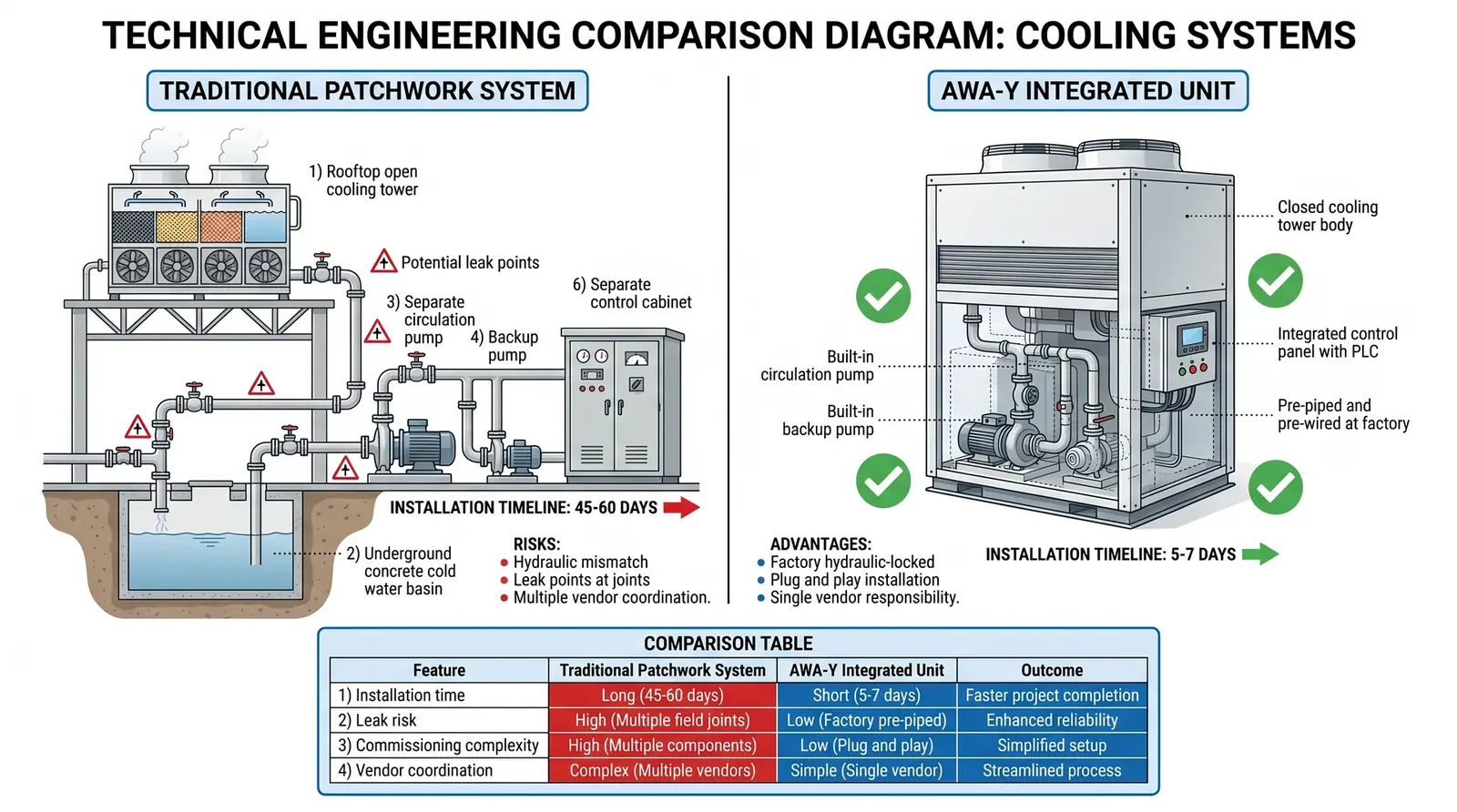
AWA-N Standard (customer supplies tank, pump and control cabinet); AWA-Y All-in-One (6–60 m³/h, integrated — plug-and-play)

Standard design conditions: inlet 37 °C, outlet 32 °C, wet-bulb 27 °C, dry-bulb 31.5 °C, atmospheric pressure 99.4 kPa. Coil material: copper (standard); stainless steel 316L available for corrosive process fluids.

AWA-N Series (Square Counter-Flow, Standard)

ModelFlow (m³/h)Rated Cooling (kcal/h)Fan Power (kW)Spray Pump (kW)Process Port (DN)Dimensions L×W×H (mm)Op. Weight (kg)
AWA-N6630,0000.750.75DN501440×850×1950712
AWA-N101050,0000.750.75DN501440×850×1950815
AWA-N151575,0000.75×21.5DN502200×1000×19501,146
AWA-N2020100,0000.75×21.5DN502200×1000×19501,269
AWA-N3030150,0001.1×21.5DN802850×1170×26901,662
AWA-N4040200,0001.1×21.5DN802850×1170×26901,737
AWA-N5050250,0001.5×21.5DN802850×1300×26901,976
AWA-N6060300,0001.5×21.5DN802850×1300×26902,058
AWA-N7070350,0001.5×22.2DN1002850×1500×28502,562
AWA-N8080400,0001.5×22.2DN1002850×1500×28503,051
AWA-N100100500,0002.2×23DN1253200×1780×32503,873
AWA-N125125625,0002.2×23DN1253200×1780×32504,221
AWA-N150150750,0004×23DN1504600×2100×42004,560
AWA-N175175875,0004×24DN1504600×2100×42005,534
AWA-N2002001,000,0005.5×24DN2004600×2100×43006,439
AWA-N2502501,250,0005.5×24DN2005300×2100×48007,777
AWA-N3003001,500,0007.5×25.5DN2505300×2300×489610,174
AWA-N3503501,750,0007.5×25.5DN2505300×2300×489611,214
AWA-N4004002,000,00011×27.5DN2505800×3000×491012,774

AWA-N450 (450 m³/h) and AWA-N500 (500 m³/h) specifications available on request. For flows exceeding 500 m³/h, parallel-unit configurations are available.

AWA-Y Series (All-in-One: Integrated Tank + Pump + Control Cabinet)

ModelFlow (m³/h)Rated Cooling (kcal/h)Fan Power (kW)Spray Pump (kW)Process Port (DN)Integrated Components
AWA-Y6630,0000.750.75DN50Elevated tank + circulation pump + control cabinet
AWA-Y101050,0000.750.75DN50Elevated tank + circulation pump + control cabinet
AWA-Y151575,0000.75×21.5DN50Elevated tank + circulation pump + control cabinet
AWA-Y2020100,0000.75×21.5DN50Elevated tank + circulation pump + control cabinet
AWA-Y3030150,0001.1×21.5DN80Elevated tank + circulation pump + control cabinet
AWA-Y4040200,0001.1×21.5DN80Elevated tank + circulation pump + control cabinet
AWA-Y5050250,0001.5×21.5DN80Elevated tank + circulation pump + control cabinet
AWA-Y6060300,0001.5×21.5DN80Elevated tank + circulation pump + control cabinet
AWA Application Scenarios

Which equipment "must" use a closed-circuit cooling tower?

In the following scenarios, process-fluid water quality is the lifeline of production continuity — open towers cannot meet the requirement

Induction Furnaces / High-Frequency Heating

Induction coil bores are typically under 8 mm — 1 mm of scale causes overheating and coil burnout. A single induction furnace is worth USD 200K–2M. AWA is the only reliable protection for these assets.

Semiconductor Equipment / Electronic Packaging

Semiconductor cooling jacket bores are under 4 mm, with conductivity requirements typically below 50 μS/cm. AWA's closed loop maintains process-fluid quality close to ultra-pure water standards, satisfying OEM equipment manual requirements.

Pharmaceutical Reactors / GMP Production Lines

GMP certification requires cooling-water microbial control (Legionella below 100 CFU/mL). AWA's closed loop physically severs the pathway for airborne micro-organisms, making it the most direct technical path to GMP validation.

Precision Injection Moulding / Mould Cooling

Injection-mould water channels are under 6 mm. Scale causes uneven cooling, directly affecting dimensional accuracy and surface quality. AWA maintains stable process-fluid quality — the foundation for consistent precision moulding.

Laser Cutting / Welding Equipment

Laser cooling channels are extremely narrow, with water-quality requirements comparable to semiconductor equipment. AWA's closed loop prevents scale from blocking laser cooling passages, extending laser service life and reducing maintenance costs.

Specialty Chemicals / Advanced Materials Synthesis

Specialty chemical reactions are extremely sensitive to ion concentrations in cooling water. AWA's closed loop ensures long-term process-fluid stability, guaranteeing the repeatability of reaction conditions.

5 Engineering Prerequisites Before Selecting AWA

Confirm these conditions to ensure AWA delivers maximum value in your project

1

Must process fluid be isolated from outside air?

If your production equipment OEM manual specifies cooling-water conductivity, suspended solids or microbial limits — or if you have already experienced equipment failures caused by scale in cooling jackets — AWA is the only solution that addresses the root cause physically. If your cooling need is ordinary industrial heat rejection, an open tower offers better value.

2

Is the flow rate within 6–500 m³/h?

The largest single AWA unit is AWA-N500 at 500 m³/h. Beyond this, multiple units can be connected in parallel. COOLTEK engineers can provide a parallel-piping design. For very large flows (over 1,000 m³/h), please contact us early to evaluate feasibility and economics.

3

Is the coil material compatible with your process fluid?

Standard AWA coils are copper, suitable for most industrial cooling-water applications. If your process fluid contains corrosive ions (chloride above 200 ppm, pH below 6 or above 9), specify stainless-steel 316L coils. Please provide a water-quality analysis report when enquiring — COOLTEK engineers will recommend the appropriate coil material.

4

Is higher energy consumption versus an open tower acceptable?

AWA runs both fan and spray pump simultaneously, so total installed power is roughly 1.5–2× that of an equivalent open tower. This is the energy cost of physical fluid isolation. For plants with core equipment valued in the millions, this premium is typically justified. If energy consumption is a critical constraint, ask us for a full life-cycle cost comparison between AWA and an "open tower + plate heat exchanger" configuration.

5

Has the make-up water quality and blowdown strategy for the external spray circuit been planned?

Although the process-fluid side is fully sealed, AWA's external spray water still evaporates and concentrates. Make-up water TDS should be kept below 500 ppm, and an automatic blowdown valve (concentration ratio 3–4×) is recommended. If local water is hard (TDS above 500 ppm), softening the make-up water will slow external coil scaling and maintain long-term heat-transfer efficiency.

Not sure AWA is right for you?

Other scenarios may be better served by these series

General industrial heat rejection, noise-sensitive sites

Consider LHR Ultra-Low Noise Cross-Flow Tower

No special process-fluid water-quality requirement, but the site is noise-sensitive or pump energy savings are a priority. LHR cross-flow gravity distribution reduces far-field noise by 1.8–3.1 dB(A) versus counter-flow towers, with water head loss of only 36–52 kPa.

Learn about LHR →
Hazardous-area installation or energy-efficiency retrofit

Consider LHRD Hydraulic Turbine Drive Tower

No fluid-isolation requirement, but the installation is in an explosive-atmosphere zone (Zone 1/2), or you need to reduce fan power consumption to zero to offset rising EVN electricity tariffs. Prerequisite: system surplus pressure ≥ 36 kPa.

Learn about LHRD →
Severely constrained footprint + demanding temperature approach

Consider LHN Compact Counter-Flow Tower

No fluid-isolation requirement, but the installation footprint is fixed and the downstream process demands a temperature approach of no more than 3 °C. LHN counter-flow design has the smallest footprint per unit flow and the highest heat-transfer efficiency in the range.

Learn about LHN →
Frequently Asked Questions

Engineers answer the 6 most common questions

What is the difference between an AWA closed-circuit cooling tower and an open cooling tower with a plate heat exchanger?

Both protect process-fluid water quality, but through different paths. An "open tower + plate heat exchanger" is two devices in series — the heat exchanger itself can scale, leak and require maintenance, and the system piping is complex. AWA combines both into one unit: process fluid circulates inside sealed coils while external spray water evaporates directly on the coil surface. No plate heat exchanger is needed, heat-transfer efficiency is higher (no intermediate transfer loss), and there are fewer maintenance points.

Does the process-fluid side (inside the coil) of an AWA require water treatment?

Yes, but requirements are far lower than for open systems. Because the process fluid in the coil is a closed loop — no evaporation, no concentration, no contact with outside air — water quality degrades very slowly. Typically only an initial corrosion inhibitor charge is needed, followed by periodic pH and conductivity checks and an annual top-up. Compared with the multiple acid-wash cycles required by open towers, maintenance costs are dramatically reduced.

Will scale form on the external spray-water side (outside the coil) of an AWA?

Yes, on the outer coil surface — not inside the process-fluid circuit. External spray water evaporates and concentrates on the coil exterior; over time, scale deposits will gradually reduce heat-transfer efficiency. A high-pressure water rinse every 1–2 years (no disassembly required) keeps the coil clean. Keeping make-up water TDS below 500 ppm and installing an automatic blowdown valve significantly slows scale build-up.

How much more energy does an AWA consume compared with an open cooling tower?

AWA's total installed power is higher than that of an equivalent open tower because it runs both a fan and a spray pump. For AWA-N100 (100 m³/h): fans 2.2 kW×2 plus spray pump 3 kW = approximately 7.4 kW, versus approximately 3–4 kW for an equivalent open tower. The additional energy consumption is the cost of physical fluid isolation. For plants with core equipment valued in the millions to tens of millions, this premium is typically justified.

What is the maximum flow rate of the AWA series? What if I need more?

The largest single AWA unit is AWA-N500 at 500 m³/h. Beyond this, multiple AWA units can be connected in parallel — each operating independently, providing mutual redundancy and actually improving system reliability. COOLTEK engineers can provide a parallel-piping design for any total flow requirement.

What is the difference between AWA-Y and AWA-N?

AWA-N is the standard model — tower body only; customers supply the elevated tank, circulation pump and control cabinet. AWA-Y (6–60 m³/h) is the all-in-one model, with the elevated tank, circulation pump and electrical control cabinet pre-integrated on a single steel frame at the factory. On site, connect the pipework and power supply and it is ready to run — significantly reducing on-site installation work, ideal for small factories or new projects requiring rapid deployment.

What Choosing AWA Actually Delivers

What plants have genuinely resolved

When scale in critical equipment cooling jackets becomes a threat to production continuity, AWA is the physical means to break the cycle.

Core equipment assets physically protected

Process fluid is permanently sealed inside the coil, severing all three contamination pathways — scale, corrosion and microbial growth — at the physical root. Induction furnace coils, injection-mould water channels and semiconductor cooling jackets last significantly longer; equipment burnout risk is eliminated.

Acid-wash shutdowns removed from the calendar

Sealed process fluid cannot concentrate — scale has no driving force. Multiple acid-wash shutdowns per year are permanently eliminated. Direct savings: lost production capacity, acid-wash chemical costs, hazardous waste disposal fees and operator chemical-exposure safety risks.

Hazardous waste discharge compliance pressure lifted

Eliminating acid-wash effluent directly satisfies Vietnam's QCVN 40:2025/BTNMT industrial wastewater discharge standard. No hazardous-waste handling licence required; no environmental inspection pressure.

GMP / cleanroom compliance validation simplified

The closed loop physically severs the microbial ingress pathway. GMP cooling-water system validation microbial control items are easier to pass. For pharmaceutical plants applying for or maintaining GMP certification, AWA is the most direct technical path to cooling-water system compliance validation.

Further Reading

Go deeper on AWA closed-circuit cooling towers

Closed-circuit vs open cooling tower: structural principles and application scenarios compared

Engineering Selection

Closed-Circuit vs Open Cooling Tower: When Must You Choose Closed-Circuit?

Starting from structural principles, clarifying the fundamental differences between the two cooling approaches and which equipment scenarios make open towers inadequate.

Read more →
How open cooling tower scale damages induction furnace coils and injection mould water channels

Failure Analysis

How Open-Tower Scale Progressively Burns Out Induction Furnace Coils: The Full Damage Chain

From evaporative concentration to scale deposition, reduced heat-transfer efficiency, overheating and coil burnout — the complete causal chain and prevention strategy.

Read more →
GMP pharmaceutical plant cooling water system quality requirements and AWA closed-circuit cooling tower compliance solution

Compliance Guide

GMP Pharma Cooling-Water System Validation: Why Closed-Circuit Is the Most Direct Compliance Path

GMP-specific requirements for cooling-water microbiology, conductivity and suspended solids — and how AWA's closed loop meets these criteria.

Read more →
Induction furnace cooling water system selection and AWA closed-circuit cooling tower application

Application Case

Induction Furnace Cooling System Selection Guide: Why Induction Coils Must Use a Closed-Circuit Tower

Induction furnace coil cooling channels are extremely narrow, with water-quality requirements far exceeding ordinary industrial equipment. Explains from coil structure why open towers are a high-risk choice.

Read more →
AWA closed-circuit cooling tower spray evaporation heat dissipation principle

Technical Principles

AWA Heat Dissipation: Spray Water Evaporates Outside the Coil, Process Fluid Sealed Inside

A diagram-based explanation of AWA's dual-circuit heat dissipation mechanism and why this structure simultaneously achieves efficient cooling and process-fluid isolation.

Read more →
AWA-Y all-in-one closed-circuit cooling tower with integrated tank, pump and control cabinet

Product Introduction

AWA-Y All-in-One: How Small Factories Solve All Cooling-Water Problems with One Unit

AWA-Y integrates an elevated tank, circulation pump and control cabinet. Connect pipework and power on site and it runs. Ideal for 6–60 m³/h small-factory rapid deployment.

Read more →

Has scale already started building up in your equipment cooling jackets?

Please provide your equipment model (or the cooling-water quality requirements from your OEM manual) and your required cooling flow rate. COOLTEK engineers will prepare a technical evaluation report including coil material recommendation, model selection and system configuration.