Figure 1: In an open tower (left), process water is in direct contact with the atmosphere. In a closed-circuit tower (right), process water circulates inside sealed coils, and the two circuits are physically isolated.
Problem Definition: The Essential Difference Between the Two Tower Types
The fundamental difference between an open cooling tower and a closed-circuit cooling tower is not appearance or price. It is whether the process water is in direct contact with the atmosphere.
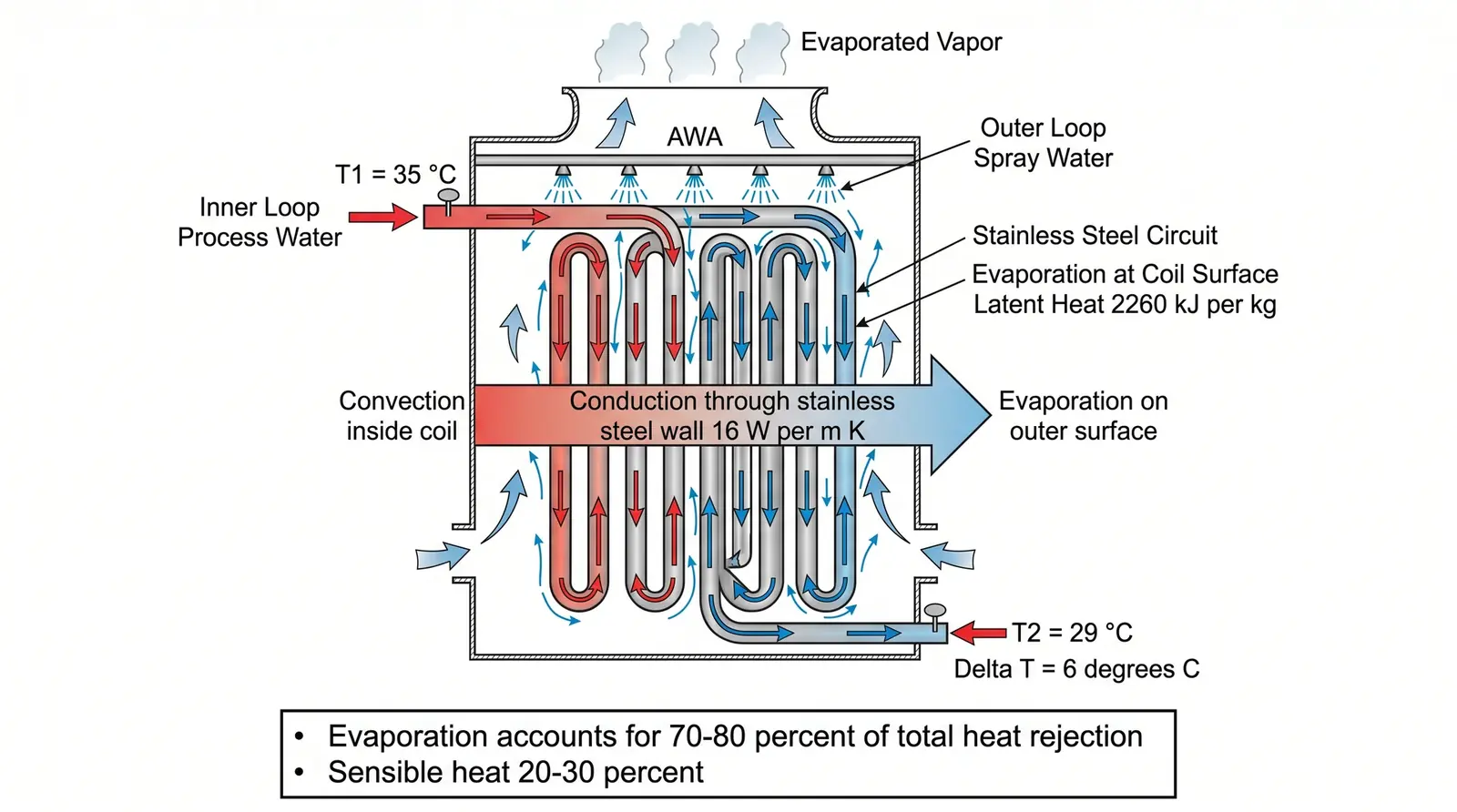
In an open tower, process water forms a water film on the surface of the fill and is directly exposed to moving air for evaporative heat rejection. In a closed-circuit tower, such as the COOLTEK AWA series, the process water always circulates inside sealed metal coils. The coil wall acts as a physical barrier between the process water and external air, while evaporative heat rejection is completed by spray water on the outside surface of the coil.
This structural difference determines the fundamentally different suitability of the two tower types in the following three application categories.
Physical Principle: Three Failure Chains
When the concentration cycle reaches 4, how scale blocks precision passages
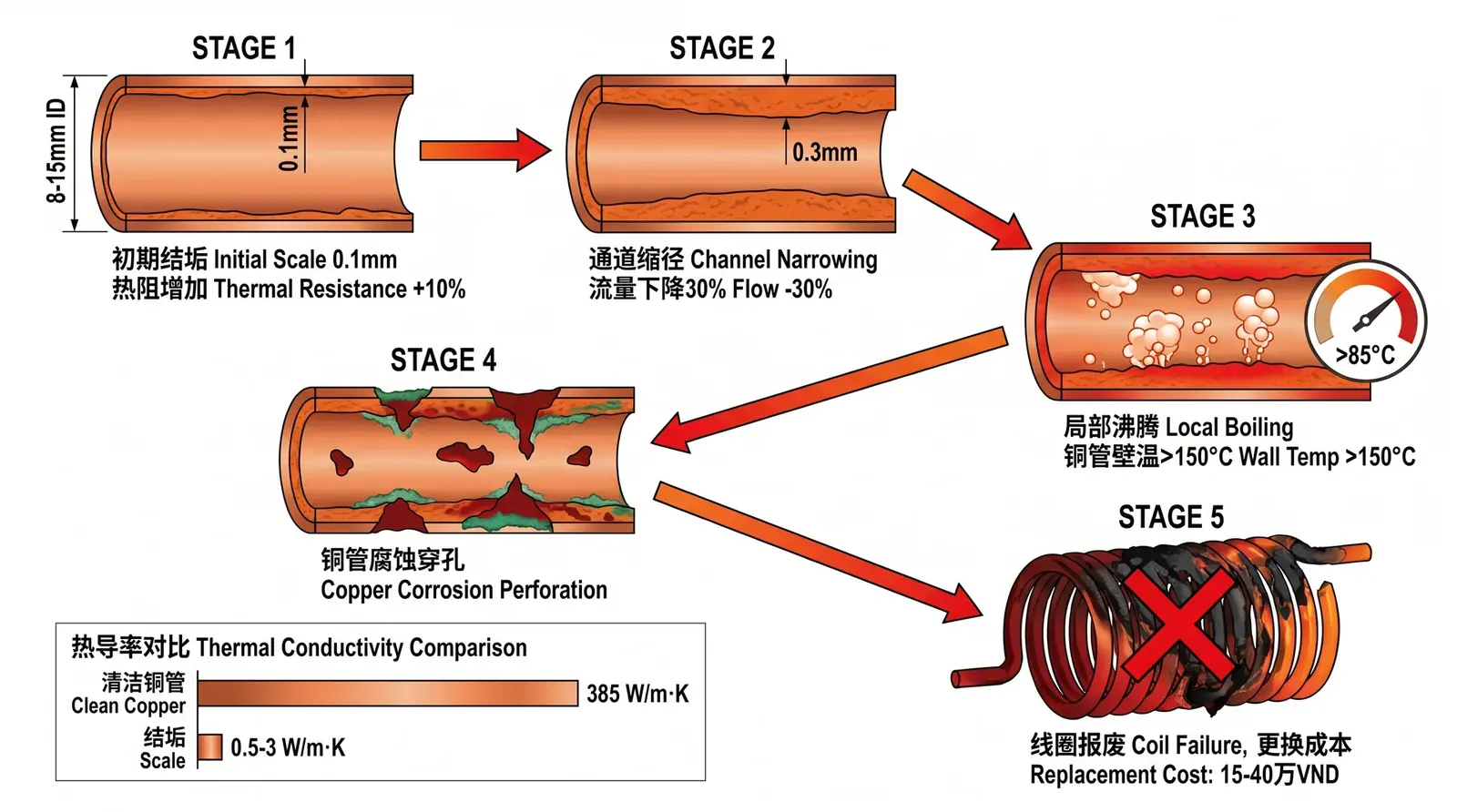
Every time an open tower evaporates 1 ton of water, all dissolved minerals in that ton of water, including Ca²⁺, Mg²⁺, and HCO₃⁻, remain in the circulating water. Taking typical Vietnamese surface water hardness of 200 mg/L as CaCO₃ as an example, when the concentration cycle reaches 4, circulating water hardness rises to 800 mg/L. When this circulating water enters the copper tube of an induction coil with an inner diameter of 8–15 mm, the tube wall temperature is much higher than the water temperature. CaCO₃ precipitates on the tube wall and forms a hard scale layer with a thermal conductivity of only 0.5–1.0 W/(m·K), compared with 390 W/(m·K) for pure copper. A 0.3 mm scale layer can increase the thermal resistance of the copper tube by about 60 times, causing the coil to overheat and burn out.
How the "scrubber effect" of an open tower brings airborne pollutants into process water
The fill section of an open tower is effectively a high-efficiency gas-liquid contactor. SO₂, NH₃, dust, and oil mist in the air flowing through the plant can be absorbed in large quantities by the circulating water in the fill. SO₂ dissolves in water to form H₂SO₃. When pH drops to 4–5, significant corrosion occurs on copper tubes. These pollutants then enter precision equipment through the circulating water circuit.
How the 25–35°C warm water zone becomes a Legionella growth environment
The operating water temperature of a cooling tower is typically 25–35°C, which falls within the favorable growth range for Legionella. In an open tower, air continuously introduces microorganisms into the circulating water, while fill surfaces provide a large attachment area for biofilm. When biofilm forms, disinfectants become difficult to penetrate effectively, and Legionella concentrations may rise to 10⁵ CFU/L or higher. This is well above the risk control threshold for pharmaceutical and food factories.
COOLTEK Solution: The Physical Isolation Path of the AWA Closed-Circuit Tower
The COOLTEK AWA closed-circuit tower uses a dual-circuit structure:
- Inner circuit: process water circulates inside sealed coils and is not exposed to air, so no evaporative concentration occurs.
- Outer circuit: spray water evaporates outside the coil and carries away heat. Even if the spray water concentrates or becomes polluted, it does not enter the process water.
- Heat transfer path: process water → coil wall → spray water film → evaporative latent heat.
Application Scenarios: Three Cases Where a Closed-Circuit Tower Is Required
| Application | Original Constraint | Risk of an Open Tower | AWA Physical Blocking Mechanism |
|---|---|---|---|
| Induction furnace cooling | Coil inner diameter 8–15 mm; OEM requires conductivity <250 μS/cm | Scale blockage and coil burnout | Inner circuit uses softened water; no evaporative concentration |
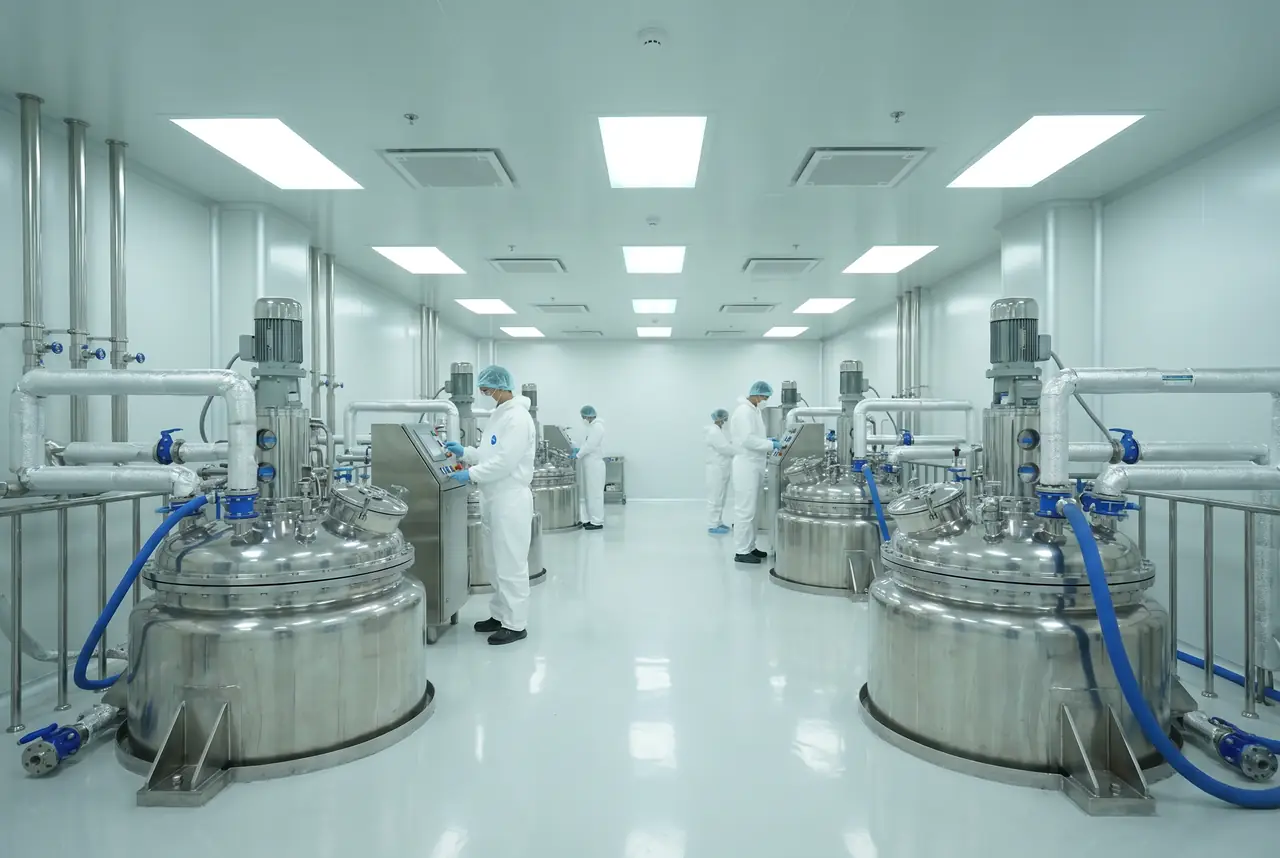
| Pharmaceutical GMP plant | TCVN 10405 / WHO GMP: cooling water must not become a contamination source | Excess Legionella; airborne pollutants entering process water | Closed circuit provides physical isolation; microorganisms cannot enter the inner circuit |
| Food and beverage plant | HACCP: cooling water must not contact food-contact surfaces | Drift from open towers contains microorganisms, creating cross-contamination risk | Closed circuit plus drift eliminator meets HACCP requirements |
Extended Questions
- How much higher is the initial investment of a closed-circuit tower compared with an open tower? Under what conditions is total cost of ownership lower instead?
- Will scale on the outside of the AWA coil affect heat transfer efficiency? How should it be handled?
- In Vietnam's high-temperature, high-humidity environment, is evaporative heat rejection outside the coil sufficient for a closed-circuit tower?