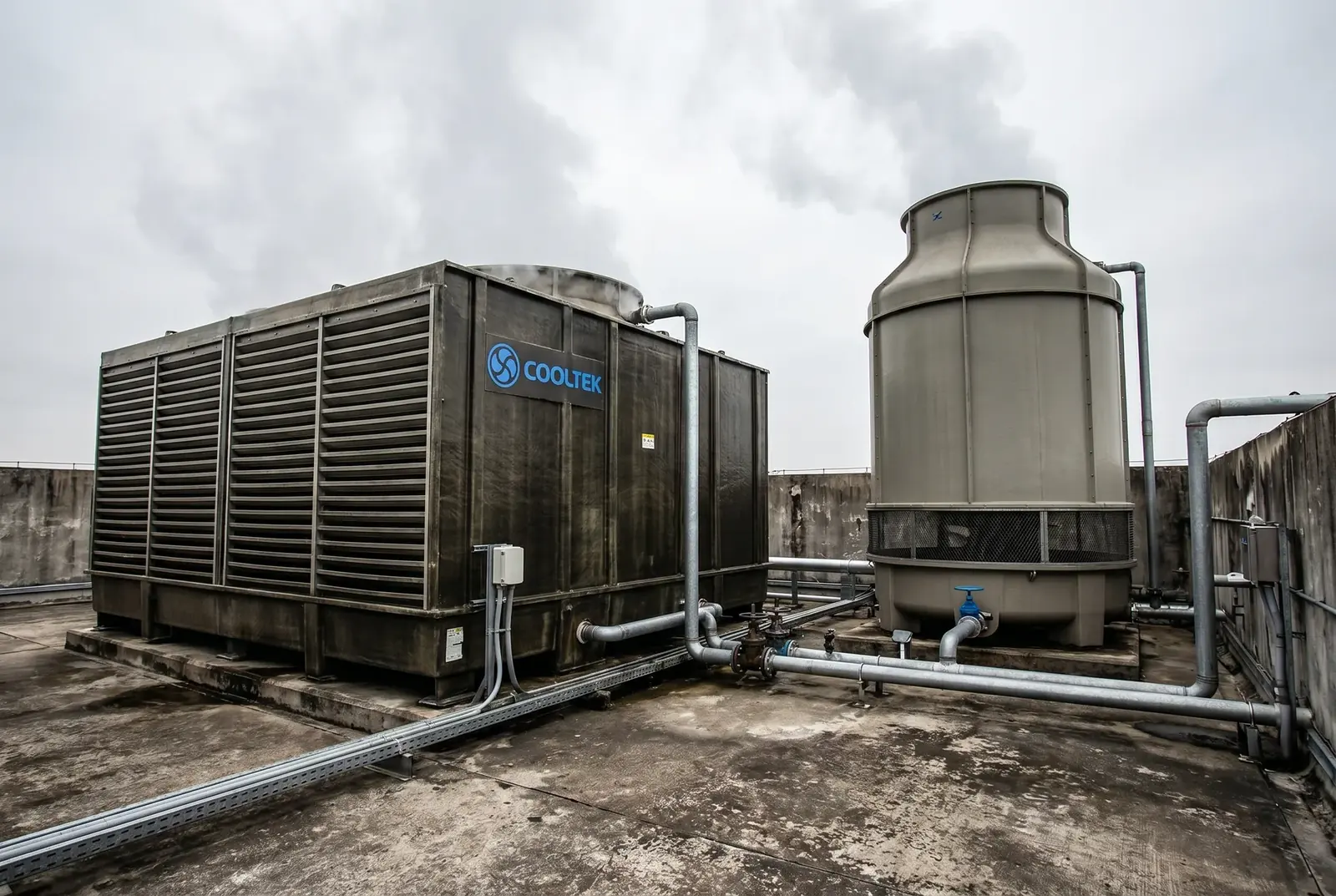
Vietnam's national technical regulation on noise, QCVN 26, was revised in 2025 with updated noise limits and measurement methodology requirements. For cooling tower operators and facility managers, understanding the new requirements is essential for compliance planning — both for existing installations and new projects.
This article summarizes the key changes in QCVN 26:2025, provides zone-by-zone limit tables, and outlines compliance strategies for cooling towers.
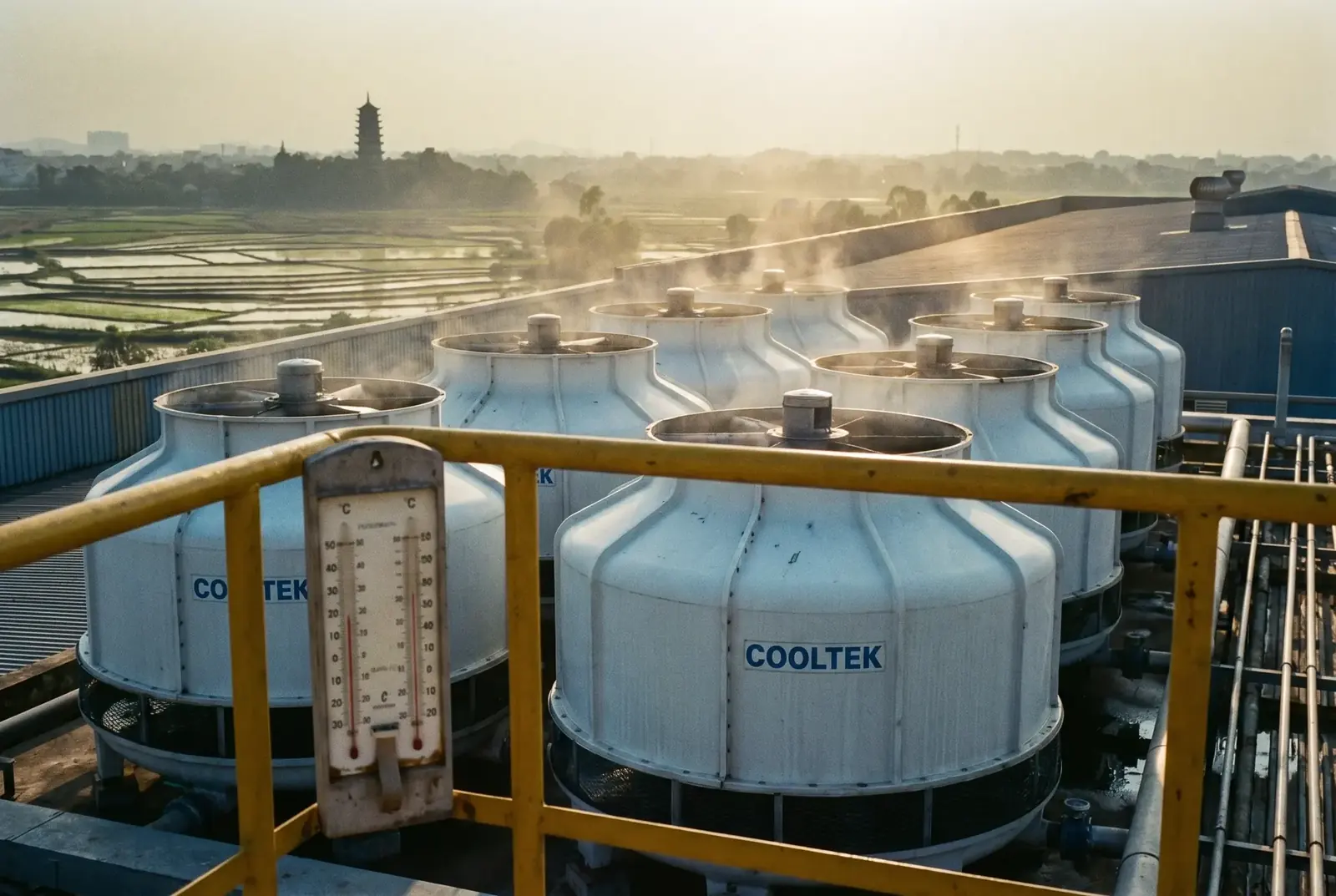
QCVN 26:2025 tightens noise limits in several zone categories and introduces new measurement methodology requirements that affect how cooling tower noise compliance is assessed.
1. Key Changes from QCVN 26:2010 to QCVN 26:2025
1.1 Updated Noise Limits
| Zone Category | QCVN 26:2010 Daytime (dB(A)) | QCVN 26:2025 Daytime (dB(A)) | Change |
|---|---|---|---|
| Special zones (hospitals, schools, residential quiet zones) | 55 | 50 | −5 dB(A) |
| Residential zones | 60 | 55 | −5 dB(A) |
| Mixed commercial/residential zones | 70 | 65 | −5 dB(A) |
| Industrial zones | 75 | 70 | −5 dB(A) |
The uniform 5 dB(A) reduction across all zone categories is significant. Many cooling tower installations that were compliant under QCVN 26:2010 may now exceed the new limits.
1.2 Updated Measurement Methodology
QCVN 26:2025 introduces updated measurement methodology aligned with ISO 1996-2:2017:
- Measurement position: At the nearest noise-sensitive receptor (property boundary, building facade, or outdoor living area), not at a fixed distance from the source.
- Measurement duration: Minimum 15-minute L_Aeq measurement during the noisiest operating period.
- Background noise correction: When the difference between total noise and background noise is less than 10 dB(A), a correction factor must be applied.
- Tonal components: If the noise contains audible tonal components (such as fan blade passing frequency), a +5 dB(A) penalty is added to the measured level.
2. Compliance Assessment for Cooling Towers
2.1 Typical Cooling Tower Noise Levels
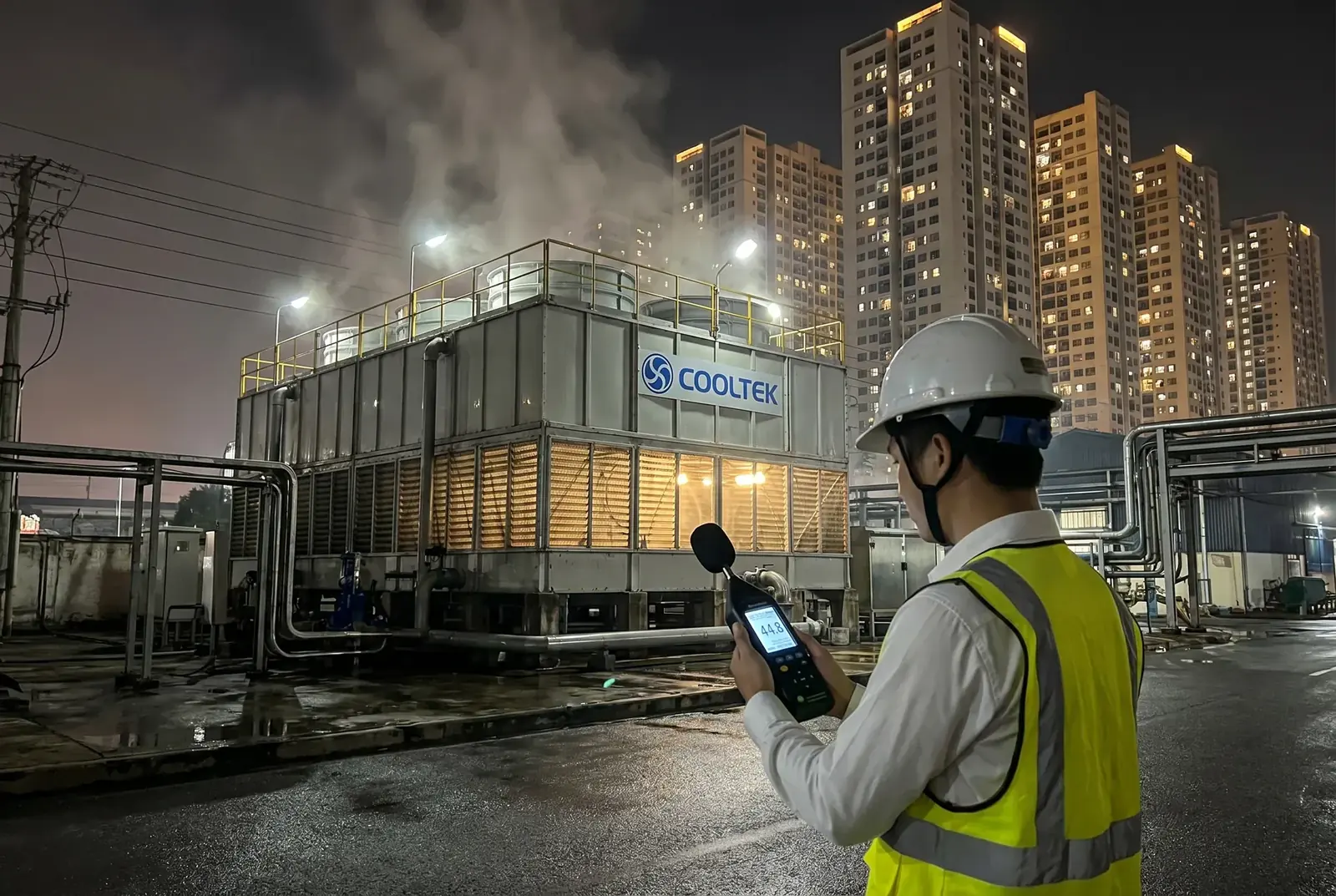
The LHR crossflow tower's 52–62 dB(A) noise level at 1 m provides a compliance margin for most zone categories under QCVN 26:2025.
| Tower Type | Noise at 1 m (dB(A)) | Estimated Level at 10 m | Estimated Level at 30 m |
|---|---|---|---|
| Standard round counterflow | 72–78 | 52–58 | 42–48 |
| Square counterflow | 68–74 | 48–54 | 38–44 |
| LHR crossflow (COOLTEK) | 52–62 | 32–42 | 22–32 |
Note: Noise attenuation with distance assumes free-field propagation (−6 dB per doubling of distance). Actual attenuation depends on barriers, ground absorption, and atmospheric conditions.
2.2 Compliance Strategies
For installations that exceed QCVN 26:2025 limits, the following strategies are available in order of increasing cost and complexity:
- Fan speed reduction: Reducing fan speed by 10% reduces noise by approximately 3 dB(A) but also reduces cooling capacity by approximately 10%. Suitable for installations with excess cooling capacity.
- Acoustic barriers: Concrete or masonry walls around the cooling tower can provide 5–15 dB(A) attenuation on the shielded side. Requires careful design to avoid reducing airflow to the tower.
- Tower replacement with LHR crossflow: The most effective long-term solution. The LHR series is 10–16 dB(A) quieter than equivalent counterflow towers, providing compliance margin for most zone categories.
- Acoustic enclosure: Full acoustic enclosure with attenuated air inlet and outlet ducts. Provides 15–25 dB(A) attenuation but requires careful engineering to maintain adequate airflow.
3. Compliance Documentation Requirements
Under QCVN 26:2025, facilities in industrial zones must maintain:
- Annual noise measurement reports from a certified testing laboratory
- Records of any noise complaints received and actions taken
- Equipment specifications showing rated noise levels for all major noise sources
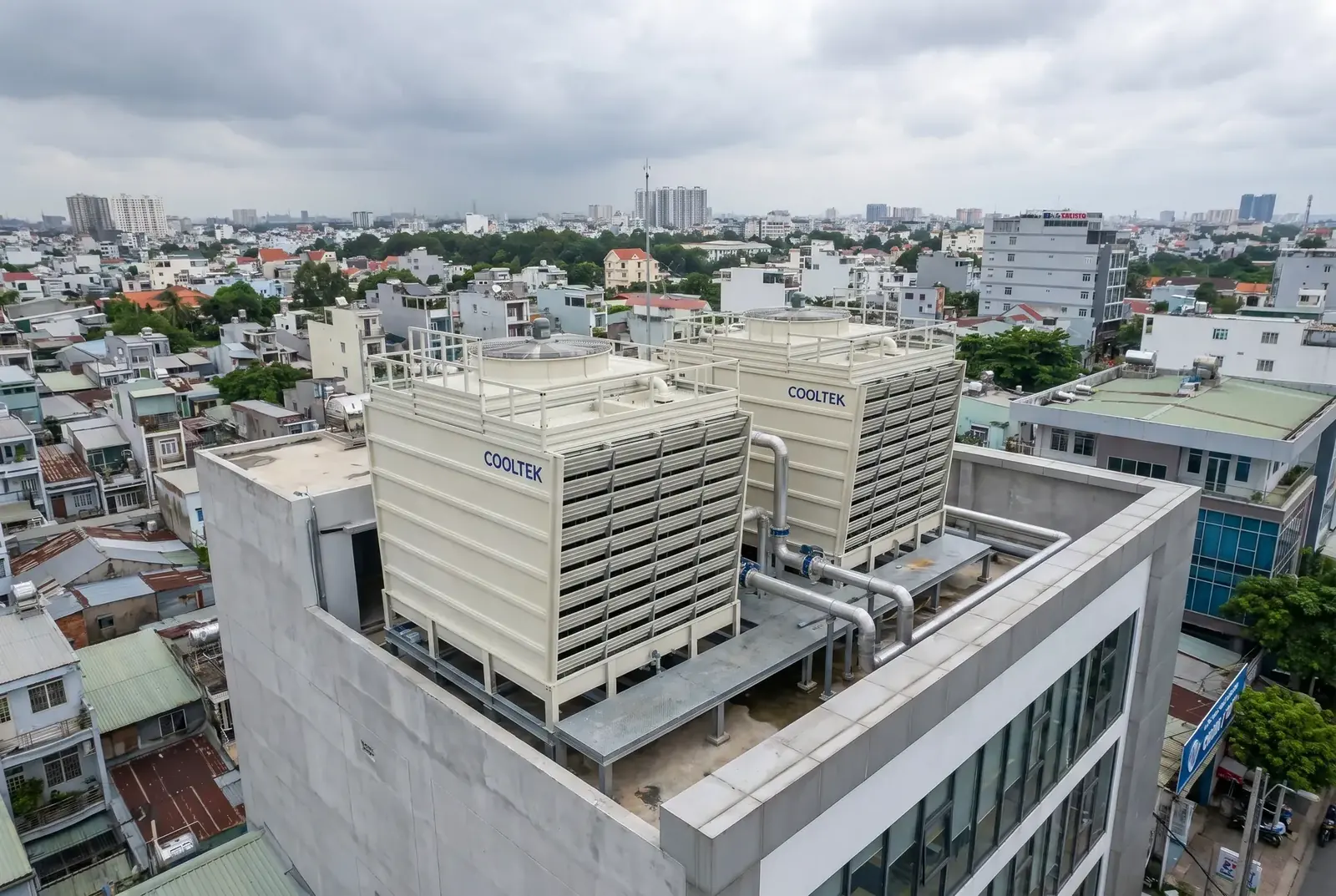
When selecting a new cooling tower, specifying the LHR series provides built-in compliance margin for QCVN 26:2025 limits in most zone categories.
Reference standards: QCVN 26:2025 National Technical Regulation on Noise (Vietnam); ISO 1996-2:2017 Acoustics — Description, measurement and assessment of environmental noise; ISO 3744:2010 Acoustics — Determination of sound power levels; CTI ATC-128 cooling tower sound measurement.