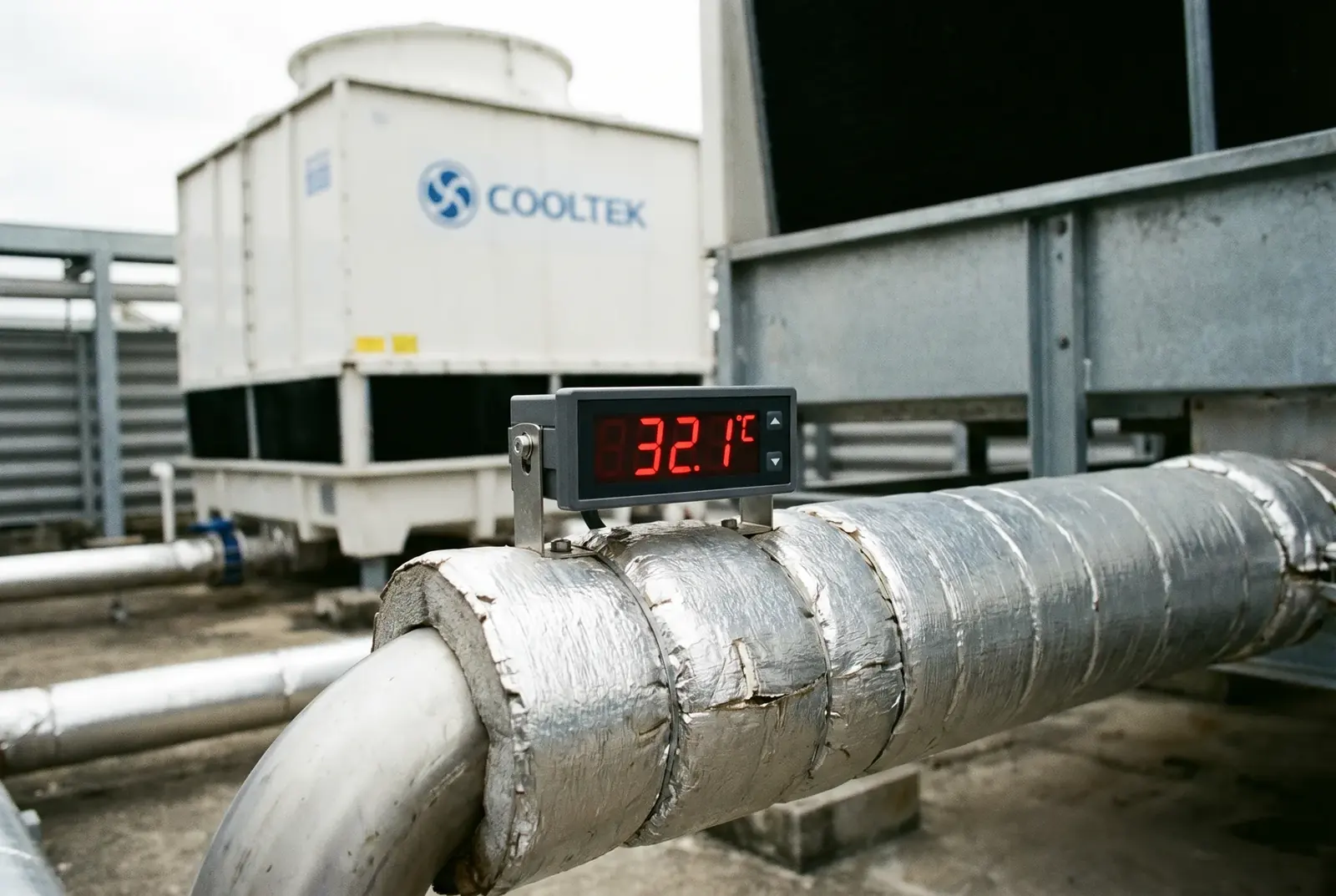
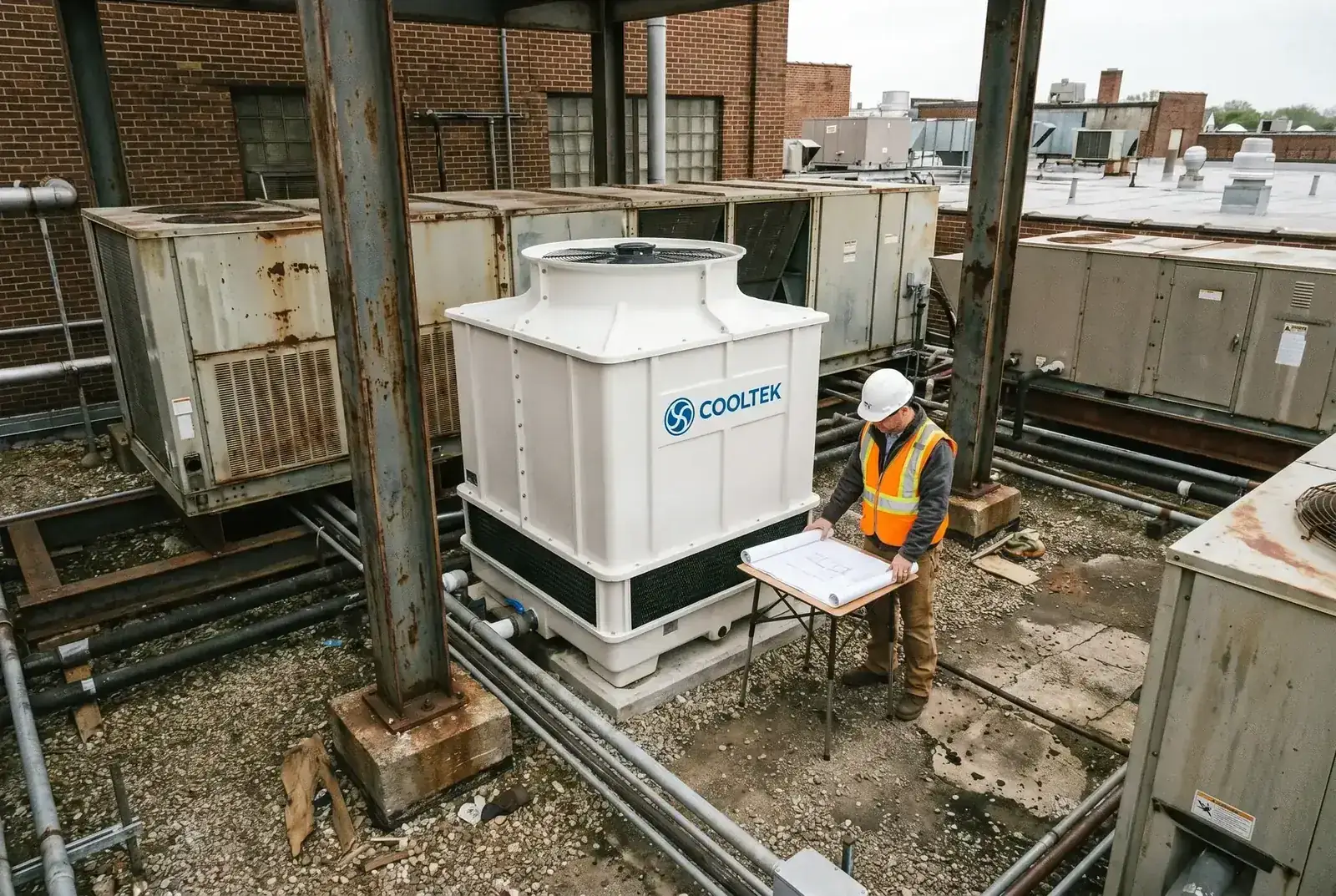
Figure 1: In pharmaceutical cooling systems, the temperature-control accuracy of the cooling tower directly affects the stable operation of fermentation tanks and chillers.
In a biopharmaceutical plant that has just passed GMP certification, the production director is facing the biggest crisis of his career. Because the chiller repeatedly triggers high-pressure alarms and shuts down, the temperature of the core fermentation tanks goes out of control, forcing two full batches of antibody culture medium worth millions of dollars to be discarded. Engineers from the main contractor disassemble and reinstall the chiller, check every sensor and control logic, but still cannot find the root cause.
It is not until an experienced senior specialist climbs onto the plant roof, looks at the low-cost cooling tower squeezed into a corner and struggling to operate, that he points out the issue in one sentence: "You spent tens of millions building a top-grade cleanroom and fermentation system, but saved only tens of thousands on the cooling tower. Now this poorly performing cooling tower is choking your chiller."
In pharmaceutical plant construction, the cooling tower is often treated as an insignificant supporting component. Yet this often-overlooked component controls the stability of the entire pharmaceutical system.
Physical Principle: How Does a Cooling Tower "Choke" a Chiller?
In biopharmaceutical production, such as vaccines and antibody drugs, fermentation tanks and bioreactors are core equipment. The growth and metabolism of microorganisms or cells impose extremely strict requirements on temperature. Typically, these reactions must be maintained within a specific temperature range, such as 37°C ± 0.5°C. To maintain this highly accurate temperature, pharmaceutical plants usually rely on large chillers to provide stable chilled water.
The stable operation of the chiller, in turn, depends entirely on cooling water supplied by the cooling tower to remove heat from the condenser. This is a closely linked thermodynamic chain. When the heat-transfer efficiency of the cooling tower is poor, or when outlet water temperature exceeds the required value due to high ambient temperature, the condenser of the chiller cannot reject heat effectively.
According to thermodynamic principles, poor condenser heat rejection directly causes the refrigerant condensing pressure and condensing temperature to rise sharply. This not only significantly reduces the cooling capacity and COP of the unit, leading to fermentation tank temperature instability; more seriously, when condensing pressure exceeds the safety threshold, the chiller's self-protection mechanism is triggered and the compressor is forced to shut down. In continuous pharmaceutical fermentation processes, a sudden chiller shutdown often means the catastrophic loss of the entire batch.
According to ASHRAE's HVAC Design Manual for Hospitals and Clinics, the stability of cooling water supply temperature is a physical foundation for ensuring efficient and stable operation of pharmaceutical process equipment and chillers.
COOLTEK's Physical Solution: Counterflow Square Tower for Space and Temperature Control
Pharmaceutical plant construction faces a difficult contradiction: on one hand, GMP requirements demand high temperature-control accuracy; on the other hand, plant layouts are often extremely compact, leaving increasingly limited installation space for cooling towers. Conventional crossflow cooling towers may have lower noise, but their large footprint often makes them difficult to fit into crowded pharmaceutical plant roofs or equipment floors.
Facing this deadlock of requiring both high-precision temperature control and extremely limited space, the COOLTEK LHN Series provides a practical crossover solution.
First, the LHN Series uses a 180° counterflow heat-transfer structure. Air flows upward while hot water is sprayed downward, forming fully opposite contact. Thermodynamically, this structure provides the maximum temperature-difference driving force. Combined with uniform pressurized nozzle distribution, the LHN can maintain a stable approach temperature of 3–5°C even in Vietnam's high-humidity summer conditions, providing a stable cooling water supply for downstream chillers.
Second, the LHN Series combines this high heat-transfer efficiency with a square minimum-footprint design. At a standard flow rate of 500 m³/h, the LHN footprint is only 25.00 m², saving up to 23.8% of space compared with a crossflow tower of the same flow rate. In addition, the LHN's single central inlet design means no piping operation space needs to be reserved on either side of the tower, allowing installation close to walls or adjacent equipment.
Industry Standard Verification: Cooling System Design Under the Spirit of GMP
In the pharmaceutical industry, the design and selection of any equipment must align with the spirit of GMP, or Good Manufacturing Practice. In its published baseline guides, ISPE emphasizes the importance of cooling systems in maintaining process-environment stability and preventing product degradation.
For thermal performance verification, CTI STD-201, Standard for the Certification of Water-Cooling Tower Thermal Performance, is a globally recognized high-level test standard. QCVN 09:2013/BXD issued by Vietnam's Ministry of Construction also directly references this standard.
| Comparison Dimension | LHN Counterflow Square Tower | Conventional Crossflow Tower |
|---|---|---|
| Air-water contact method | 180° fully opposite flow, most stable heat transfer | 90° cross contact, more affected by external disturbance |
| Approach-temperature control capability | Very strong, stable within 3–5°C | General, usually above 5–8°C |
| Risk of chiller high-pressure shutdown | Very low, cooling water temperature remains qualified and stable | Higher, water temperature can exceed limits in summer |
| Applicable process scenarios | Biofermentation, lyophilization, high-precision chillers | Conventional refrigeration, non-core process cooling |
| Footprint at the same flow rate | Smallest, saving about 23.8% of space | Larger |
Reference standards: ASHRAE HVAC Design Manual for Hospitals and Clinics, 2nd Edition; ISPE Baseline Guide: Volume 5 — Commissioning and Qualification; CTI STD-201: Standard for the Certification of Water-Cooling Tower Thermal Performance.