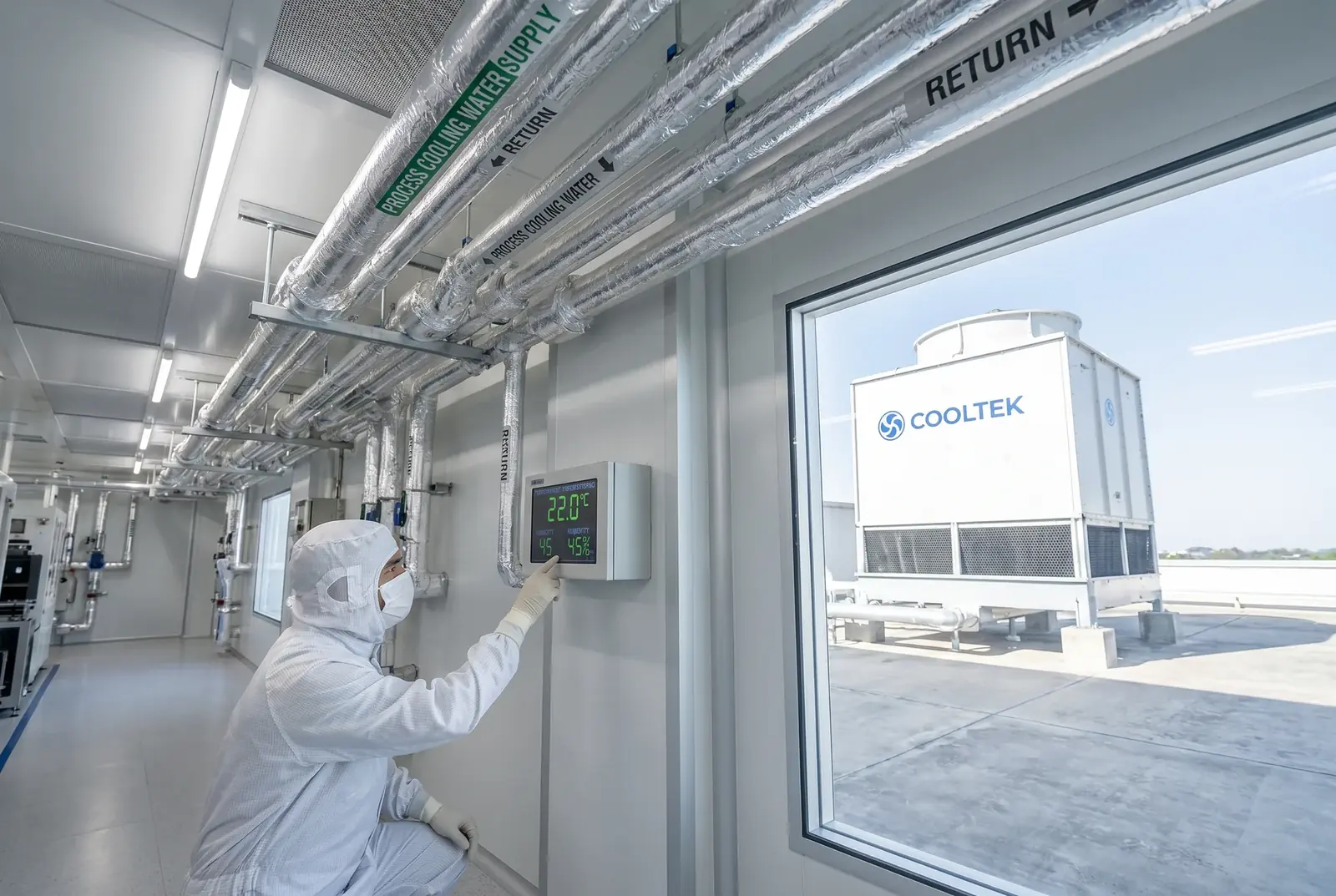
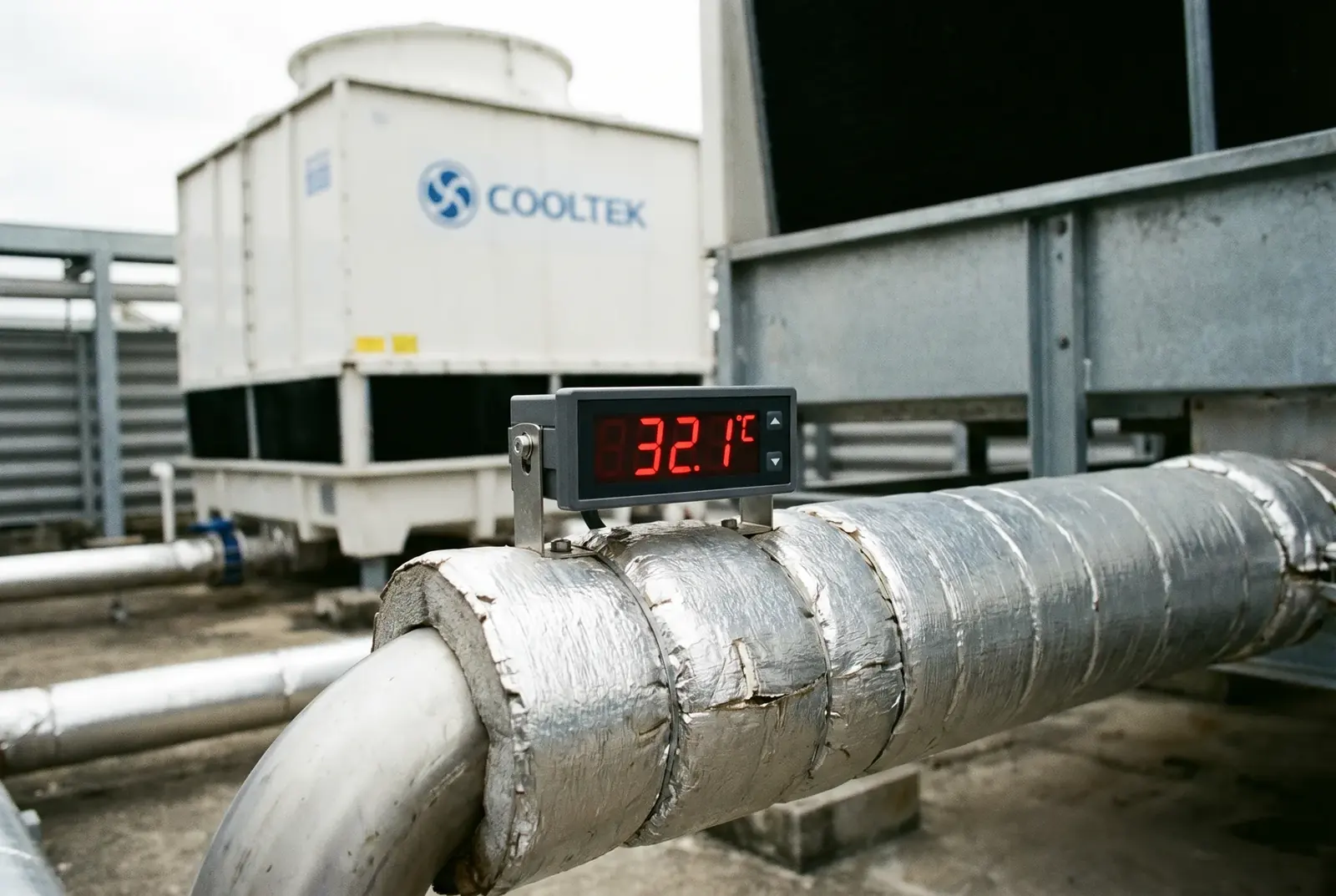
Figure 1: Approach temperature is the difference between cooling tower outlet water temperature and local wet-bulb temperature. The smaller the approach, the higher the heat-transfer efficiency.
In July and August each year, Vietnam's rainy season is mixed with intense heat, and the entire industrial park can feel like a huge sauna. At that time, the call facility engineers fear most comes from the production workshop: "The water temperature is over the limit again! The chiller is about to trigger a high-pressure alarm!"
You rush to the rooftop and find that the cooling tower fan is already running at full load, and the circulating water pump has been opened to its maximum flow. You even ask someone to flush water directly into the tower with a hose, but the outlet water temperature seems fixed in place, stuck firmly at 33°C and refusing to drop. The workshop manager shouts over the phone: "The air temperature is only 35°C. Why can't the water temperature even drop below 32°C? Is the cooling tower defective?"
Faced with this frustrating situation, many inexperienced engineers instinctively suspect equipment failure, and some may even propose adding more cooling towers. In reality, the equipment is not necessarily broken. You have simply hit a physical wall called "wet-bulb temperature."
Approach temperature is the difference between the cooling tower outlet water temperature and the wet-bulb temperature. It is a core indicator for evaluating heat-transfer efficiency.
Physical Principle: Why Can't the Water Temperature Drop Below the Air Temperature?
To explain this issue to non-specialists, we first need to break a common misconception: a cooling tower does not cool water simply by "blowing cold air." If heat were removed only by the temperature difference of air, known as sensible heat, then at an air temperature of 35°C, the water could never be cooled below 35°C.
The real mechanism of a cooling tower is the latent heat of evaporation. When hot water is sprayed into small droplets inside the tower, a small portion of water molecules absorbs heat from the surrounding water body, changes from liquid to vapor, and is carried away by the airflow. It is this "sacrifice" of a small fraction of water molecules that removes a large amount of heat and allows the remaining water to cool significantly. This is why the outlet water temperature of a cooling tower can, in practice, fall below the ambient air temperature, or dry-bulb temperature.
However, this evaporation process has a limit. Air is like a sponge. Once it is saturated with moisture, with relative humidity reaching 100%, it can no longer absorb even one more drop of water vapor. In thermodynamics, the lowest temperature that can be reached when water evaporates under adiabatic conditions until the surrounding air becomes saturated is called the wet-bulb temperature.
In simple terms, wet-bulb temperature is the theoretical lowest temperature a cooling tower can achieve through evaporative cooling alone. In the real world, the outlet water temperature of a cooling tower can never be equal to the wet-bulb temperature. The difference between the two is called approach temperature:
Approach Temperature = Cooling Tower Outlet Water Temperature − Wet-Bulb Temperature
According to the discussion in Chapter 40 of the ASHRAE Handbook, approach temperature is one of the most important indicators for evaluating cooling tower heat-transfer efficiency. In Southeast Asian regions such as Vietnam, summer wet-bulb temperatures often remain as high as 28–29°C. This means that if your process requires cooling water to be controlled below 32°C, the allowable approach temperature left for the cooling tower is only a very demanding 3–4°C. When the approach temperature enters this extreme range, every 0.1°C reduction requires a sharply increasing fill volume and airflow.
COOLTEK's Physical Solution: Extracting Performance at the Limit of Approach Temperature
When faced with the demanding requirement of a very small approach temperature, conventional crossflow cooling towers often struggle. In a crossflow tower, air passes horizontally through the falling water. At the bottom of the tower, the water temperature is already low and evaporation becomes very difficult. At the same time, the air in contact with this low-temperature water may already have absorbed heat and moisture from the upper water droplets, becoming warm and humid and losing much of its evaporative driving force.
To break this limitation, the COOLTEK LHN Series adopts a 180° counterflow heat-transfer structure. In the LHN tower, the coldest and driest air is drawn in from the bottom and first meets the coldest water, which is about to leave the fill. This reverse matching ensures that in the final stage of heat exchange, when the water temperature is closest to the wet-bulb temperature and evaporation is most difficult, there is still sufficient temperature and humidity difference to drive evaporation.
In addition, the LHN Series uses a pressurized nozzle water distribution system to atomize hot water into very fine and uniform droplets. Combined with high-density film fill, this forces the droplets to change their flow path continuously as they fall, significantly extending the heat-transfer time. It is this intense use of the available heat-transfer process that enables the LHN Series, under the same fill volume, to hold the approach temperature within a very small range of 3–5°C.
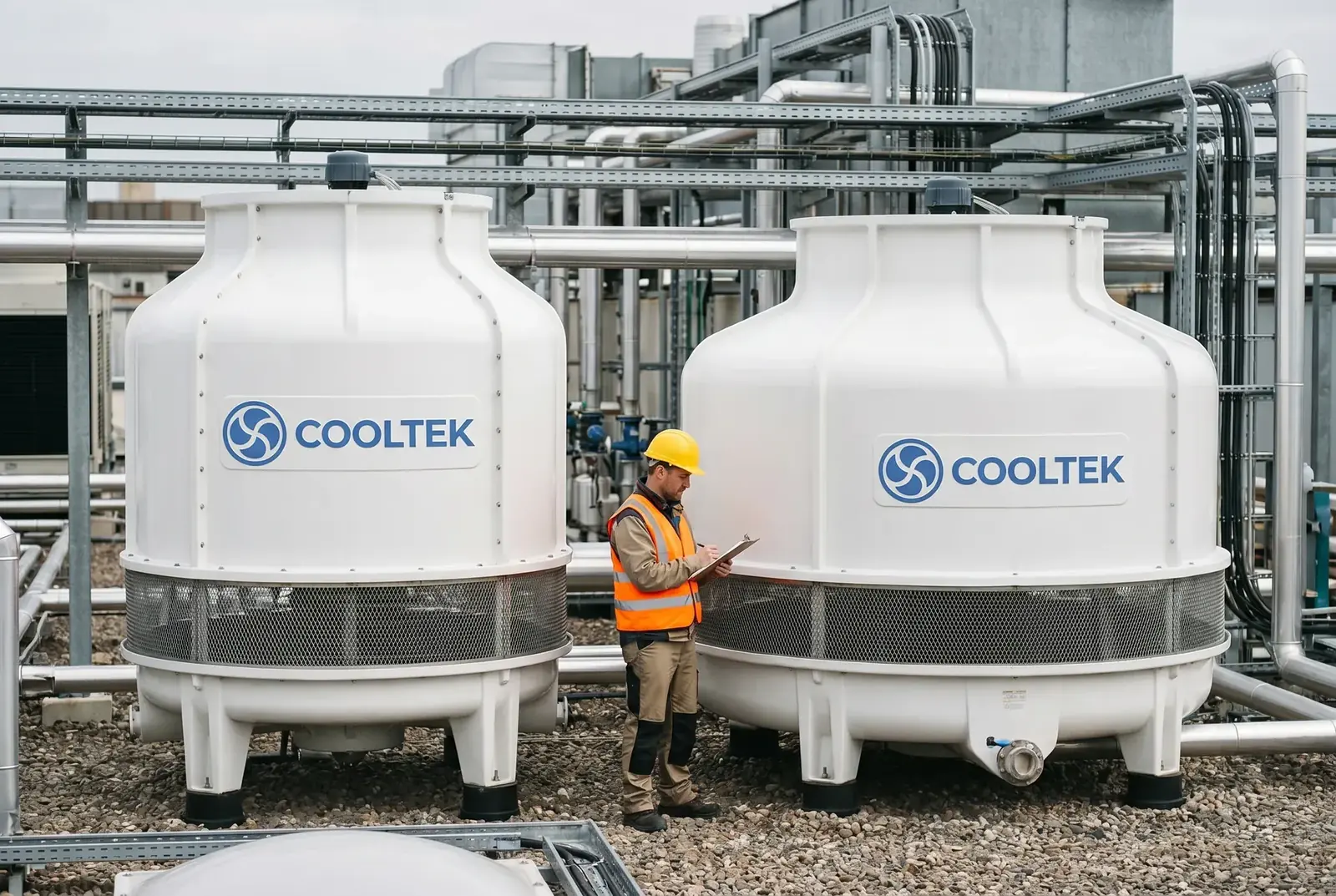
Figure 2: At 500 m³/h, the LHN footprint is only 25.00 m², saving 23.8% compared with a crossflow tower of the same capacity.
What is even more notable is that the LHN Series places this high heat-transfer efficiency inside an extremely compact square body. At a standard flow rate of 500 m³/h, the LHN footprint is only 25.00 m², saving up to 23.8% of space compared with a crossflow tower of the same flow rate. For factories that must hold the temperature line while having no spare space for large equipment, the LHN Series is close to the practical answer.
Industry Standard Verification: Rejecting Paper-Only Performance Claims
In industrial cooling, any claim about an "extremely small approach temperature" is not credible unless it has been verified through authoritative testing. CTI STD-201, issued by the Cooling Technology Institute, is a globally recognized standard for assessing cooling tower thermal performance. It requires that, under strictly controlled test conditions, a cooling tower's actual heat-rejection capacity must meet or exceed the manufacturer's declared rating.
In the Vietnamese market, QCVN 09:2013/BXD, the National Technical Regulation on Energy Efficiency Buildings issued by Vietnam's Ministry of Construction, directly references CTI STD-201 in cooling tower test procedures as a basis for evaluating thermal performance.
Under the strict testing framework of CTI standards, the counterflow structure of the COOLTEK LHN Series has been sufficiently verified for its approach-temperature control capability. Whether facing Vietnam's extreme summer wet-bulb temperature of 29°C or meeting the strict requirement of precision manufacturing processes for 32°C outlet water, the LHN Series provides a credible temperature-control basis for high-standard industrial cooling. The next time the workshop manager calls to complain that the water temperature cannot be lowered, you can answer with confidence: "The equipment is not necessarily broken. This is physics. Fortunately, we selected the right tool to work against that physical limit."
Reference standards: ASHRAE Handbook—HVAC Systems and Equipment, Chapter 40; CTI STD-201: Standard for the Certification of Water-Cooling Tower Thermal Performance; QCVN 09:2013/BXD National Technical Regulation on Energy Efficiency Buildings.