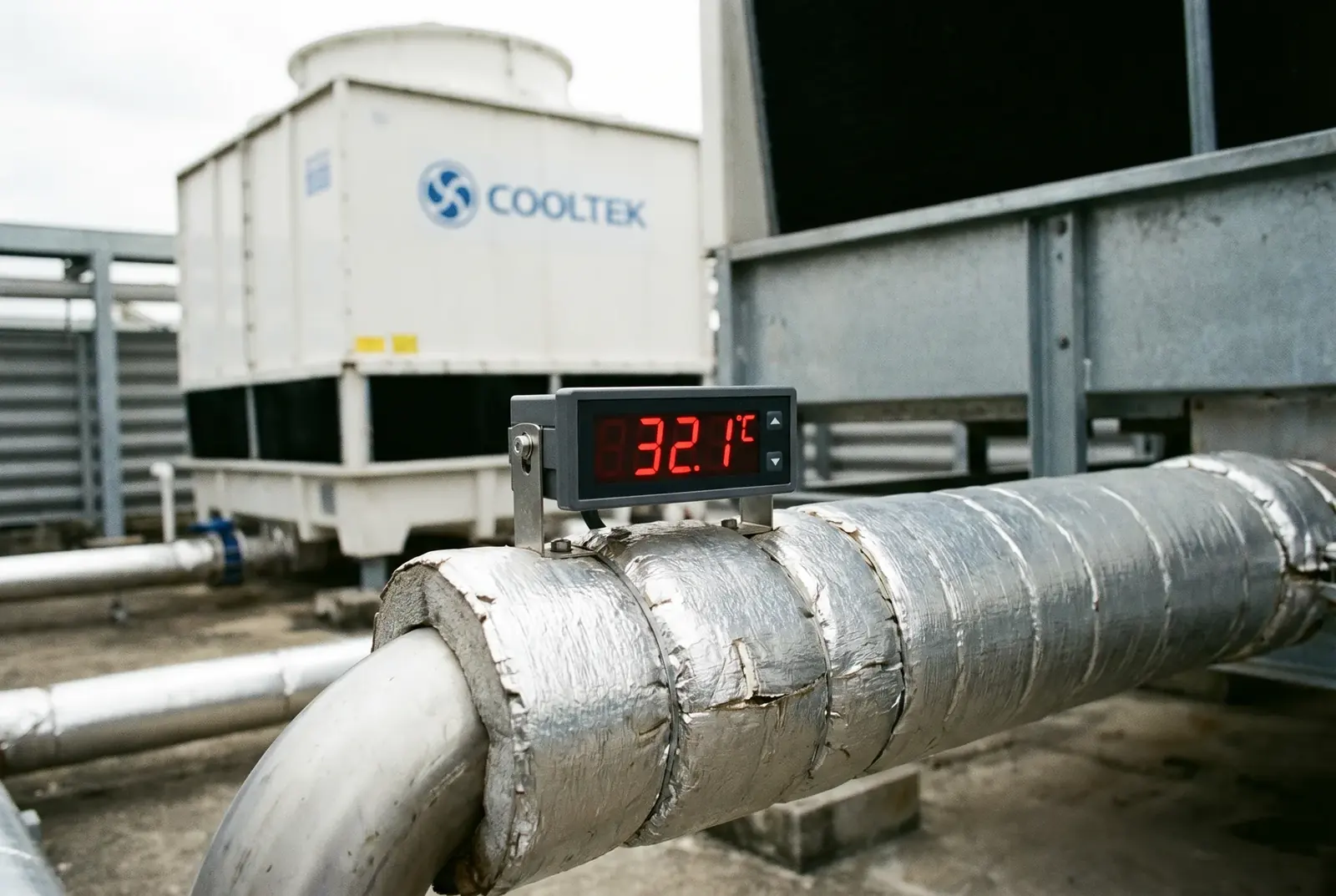
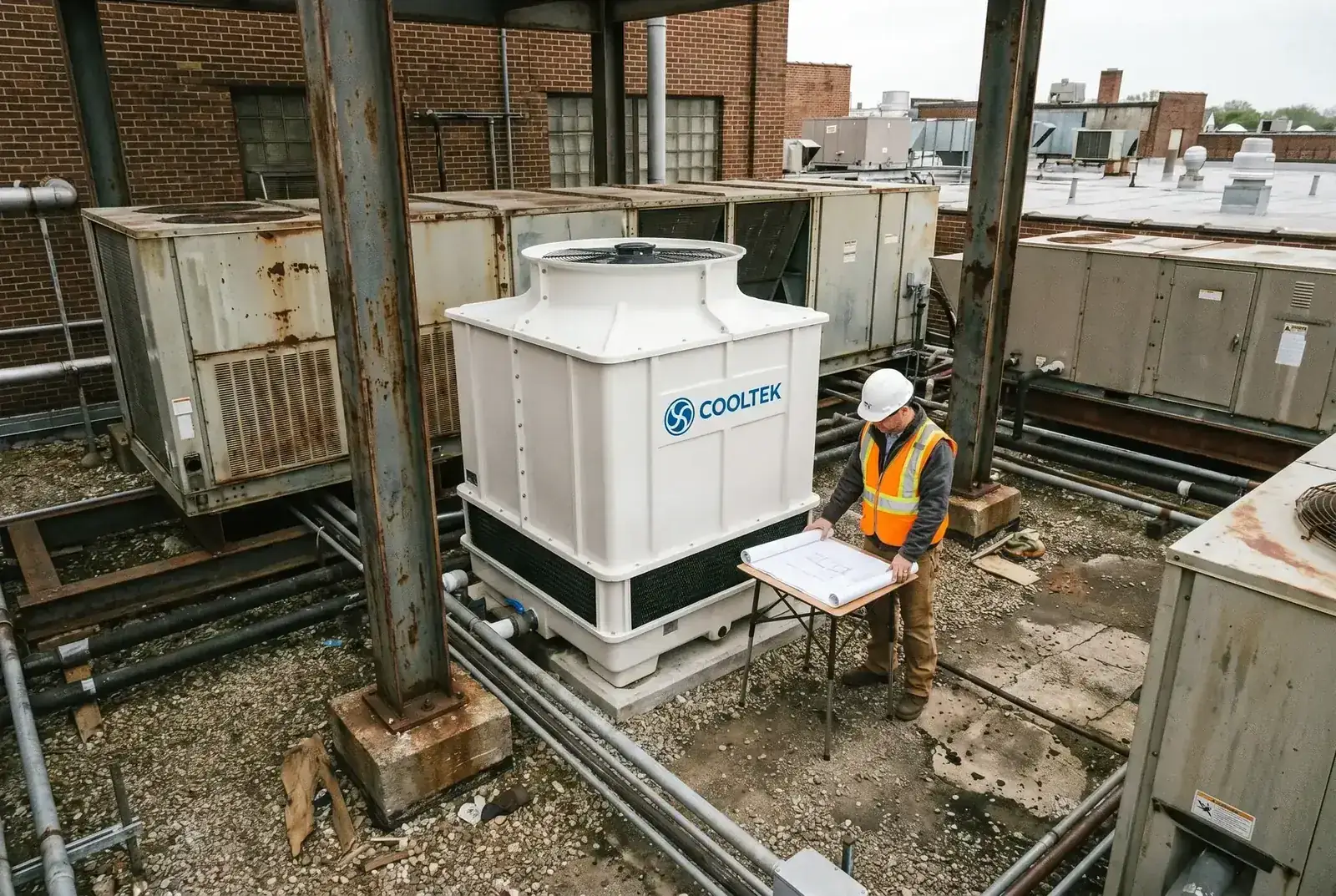
Figure 1: The air-water contact methods of the LHN counterflow square tower and the LHR crossflow square tower determine their distinctly different application scenarios.
As a facility director who has worked in Vietnam's industrial parks for more than ten years, you may have just gone through a suffocating meeting: the production vice president requires cooling water system expansion before the end of next month, while the environmental compliance manager reminds everyone that the factory is less than 50 meters from a residential area and nighttime noise must not exceed 45 dBA. Worse still, the equipment foundation left for the new cooling tower is only a cramped corner of less than 30 m².
Space is completely locked, the noise limit is hanging overhead, and the process requirement for water temperature keeps getting stricter. How can one cooling tower meet the three demanding requirements of production, environmental compliance, and civil works at the same time?
Engineers often compare parameters in supplier catalogues. Today, however, we will go directly to the physical basis. In industrial cooling, almost every performance trade-off can ultimately be traced to one basic geometric question: at what angle should water and air meet?
Physical Principle: The 180° and 90° Difference
The core task of a cooling tower is to bring hot water and cold air into sufficient contact and use the latent heat of water evaporation to remove waste heat. In this process, the angle of air-water contact determines the character of the cooling tower.
In a counterflow structure, air is drawn in from the bottom and rises upward, while hot water is sprayed from the top and falls rapidly under gravity. This is a 180° head-on contact. According to the thermodynamic principles discussed in Chapter 40 of the ASHRAE Handbook, this fully opposite contact provides the maximum temperature-difference driving force. The coldest and driest air always meets the coldest water that is about to leave the fill, enabling a counterflow tower to bring the outlet water temperature very close to the wet-bulb temperature, with an approach temperature as low as 3–5°C.
However, this head-on contact has a cost. To distribute water droplets uniformly, a counterflow tower must use pressurized nozzles. As the droplets fall against a strong upward airflow, greater aerodynamic noise and spray noise are unavoidable.
By contrast, a crossflow structure uses a gentler contact method. Air passes horizontally through the falling water, with air and water crossing at 90°. A crossflow tower uses an open gravity water basin at the top, allowing water to fall naturally under gravity. This design eliminates the spray noise of pressurized nozzles and makes the crossflow tower very quiet during operation. The cost is that its heat-transfer efficiency is slightly lower, and because it must accommodate fill on both sides and a central fan suction chamber, its footprint becomes larger.
COOLTEK's Physical Solution: A Clear Scenario-Based Choice
LHN Series: Built for Locked Space and High-Precision Temperature Control
If your plant roof is already occupied by various exhaust fans, or if your semiconductor packaging line has zero tolerance for cooling water temperature fluctuation, the LHN is the preferred choice.
Thanks to the high efficiency of 180° counterflow heat transfer, the LHN has the smallest footprint among the series at the same flow rate. Using a standard flow rate of 500 m³/h as an example, the LHN requires only 25.00 m², while an LHR crossflow tower of the same flow rate requires 32.83 m² — saving up to 23.8% of valuable space. In addition, the LHN uses a single central inlet design, so no piping operation space is required on either side of the tower. Multiple units can be arranged with zero spacing like building blocks.
LHR Series: A Practical Option Under the QCVN 26:2025 Noise Limit
If your factory is close to a residential area or is under strict monitoring by environmental authorities, the LHR should be selected without hesitation. Test data show that at a far-field distance of 16 m, the operating noise of the LHR is 1.8–3.1 dB(A) lower than that of an LHN with the same flow rate. In acoustics, a 3 dB(A) difference means the sound energy is reduced by half. This is not only a numerical advantage; it can be the practical basis for keeping the factory operating legally at night under QCVN 26:2025/BTNMT.
In addition, the gravity water-distribution design of the LHR gives it a water head loss 4–6 kPa lower than that of the LHN. This means you can select a circulating water pump with lower head and lower power, saving a meaningful amount of electricity over long-term operation.
Selection Decision Tree: Four Direct Questions
| Decision Question | Prefer LHN Counterflow Square Tower | Prefer LHR Crossflow Square Tower |
|---|---|---|
| 1. Is site space extremely limited? | Yes, the equipment floor area is already locked | No, sufficient footprint is available |
| 2. Does the project face a strict noise limit? | No, far from residential areas | Yes, located in a QCVN 26:2025 Area B environment |
| 3. Does the downstream process require very high outlet water temperature accuracy? | Yes, approach temperature must be controlled at ≤ 3°C | No, conventional industrial cooling |
| 4. Is reducing circulating pump energy consumption a priority? | No, sufficient pump head margin is available | Yes, the LHR has lower water head loss |
In actual engineering projects, you may face conflicting conditions, such as extremely limited space together with strict noise assessment. In that case, a deeper acoustic evaluation or a customized noise-control solution is required. As a responsible engineering advisor, we do not conceal the physical trade-offs of the product: choosing LHN means accepting slightly higher noise and water head loss; choosing LHR means reserving more civil-work area.
Reference standards: ASHRAE Handbook — HVAC Systems and Equipment, Chapter 40; CTI STD-201: Standard for the Certification of Water-Cooling Tower Thermal Performance; QCVN 26:2025/BTNMT National Technical Regulation on Noise.