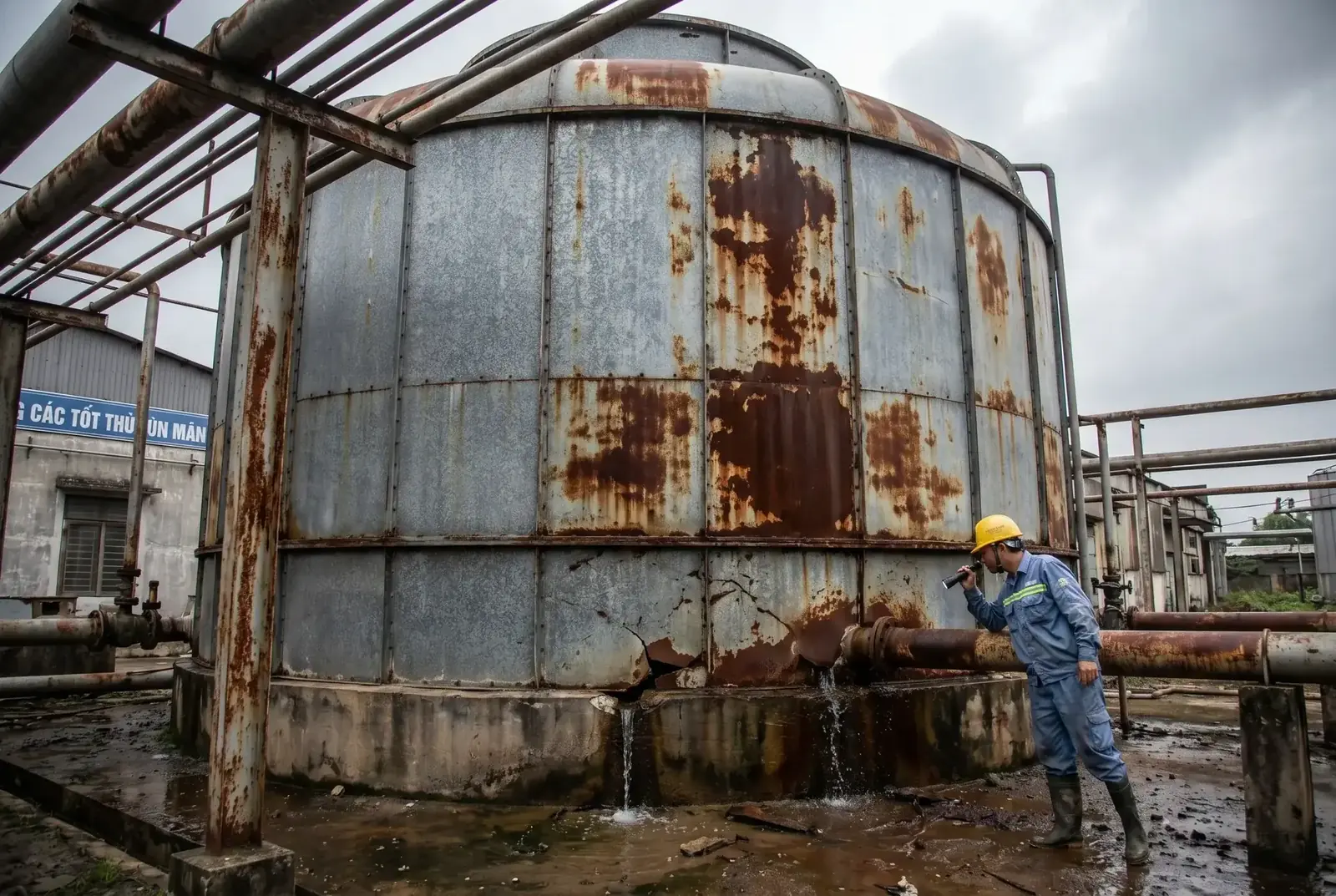
A cooling tower is a long-term capital investment. The decisions made at each stage of its lifecycle — from initial selection through installation, commissioning, routine maintenance, performance monitoring, and eventual replacement — determine whether the investment delivers its expected return.
This guide covers the complete lifecycle of the COOLTEK LH series cooling tower, providing actionable guidance for each stage.
The COOLTEK LH series is designed for a service life exceeding 20 years. A structured lifecycle management approach maximizes return on investment and minimizes unplanned downtime.
1. Selection Stage
1.1 Key Selection Parameters
Correct selection requires specifying the following parameters:
- Cooling duty (kW or kcal/h): Total heat to be rejected by the cooling tower.
- Cooling water flow rate (m³/h): Volume of water to be cooled per hour.
- Inlet water temperature (°C): Temperature of warm water entering the tower.
- Outlet water temperature (°C): Required temperature of cooled water leaving the tower.
- Wet-bulb temperature (°C): Design ambient wet-bulb temperature for the installation location.
- Site conditions: Available footprint, height clearance, noise limits, seismic zone.
1.2 LH Series Selection Range
| Model Range | Flow Rate (m³/h) | Cooling Duty (kW) | Fan Power (kW) |
|---|---|---|---|
| LH-10 to LH-50 | 8–50 | 40–250 | 0.37–2.2 |
| LH-50 to LH-200 | 50–200 | 250–1,000 | 2.2–11 |
| LH-200 to LH-500 | 200–500 | 1,000–2,500 | 11–30 |
| LH-500 to LH-1000 | 500–1,000 | 2,500–5,000 | 30–55 |
2. Installation Stage
2.1 Foundation Requirements
- Levelness: Foundation surface levelness must be within ±2 mm across the full base dimension.
- Load capacity: Foundation must support the operating weight (tower + water in basin) with a safety factor of ≥1.5.
- Anchor bolts: Install per the certified drawing P.C.D. and bolt specification.
- Drainage: Provide floor drain within 1 m of the tower basin drain connection.
2.2 Piping Connection
- Use flexible pipe connections at the tower inlet and outlet to isolate vibration.
- Install isolation valves on inlet and outlet for maintenance access.
- Install a strainer on the tower inlet to protect nozzles or basin openings from debris.
- Slope all piping toward drain points to allow complete drainage during shutdown.
3. Commissioning Stage
3.1 Pre-Start Checklist
- Confirm all shipping braces and protective packaging have been removed.
- Check fan blade pitch angle — all blades must be set to the same angle (within ±0.5°).
- Verify motor rotation direction matches the fan blade pitch direction.
- Fill basin to operating level and check float valve operation.
- Check all piping connections for leaks before starting the fan.
3.2 Commissioning Measurements
Record the following baseline measurements during commissioning:
- Fan motor operating current (all three phases)
- Fan vibration level (at motor bearing housing)
- Inlet and outlet water temperatures at design flow rate
- Approach temperature (outlet water temperature minus wet-bulb temperature)
- Sound pressure level at 1 m from tower
These baseline measurements are essential for future performance comparison and warranty claims.
4. Maintenance Schedule
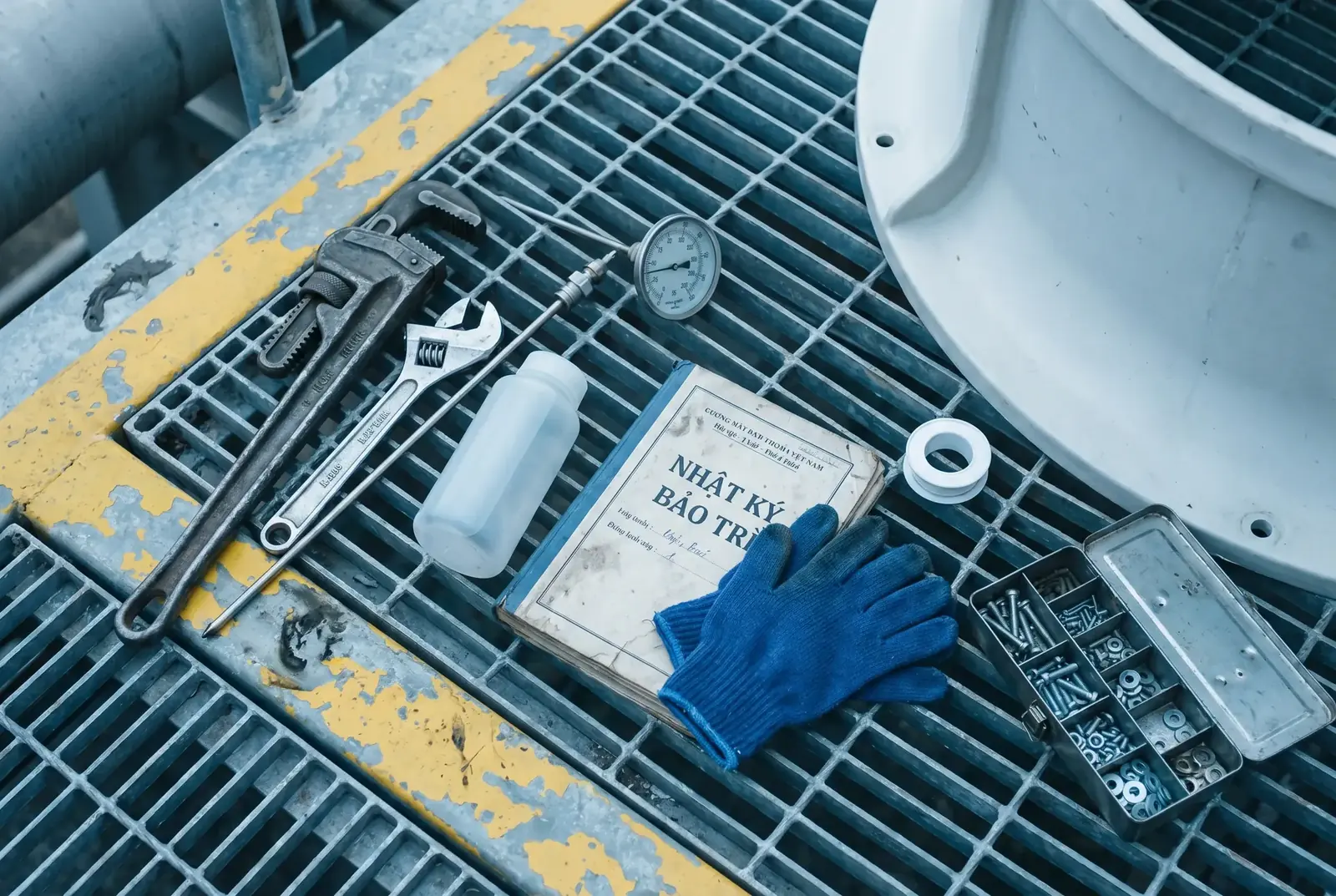
A structured maintenance schedule prevents the non-linear cost escalation that occurs when cooling towers are operated without regular inspection.
| Task | Frequency | Shutdown Required |
|---|---|---|
| Visual inspection (housing, basin, piping) | Monthly | No |
| Water quality testing (pH, TDS, turbidity) | Monthly | No |
| Fan motor current and vibration check | Quarterly | No |
| Basin cleaning | Quarterly | Short (2–4 h) |
| Legionella testing | Quarterly | No |
| Approach temperature measurement | Semi-annually | No |
| Motor bearing lubrication | Every 2,000 h | Short (1–2 h) |
| Fan blade inspection and adjustment | Annually | Short (2–4 h) |
| Fill condition assessment | Every 3 years | Short |
| Fill replacement | Every 8–12 years | 1–3 days |
5. Performance Monitoring and End-of-Life Decision
5.1 Key Performance Indicators
Monitor these KPIs to track tower performance over its lifecycle:
- Approach temperature trend: Rising approach temperature indicates fill degradation or airflow reduction.
- Fan motor current trend: Rising current indicates increased air-side resistance (fill fouling) or mechanical issues.
- Maintenance cost trend: Accelerating maintenance costs indicate approaching end-of-life.
5.2 Replacement Decision Criteria
Consider replacement when any of the following conditions are met:
- Approach temperature consistently >8°C above design despite good water quality and airflow
- Annual maintenance cost exceeds 30% of new tower cost
- Housing structural integrity compromised (cracks, deformation)
- Tower age exceeds 15 years and major component failure occurs
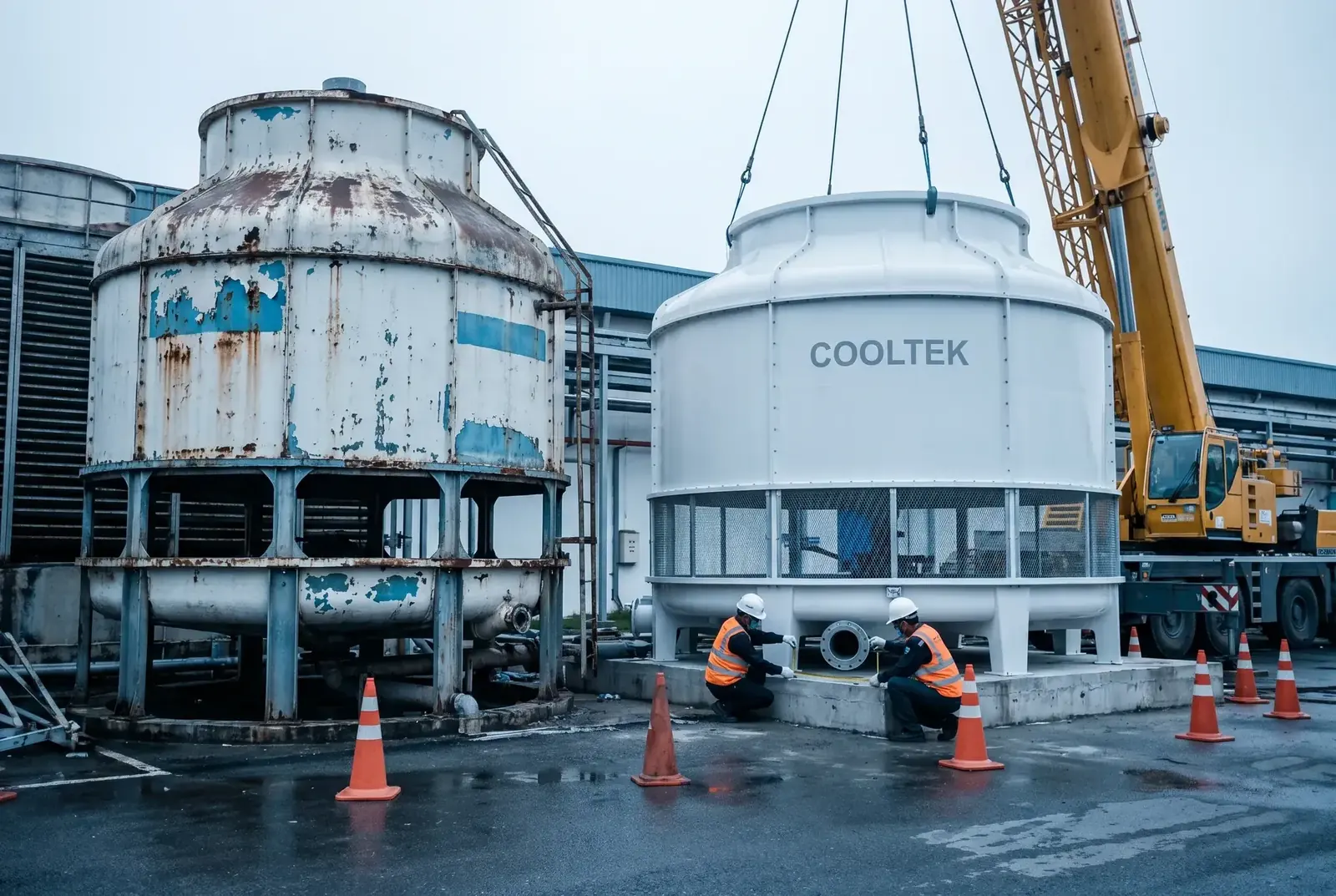
When annual maintenance costs exceed 30% of new tower cost, replacement is almost always more economical than continued repair.
Reference standards: CTI ATC-105 cooling tower performance test code; ASHRAE Guideline 12-2020 Managing the Risk of Legionellosis; GB/T 50392-2016 Code for Design of Mechanical Draft Cooling Towers; ISO 9906 rotodynamic pumps hydraulic performance acceptance tests.