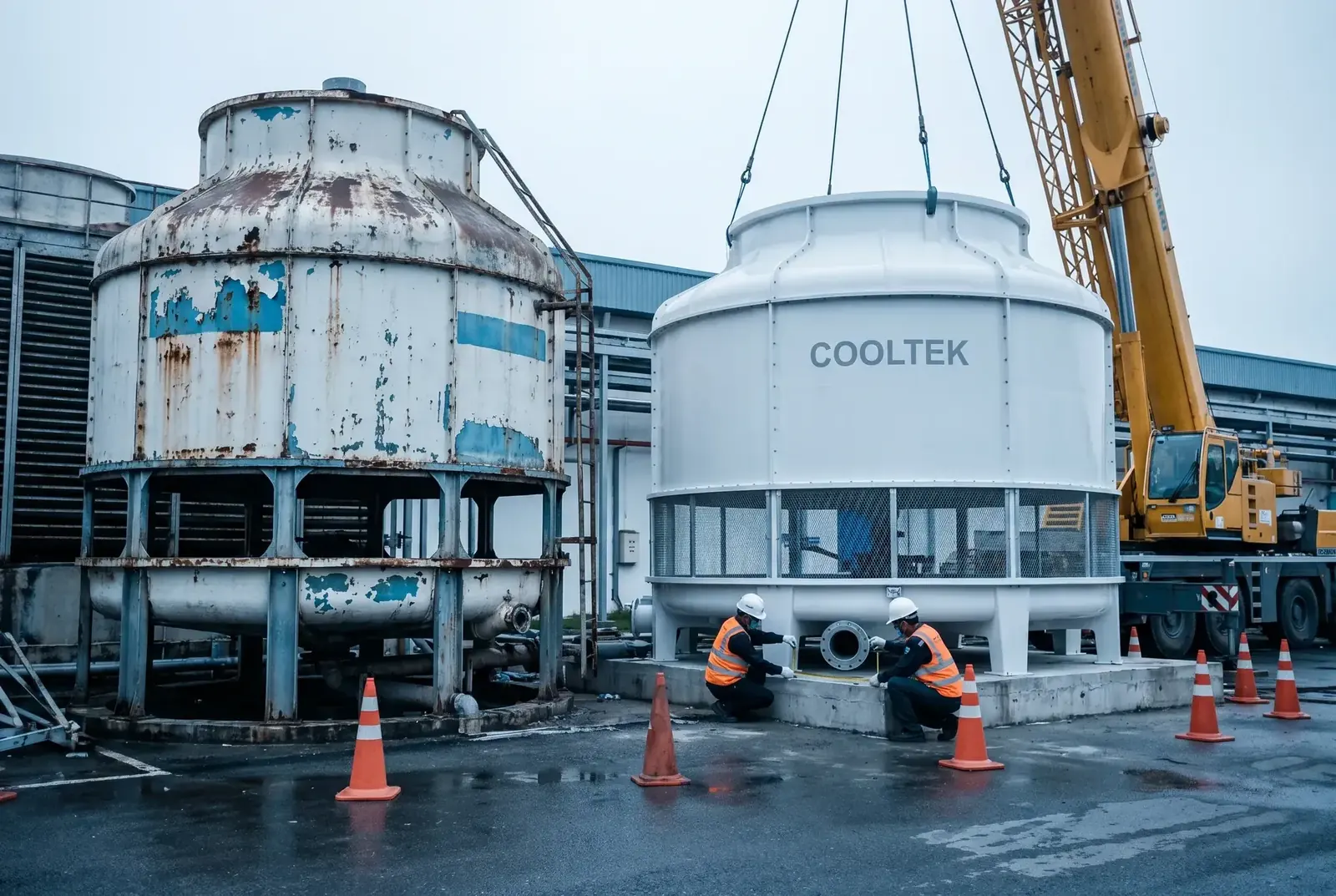
With EVN industrial electricity tariffs increasing by an average of 8–12% per year and aging cooling towers consuming 20–40% more energy than modern equivalents, the financial case for replacement has never been stronger. Yet many plant managers delay the decision because they lack a structured framework to quantify the ROI.
This article provides a complete ROI calculation framework for cooling tower replacement decisions in 2025, incorporating energy savings, maintenance cost reduction, and production loss risk.
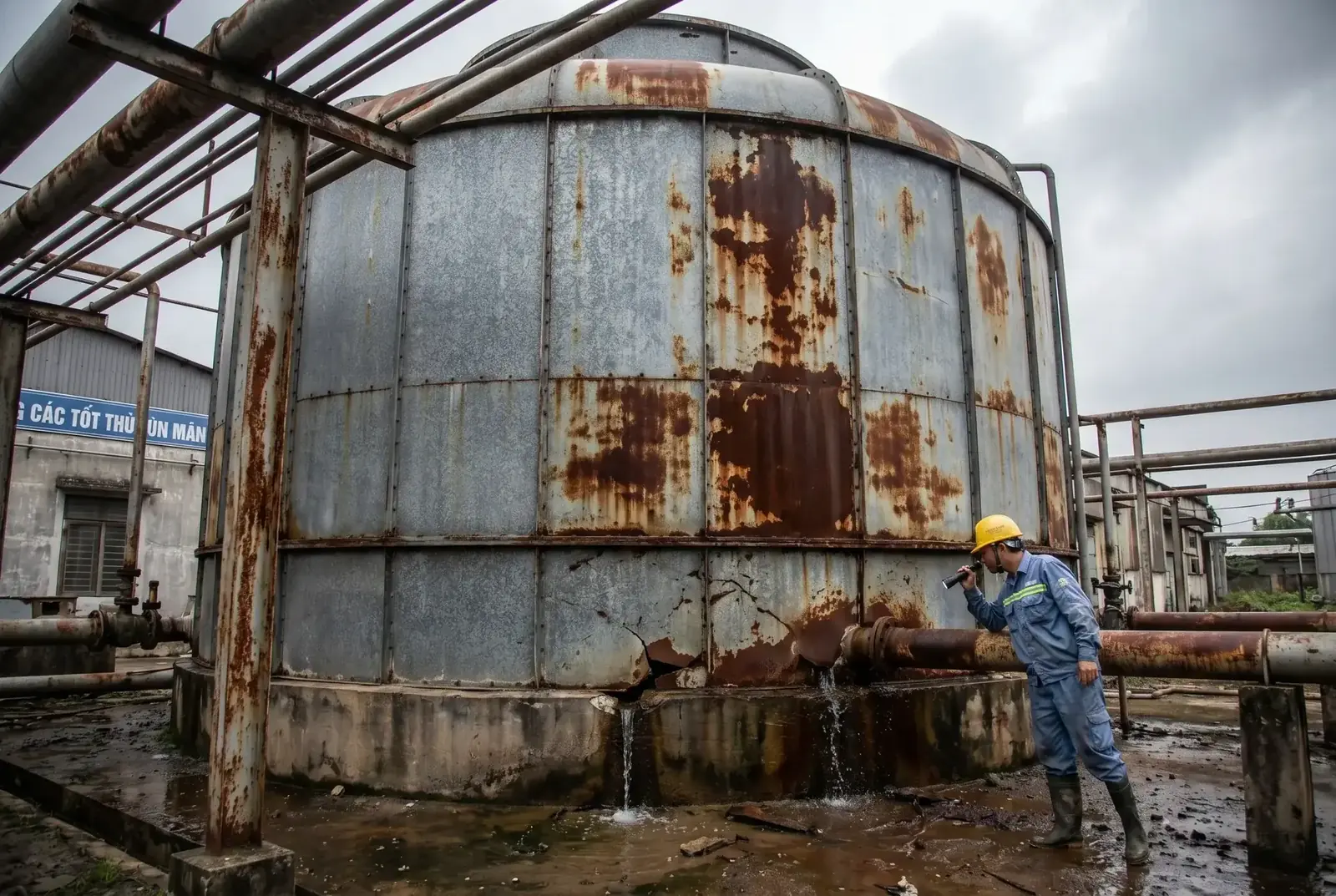
The ROI calculation for cooling tower replacement must account for three cost streams: energy savings, maintenance cost reduction, and production loss risk elimination.
1. The Three Cost Streams of Cooling Tower Ownership
1.1 Energy Cost Stream
An aging cooling tower incurs excess energy costs through two mechanisms:
- Fan energy excess: Degraded fill increases air-side resistance, forcing the fan to work harder. A tower with 5-year-old fill typically consumes 15–25% more fan energy than a new tower.
- Pump energy excess: Scale buildup in piping and nozzles increases water-side pressure drop. A 20% increase in pressure drop increases pump power by approximately 20%.
Combined, an aging tower (8–12 years old) typically consumes 20–40% more total energy than a new equivalent.
1.2 Maintenance Cost Stream
Maintenance costs for aging towers escalate non-linearly:
| Tower Age | Annual Maintenance Cost (relative to Year 1) | Primary Cost Driver |
|---|---|---|
| Years 1–3 | 1.0× | Routine inspection and water treatment |
| Years 4–6 | 1.5–2.0× | Fill cleaning, anti-corrosion treatment |
| Years 7–10 | 2.5–4.0× | Fill replacement, motor overhaul, structural repairs |
| Years 10+ | 4.0–8.0× | Frequent emergency repairs, partial replacement |
1.3 Production Loss Risk Stream
As cooling towers age, the probability of unplanned failure increases. For a production line with a cooling load of 500 kW, a 24-hour cooling tower failure can result in:
- Direct production loss: depends on product value and production rate
- Quality loss: temperature excursions during cooling failure can cause product rejection
- Emergency repair premium: after-hours emergency repairs typically cost 2–3× normal rates
2. ROI Calculation Framework
2.1 Annual Savings Calculation
Annual savings from replacement = Energy savings + Maintenance cost reduction + Risk-adjusted production loss avoidance
Example: 300 m³/h system, 10-year-old tower, replacing with LHR crossflow
| Savings Component | Calculation | Annual Amount |
|---|---|---|
| Fan energy saving (20% reduction) | Fan power 15 kW × 20% × 8,000 h × 2,200 VND/kWh | 52.8M VND |
| Pump energy saving (40 kPa reduction) | 1.48 kW × 8,000 h × 2,200 VND/kWh | 26.0M VND |
| Maintenance cost reduction | Old tower: 80M VND/year → New tower: 20M VND/year | 60.0M VND |
| Risk-adjusted production loss avoidance | 2% failure probability × 200M VND average loss | 4.0M VND |
| Total annual savings | 142.8M VND |
2.2 Payback Period Calculation
For a new LHR crossflow tower at a typical installed cost of 350M VND (equipment + installation):
- Simple payback period: 350M ÷ 142.8M = 2.5 years
- NPV over 10 years (discount rate 8%): approximately +650M VND
- IRR: approximately 38%
With EVN tariffs projected to increase 8–12% annually, the NPV of cooling tower replacement improves each year the decision is delayed — but so does the accumulated excess cost of operating the old tower.
3. Impact of EVN Tariff Increases on ROI
EVN has announced planned electricity tariff increases of 8–12% per year through 2030 as part of Vietnam's energy sector reform. This has two effects on the replacement ROI:
- Energy savings grow in absolute terms: Each year, the same kWh savings are worth more VND.
- The cost of delay increases: Every year of continued operation with the old tower incurs the full excess energy cost at the current (higher) tariff.
At 10% annual tariff increase, the cumulative energy cost of operating an old tower for 3 more years before replacing it is approximately 15% higher than replacing it today.
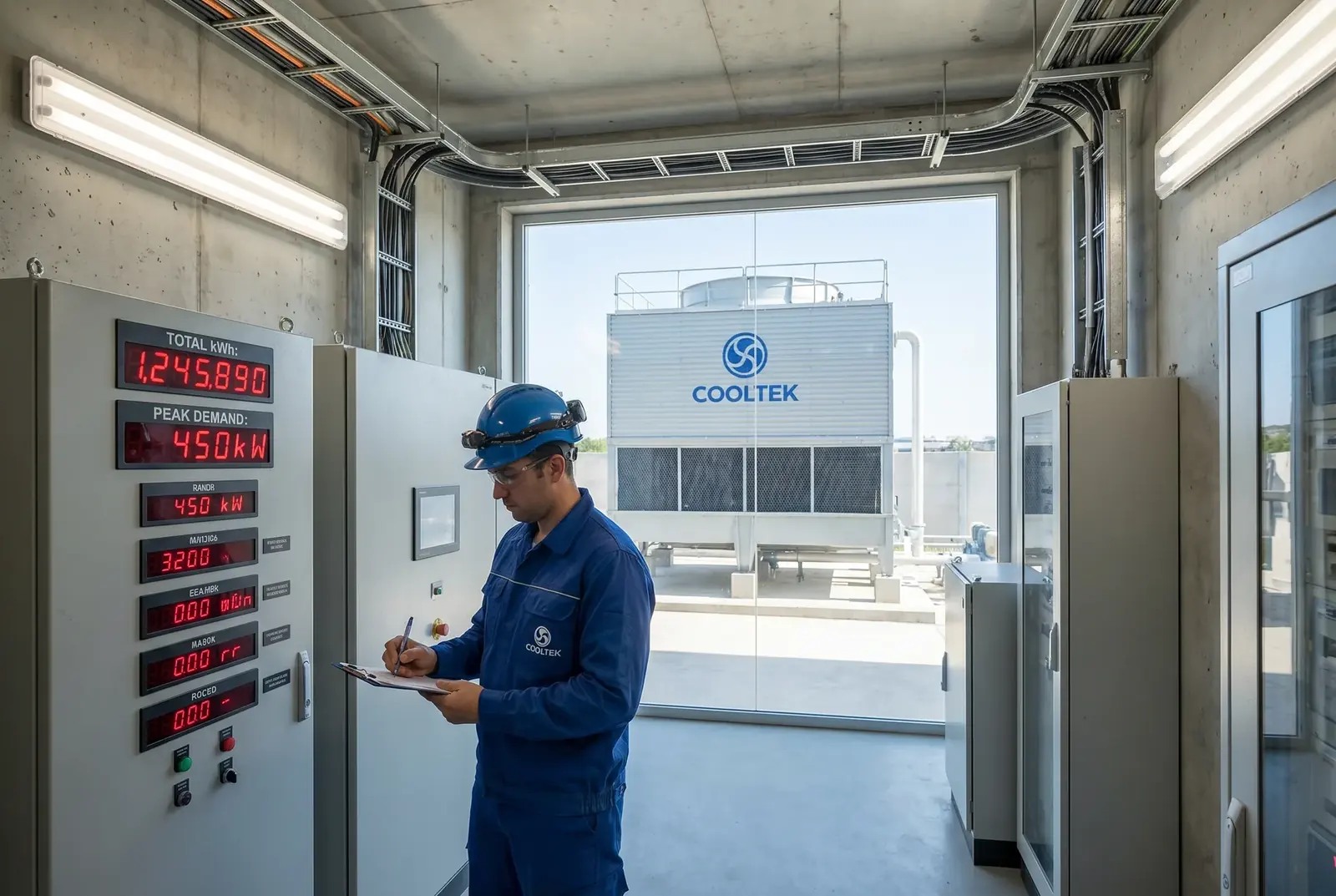
Pressure drop reduction is a permanent, compounding savings — it applies every operating hour for the full service life of the new tower.
Reference standards: EVN Decision No. 648/QD-EVN (2024) electricity tariff schedule; Vietnam Ministry of Industry and Trade electricity pricing roadmap 2024–2030; ASHRAE 2019 HVAC Systems and Equipment Chapter 40.