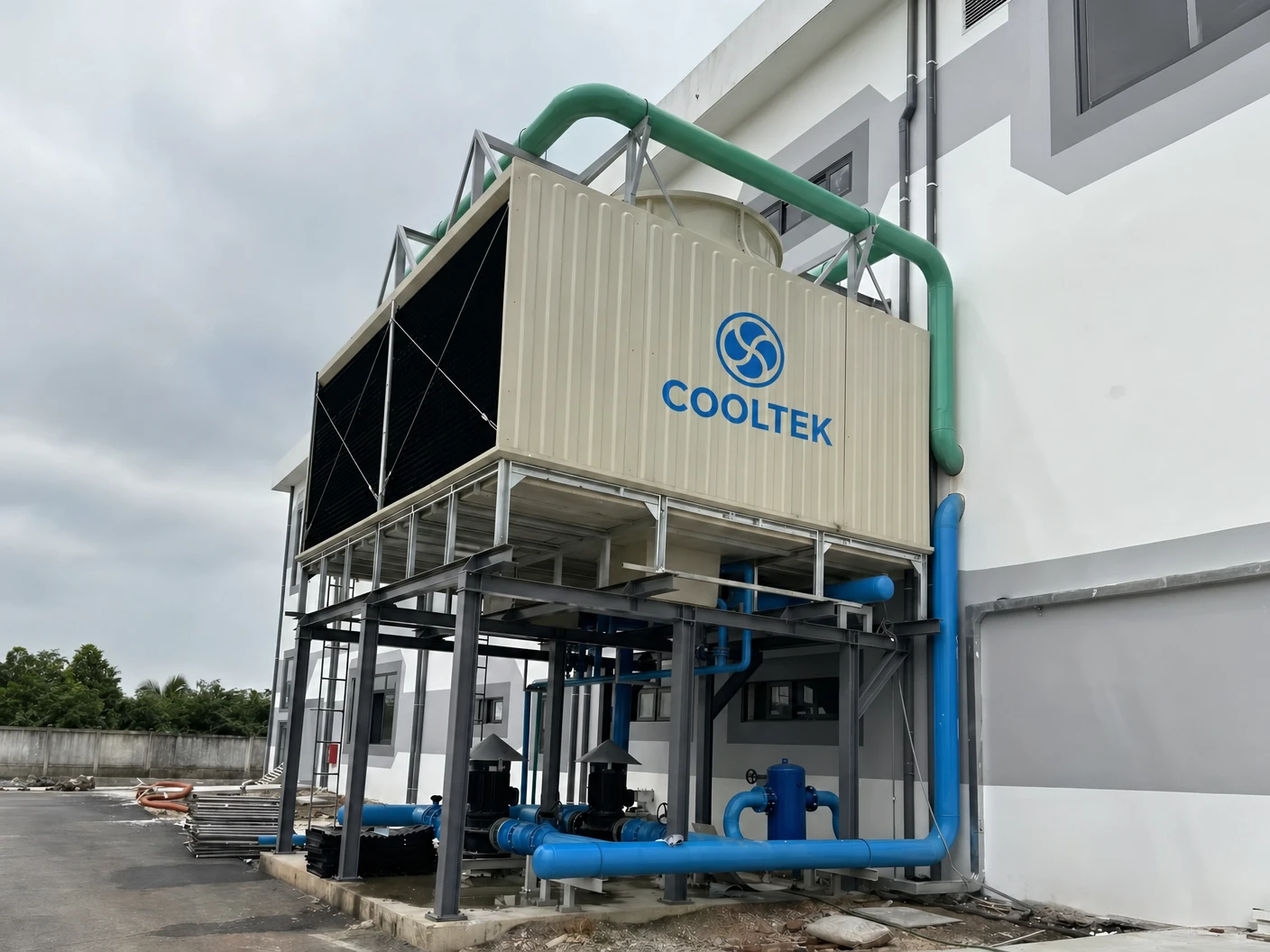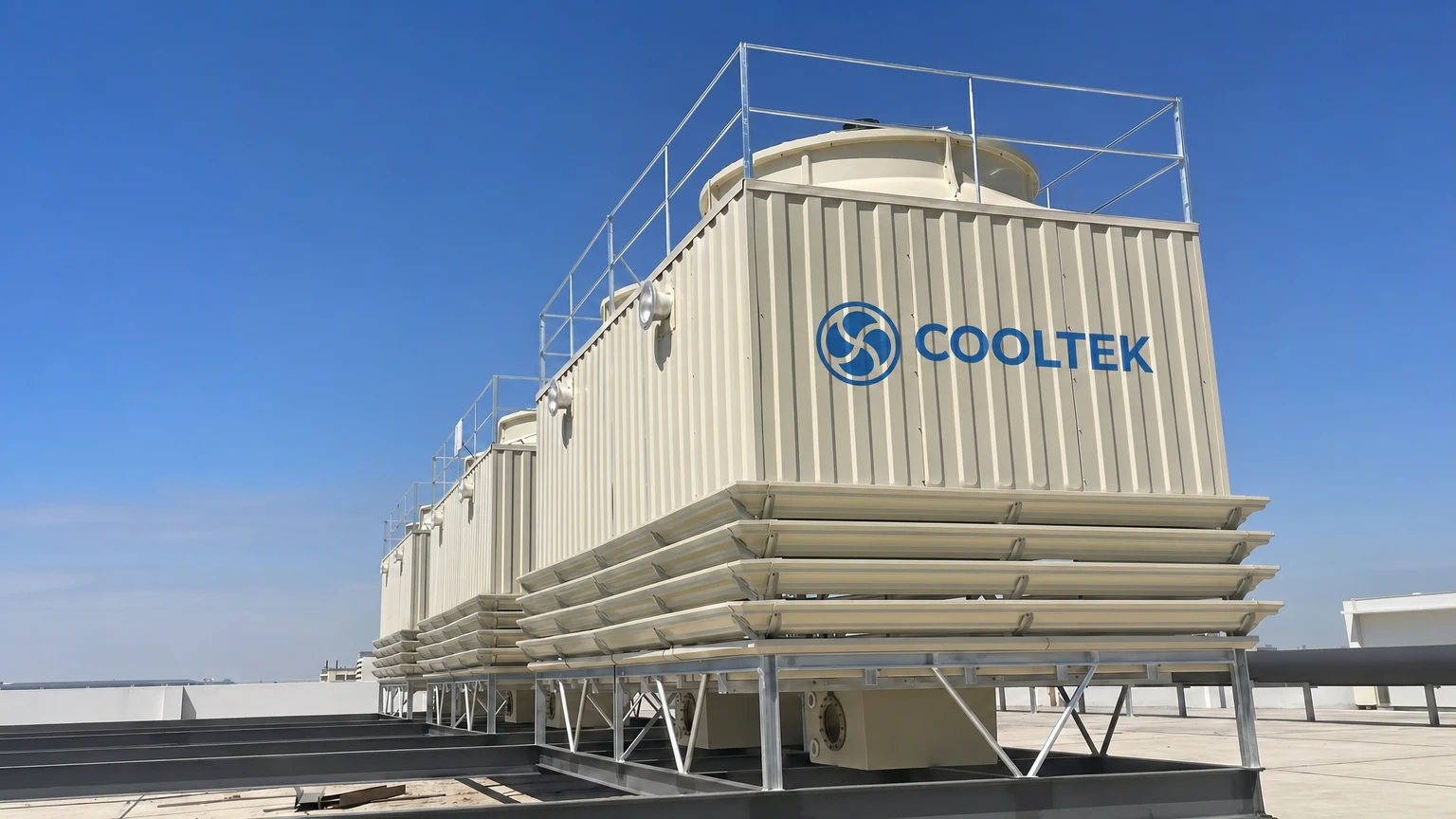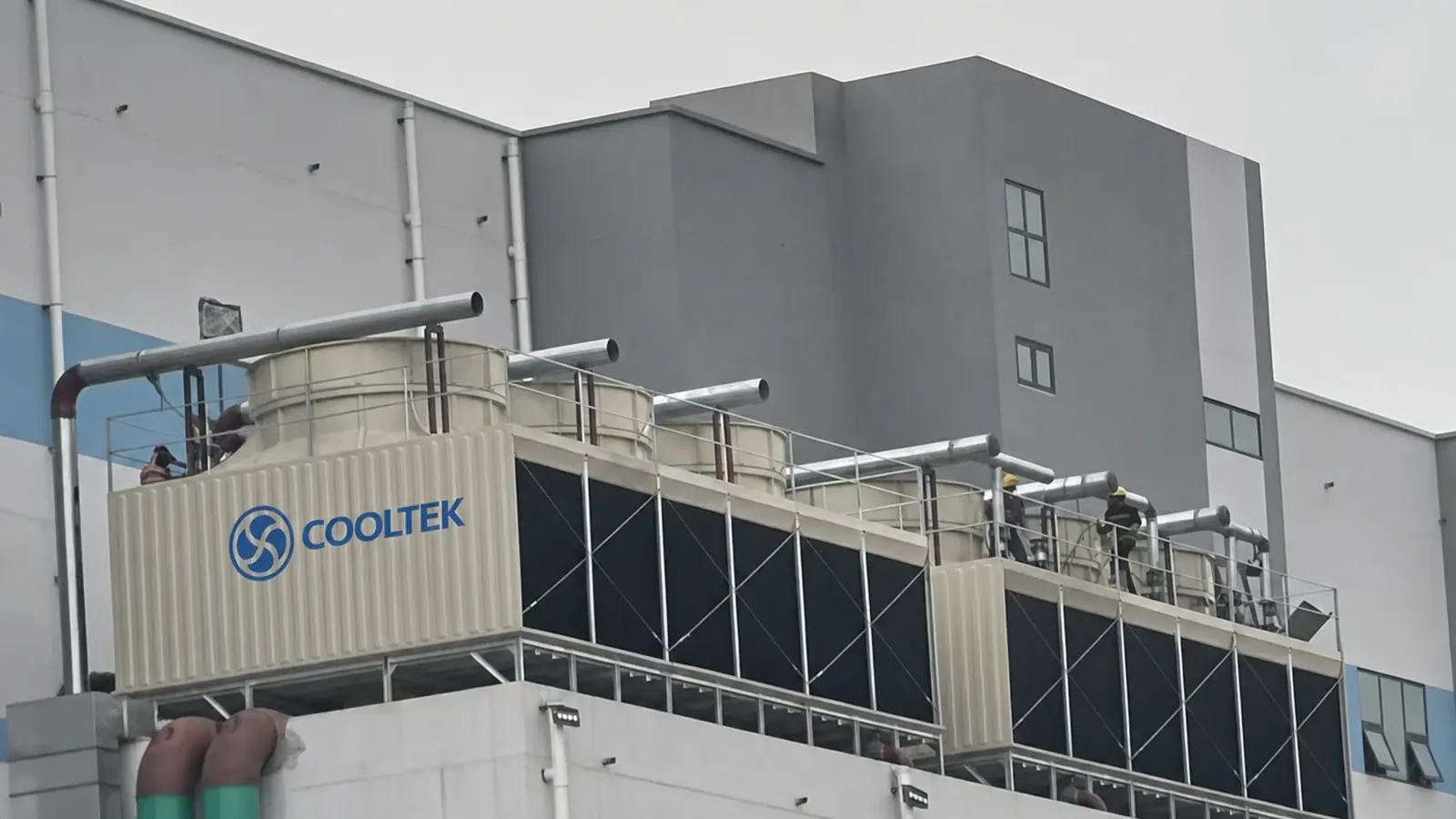
Providence Enterprise (Việt Nam) is an important industrial manufacturer in Vietnam, with production facilities that demand extremely high cooling system stability. The factory is located in a northern Vietnam industrial zone, significantly affected by monsoon climate — the prevailing wind direction shifts dramatically between dry and wet seasons. This climate characteristic poses serious challenges to the uniform airflow of conventional crossflow square towers, affecting outlet temperature stability. COOLTEK provided a 3000RT cooling solution centered on LHR round counterflow towers.
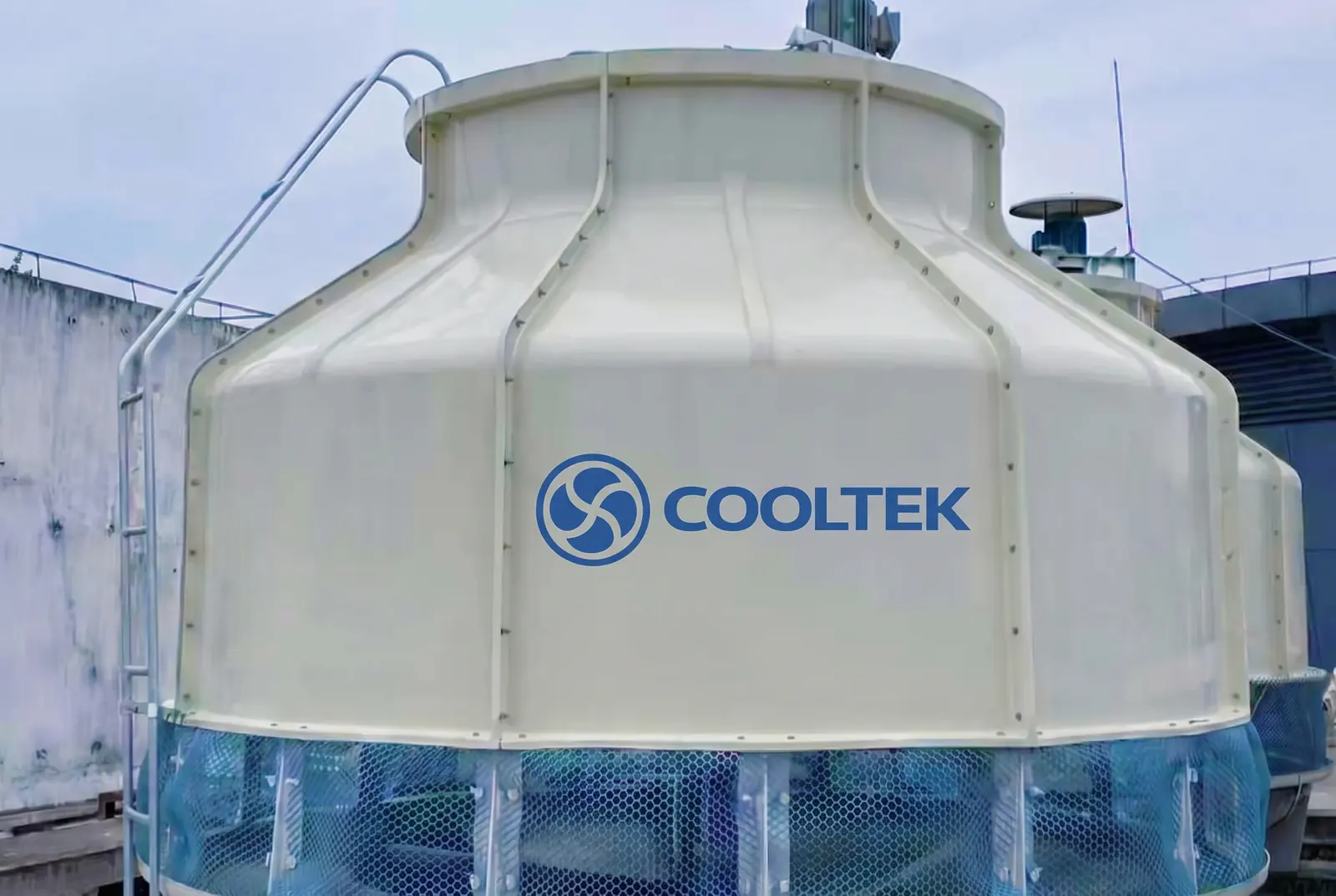
Providence Enterprise Vietnam factory, LHR round counterflow tower installation
1. Project Background & Cooling Challenges
1.1 Monsoon Climate Impact on Cooling Systems
Northern Vietnam industrial zones are alternately affected by the northeast monsoon (October to April) and southwest monsoon (May to September), with the prevailing wind direction switching every six months. Conventional crossflow square towers have fixed intake faces; when the prevailing wind direction is perpendicular to the intake face, airflow can drop 15–20%, directly causing higher outlet temperatures and reduced cooling efficiency.
1.2 Precision Process Temperature Control Requirements
Providence's manufacturing processes have strict outlet temperature requirements — fluctuations exceeding ±2°C can affect product quality. This requires the cooling system to maintain stable outlet temperatures under all seasonal and wind conditions throughout the year.
2. COOLTEK Solution
2.1 LHR Round Tower 360° Omnidirectional Intake
COOLTEK LHR round counterflow towers use a circular tower body design with intake openings distributed uniformly around the full 360° circumference. Regardless of external wind direction, the round tower always draws air evenly from all directions, eliminating the wind-direction sensitivity of crossflow square towers. This design is particularly suited to Vietnam's monsoon climate where wind direction changes frequently.
2.2 Counterflow Design Heat Transfer Efficiency
The LHR series uses counterflow design — hot water sprays down from above while cold air enters from below and flows upward. This counter-directional flow maximizes heat transfer efficiency. At the same cooling capacity, counterflow design achieves lower outlet temperatures than crossflow, or reduces footprint by 10–15% at the same outlet temperature.
| Parameter | Value |
|---|---|
| Product Model | LHR Round Counterflow Tower |
| Total Capacity | 3000RT |
| Intake Design | 360° Omnidirectional |
| Design Condition | Inlet 37°C → Outlet 32°C, WBT 28°C |
| Temperature Stability Improvement | +25% in monsoon season |
3. Project Results
- Outlet temperature stability improved 25%: Monsoon season fluctuation reduced from ±2°C to within ±1.5°C
- Year-round temperature compliance: Both dry and wet seasons meet precision process requirements
- System reliability improved: 360° intake eliminates cooling efficiency fluctuations from wind direction changes
- Maintenance convenience improved: Round tower structure is simple; annual maintenance time reduced by ~30%
Case data source: COOLTEK Project Delivery Report (2023). Monsoon climate impact analysis references Vietnam Meteorological Organization (VMO) historical data.