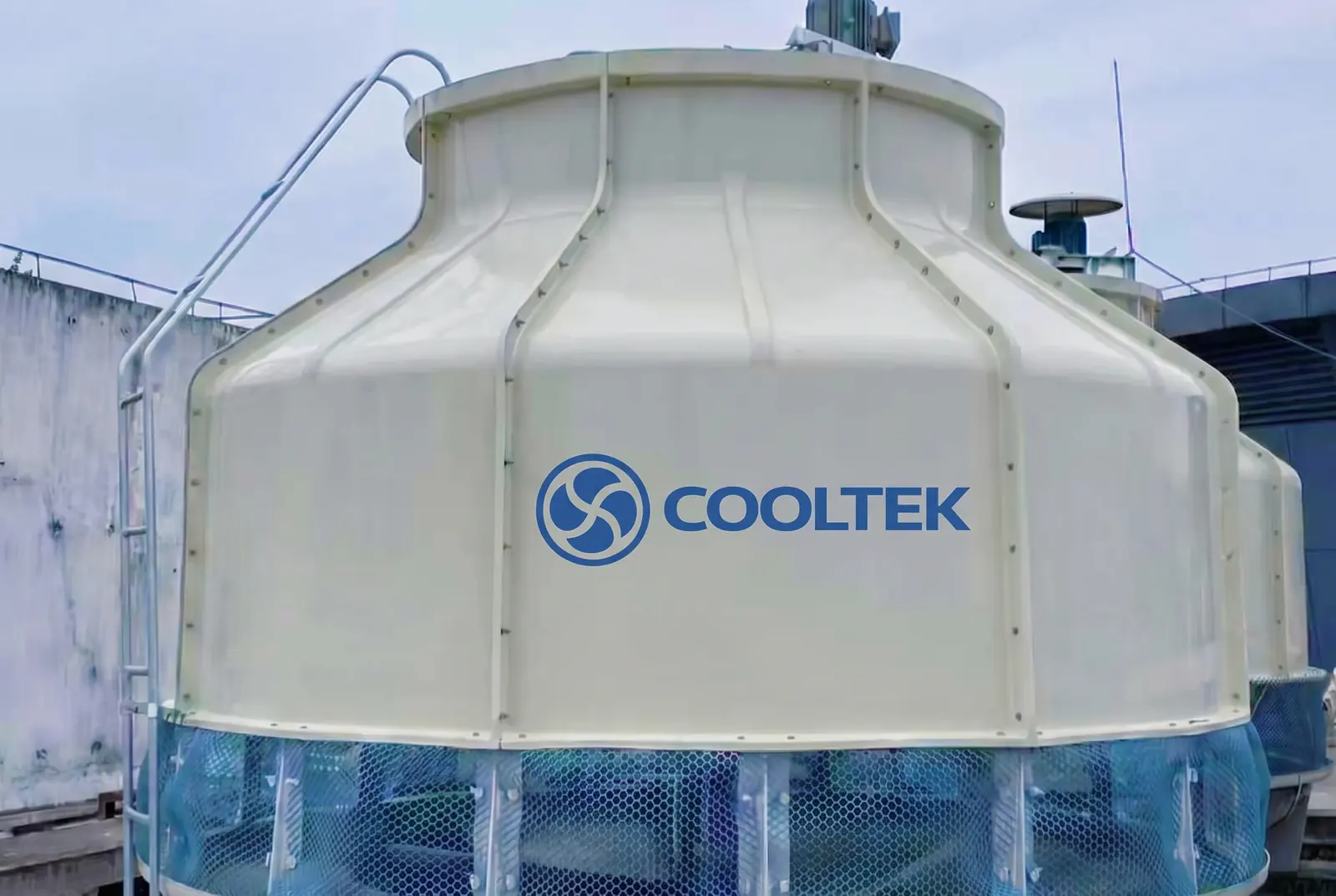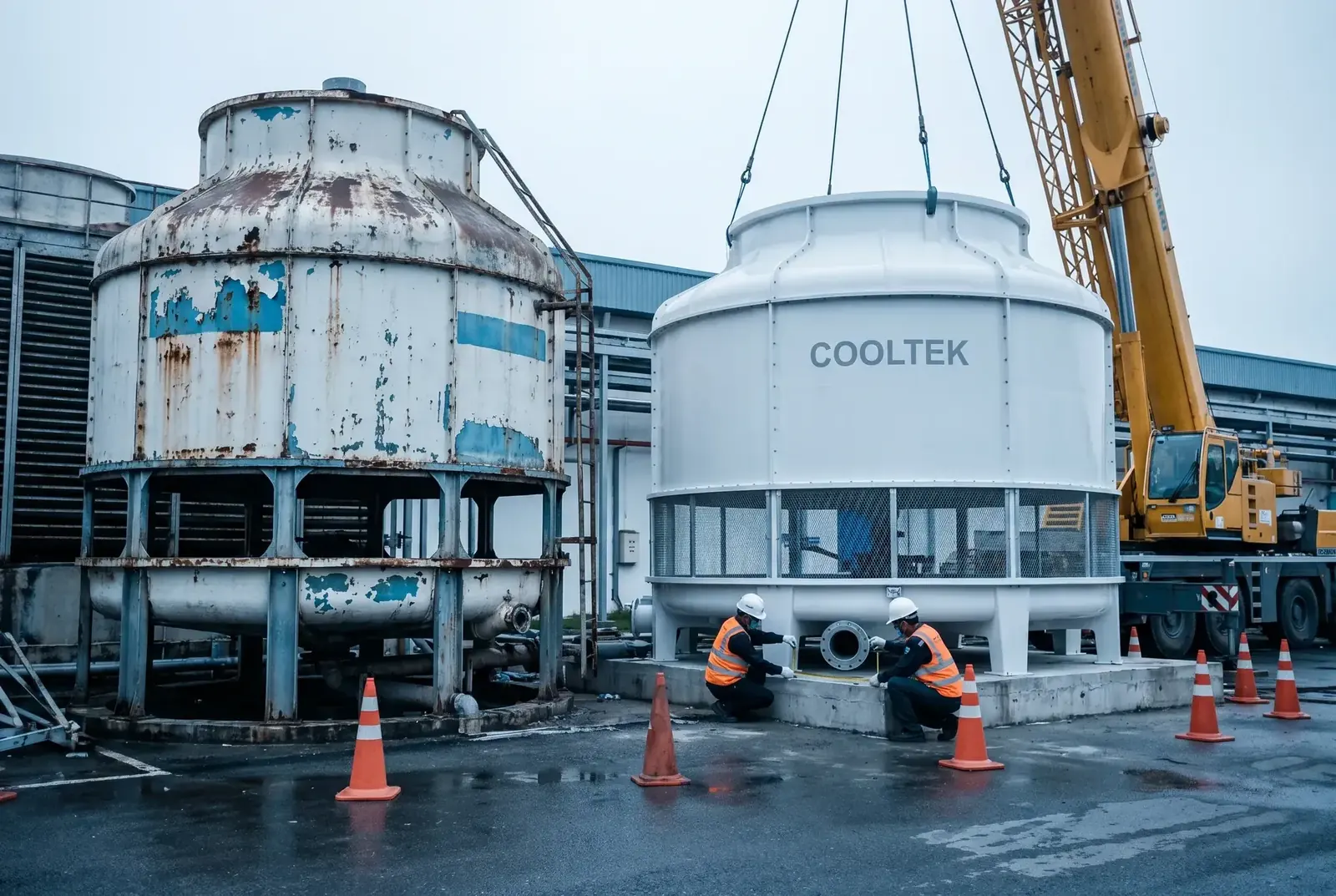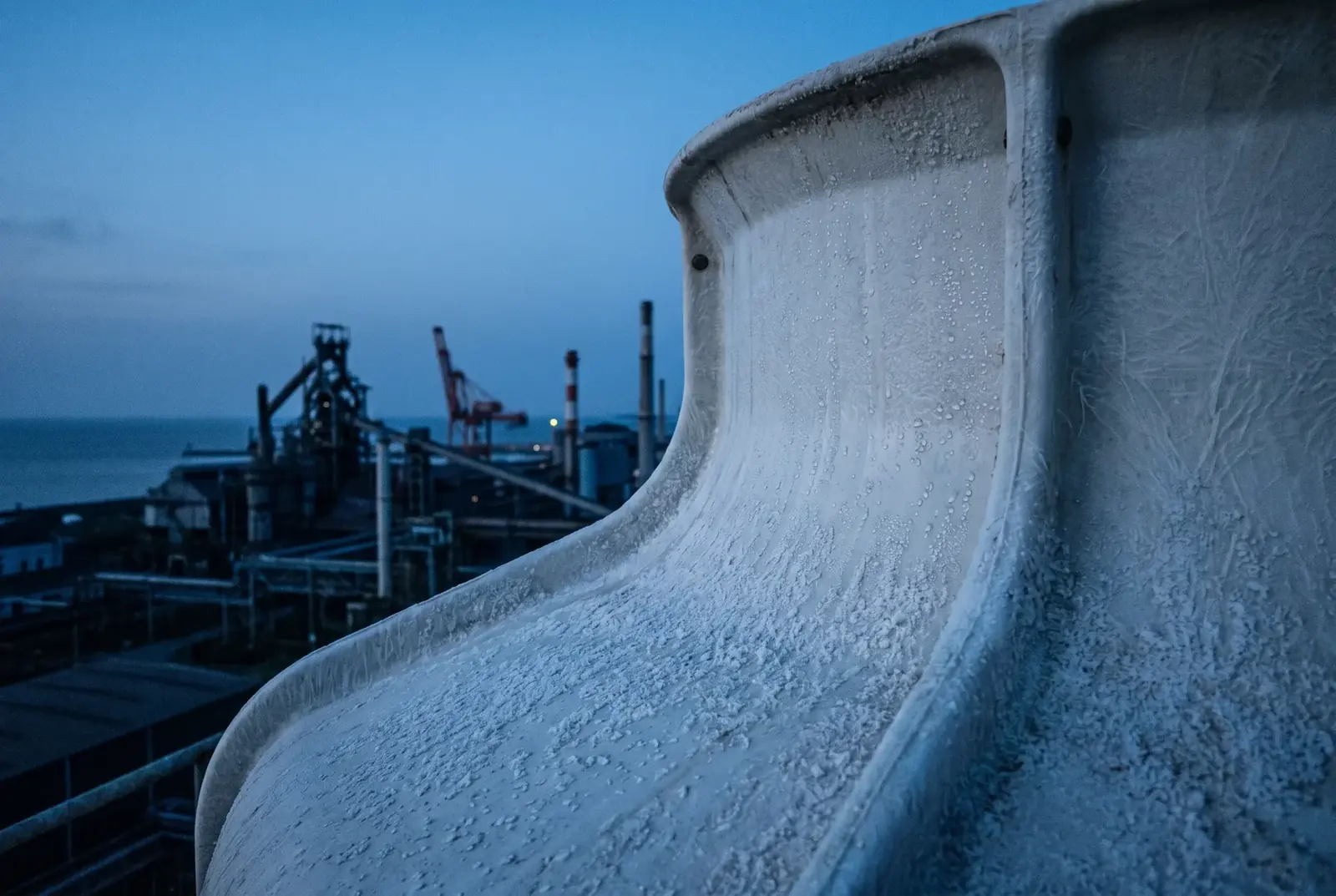
G.TECH Technology Việt Nam is a major electronics manufacturer operating in Vietnam's coastal industrial zones. The factory's high-humidity, salt-laden environment posed severe corrosion risks to conventional galvanized steel cooling towers. COOLTEK provided a 3200RT cooling solution based on 4× LH-800RT counterflow towers with FRP (Fiber-Reinforced Plastic) casing.
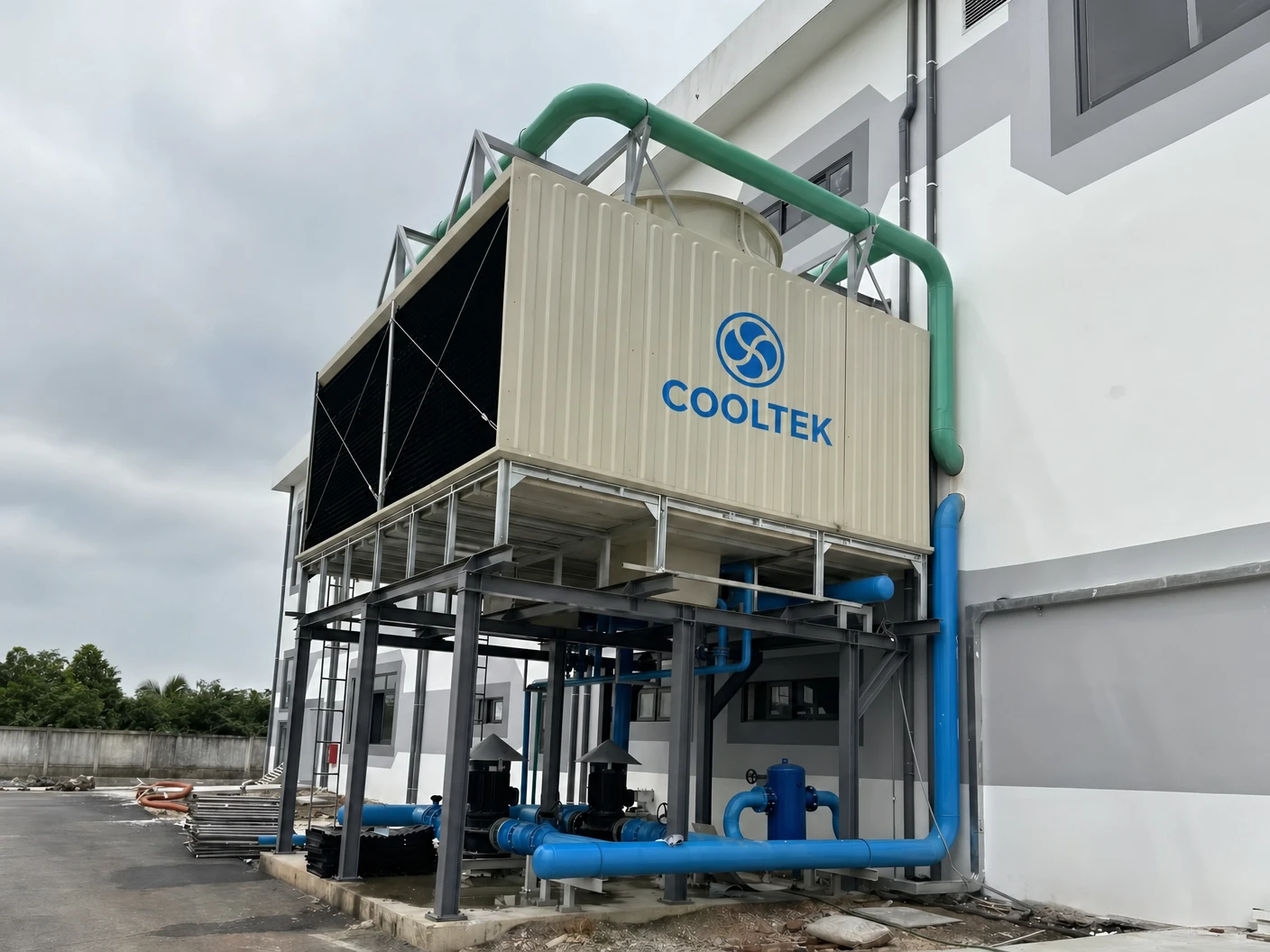
G.TECH Technology Việt Nam factory, LH-800RT counterflow tower installation
1. Project Background & Cooling Challenges
1.1 Salt-Spray Corrosion in Coastal Industrial Zones
Vietnam's coastal industrial zones experience year-round high humidity (85–95% RH) and salt-laden air. Galvanized steel cooling towers in these environments typically show significant corrosion within 3–5 years, leading to structural degradation, increased maintenance frequency, and ultimately premature replacement. For a 3200RT system, unplanned downtime directly impacts production continuity.
1.2 High O&M Cost of Legacy Towers
G.TECH's previous cooling system required quarterly maintenance cycles and frequent component replacements due to corrosion. Annual O&M costs were significantly above industry benchmarks for comparable cooling capacity.
2. COOLTEK Solution
2.1 FRP Casing: Eliminating the Electrochemical Corrosion Path
COOLTEK LH-800RT uses a full FRP (Fiber-Reinforced Plastic) casing that is inherently non-conductive and immune to electrochemical corrosion. Unlike galvanized steel, FRP does not react with salt-laden air or process water chemicals. This eliminates the primary corrosion mechanism that degrades conventional towers in coastal environments.
2.2 4× Parallel Configuration for Reliability
Four LH-800RT units in parallel provide 3200RT total cooling capacity. The modular configuration allows individual units to be taken offline for maintenance while the remaining three continue operating, ensuring production continuity. This design also enables load-based capacity adjustment for energy savings during low-demand periods.
| Parameter | Value |
|---|---|
| Product Model | LH-800RT Counterflow Tower |
| Configuration | 4 units in parallel |
| Total Capacity | 3200RT |
| Casing Material | Full FRP |
| Maintenance Cycle | Extended to 18 months |
| O&M Cost Reduction | 60% |
3. Project Results
- O&M cost reduced by 60%: Maintenance cycle extended from quarterly to 18 months
- Zero unplanned downtime in the first 12 months after commissioning
- FRP casing integrity maintained: No corrosion signs after 18 months in coastal salt-spray environment
- System availability ≥ 97%: Modular parallel design ensures continuous operation during planned maintenance
Case data source: COOLTEK Project Delivery Report (2023). Salt-spray environment assessment based on Vietnamese coastal industrial zone meteorological data.