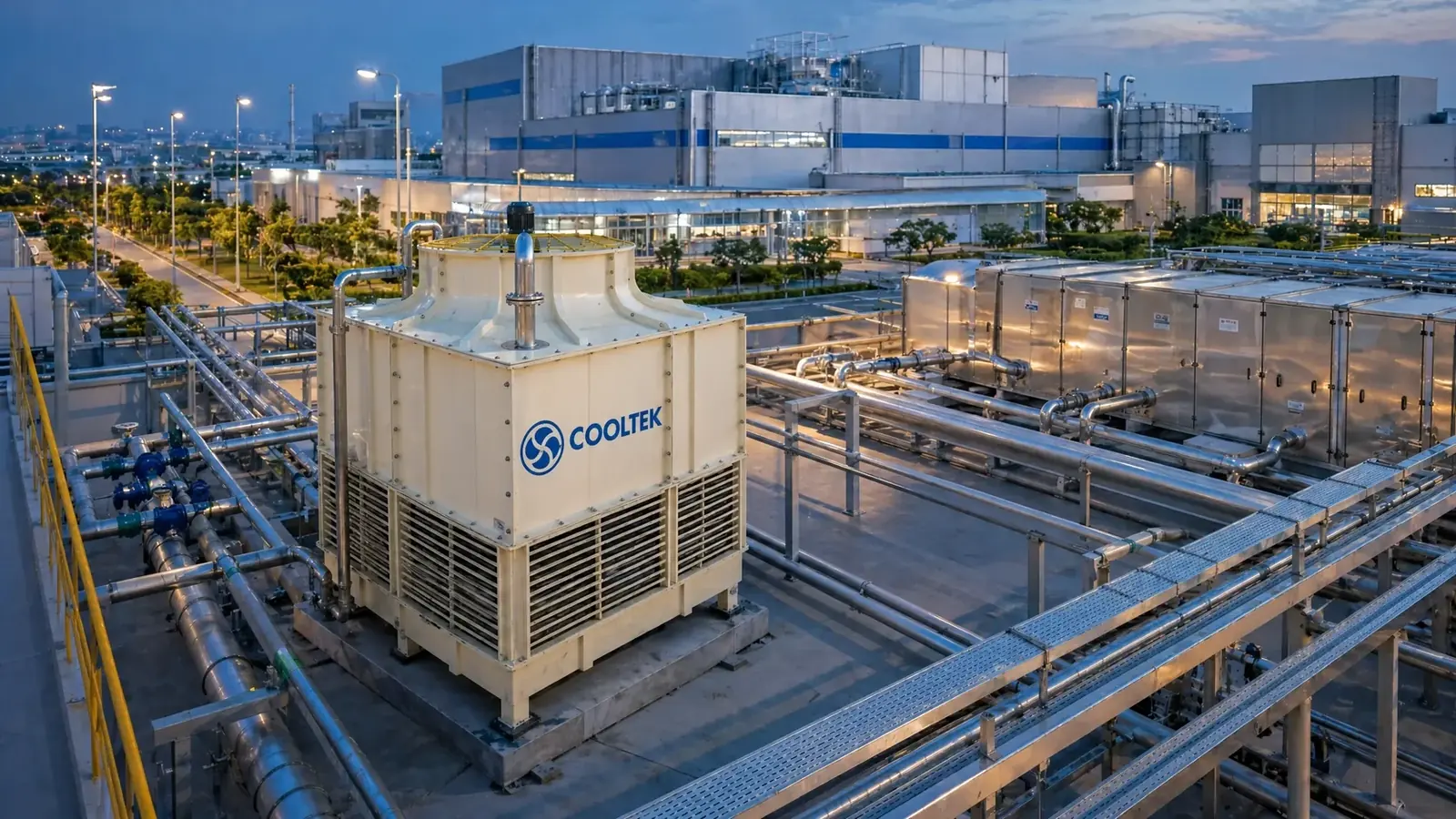
Henrico Tower is a 33-floor mixed-use commercial high-rise in central Hanoi, combining office, retail, and hotel functions. The building's central air conditioning system requires 900RT cooling capacity, with cooling towers installed on the rooftop equipment floor. Hanoi city has strict height restrictions for rooftop equipment, and the surrounding area includes residential zones with noise standards enforced at urban commercial zone levels. COOLTEK provided an LHN crossflow square tower solution that passed Hanoi's noise and environmental audit on first submission.
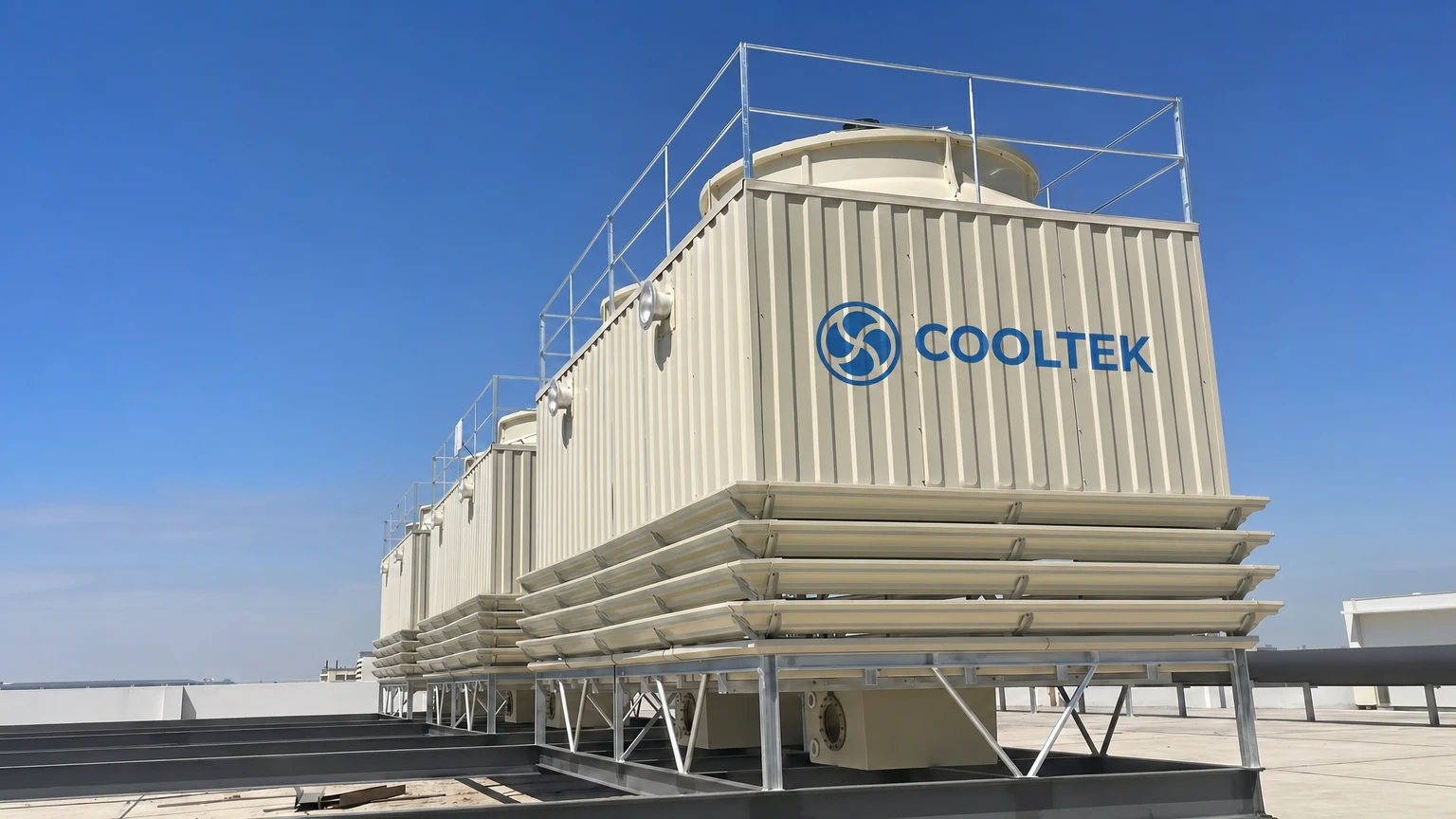
Henrico Tower Hanoi, LHN crossflow square tower rooftop equipment floor installation
1. Project Background & Cooling Challenges
1.1 Building Height Restrictions
Hanoi city has strict height restrictions for rooftop equipment on high-rise buildings, typically requiring equipment floor clear height not exceeding 4.5 meters and equipment not protruding beyond the building envelope. This imposes strict requirements on cooling tower body height. Standard counterflow tower body height is typically 3.5–5 meters, leaving extremely tight installation space when equipment floor clear height is restricted.
1.2 Urban Commercial Zone Noise Standards
Henrico Tower is located in Hanoi's commercial district with surrounding residential areas. Vietnam QCVN 26:2025 sets urban commercial zone noise limits at 65dB(A) daytime and 55dB(A) nighttime — stricter than industrial zone standards. Rooftop cooling tower noise must be strictly controlled within limits while maintaining building aesthetics.
1.3 Commercial Building Cooling System Continuity Requirements
Commercial building central air conditioning systems require year-round 7×24 hour continuous operation. Any unplanned downtime directly impacts building operations and tenant satisfaction, requiring high system reliability and convenient maintenance access.
2. COOLTEK Solution
2.1 LHN Crossflow Tower Low-Profile Design
COOLTEK LHN crossflow square towers use a crossflow design where hot water enters the fill media from the side while cold air enters from the side and flows horizontally through the fill. Crossflow design reduces tower body height by approximately 20–30% compared to counterflow design at the same cooling capacity, meeting Henrico Tower's rooftop equipment floor height restrictions.
2.2 45° Air Deflectors for Noise Control
Standard cooling tower fans discharge vertically upward, spreading noise evenly in all directions. COOLTEK configured 45° air deflectors for Henrico Tower, deflecting the discharge direction away from surrounding residential areas, effectively reducing noise impact on nearby residents. The deflector inner walls use sound-absorbing treatment to further reduce noise propagation.
| Parameter | Value |
|---|---|
| Product Model | LHN Crossflow Square Tower |
| Total Capacity | 900RT |
| Installation Location | Rooftop Equipment Floor (33F) |
| Special Configuration | 45° Air Deflectors |
| Noise Standard | Passed QCVN 26:2025 Urban Commercial Zone |
| Audit Result | First submission, no rectification |
3. Project Results
- Meets building height restrictions: LHN crossflow tower low-profile design fully complies with rooftop equipment floor clear height limits
- Passed Hanoi noise and environmental audit on first submission: No rectification needed, saving ~2–3 months and additional costs
- Urban commercial zone noise compliance: Boundary noise meets QCVN 26:2025 urban commercial zone strict 65dB(A) daytime limit
- Building operation continuity guaranteed: Zero unplanned downtime since commissioning
Case data source: COOLTEK Project Delivery Report (2024). Noise testing conducted per QCVN 26:2025 standard; test report issued by Vietnam-accredited laboratory.