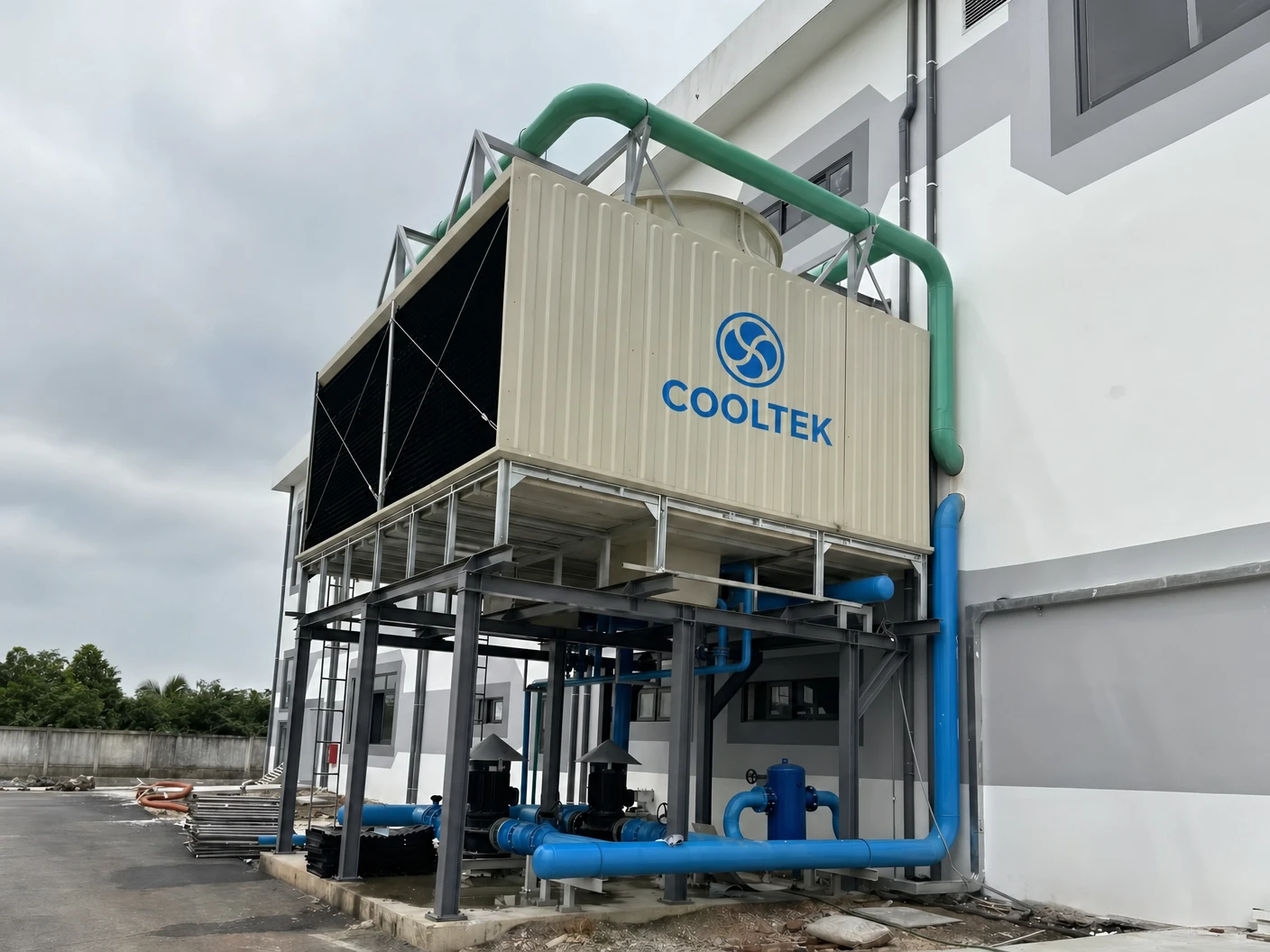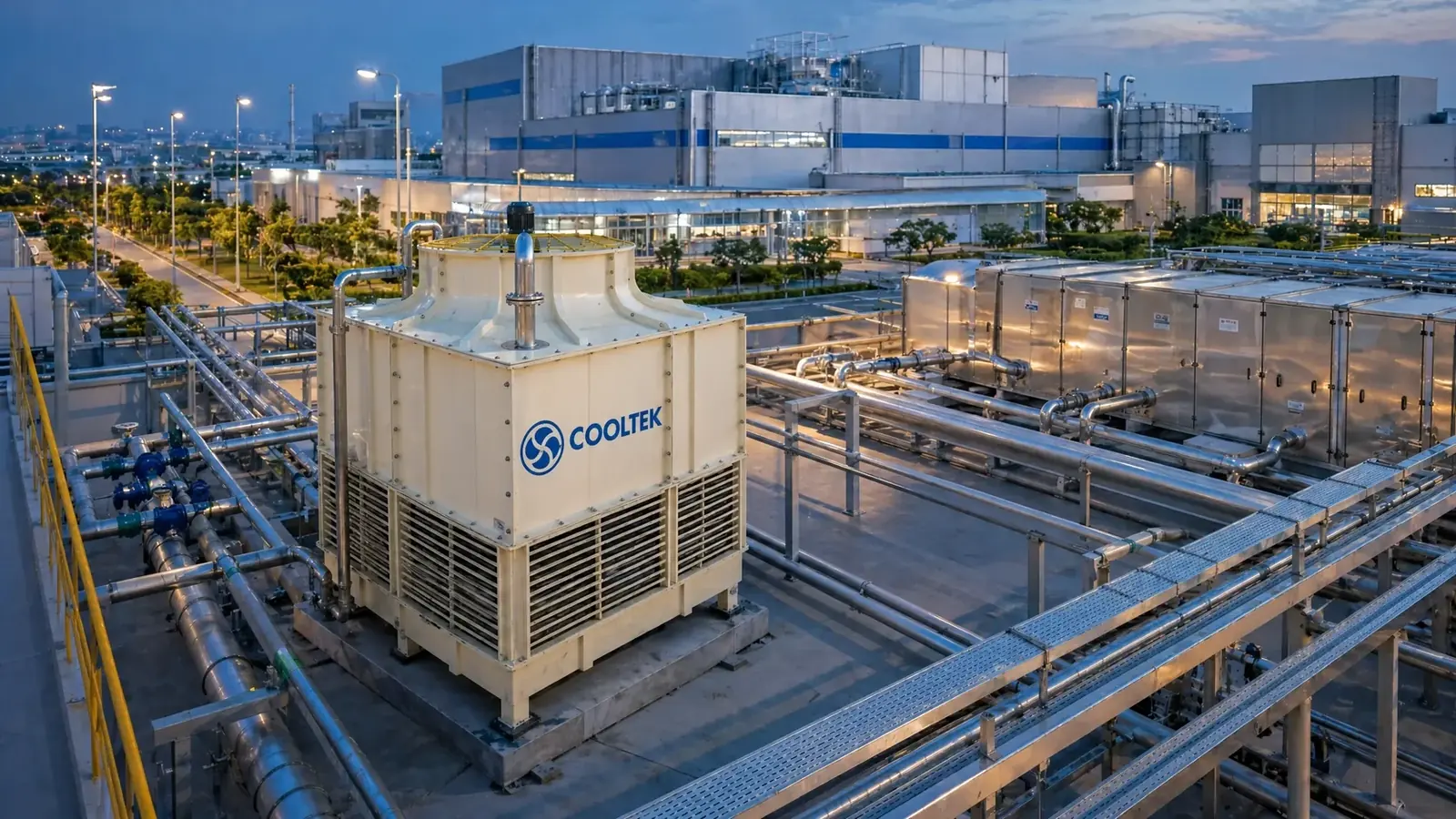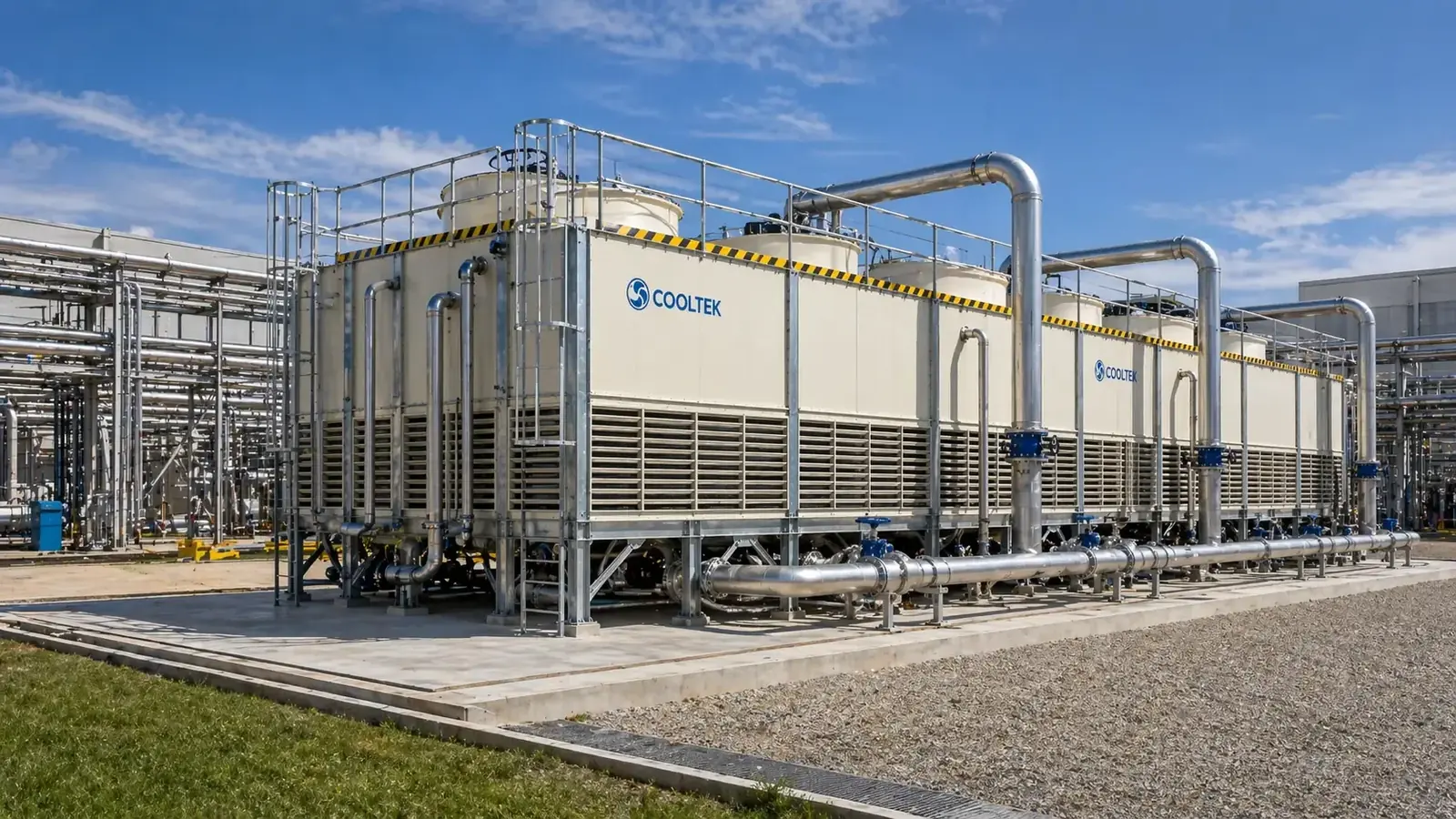
Quang Điện Dubhe is a precision optoelectronics manufacturer in Hưng Yên Province, Vietnam, specializing in mass production of optical components and optoelectronic devices. Precision optoelectronics manufacturing demands extremely strict outlet temperature stability — fluctuations exceeding ±1°C can cause optical alignment deviations and welding quality degradation, directly affecting product yield. Simultaneously, the factory is located in an industrial zone and must comply with QCVN 26:2025 noise standards. COOLTEK provided a 4200RT cooling solution with 6× LH-700RT rooftop parallel installation.
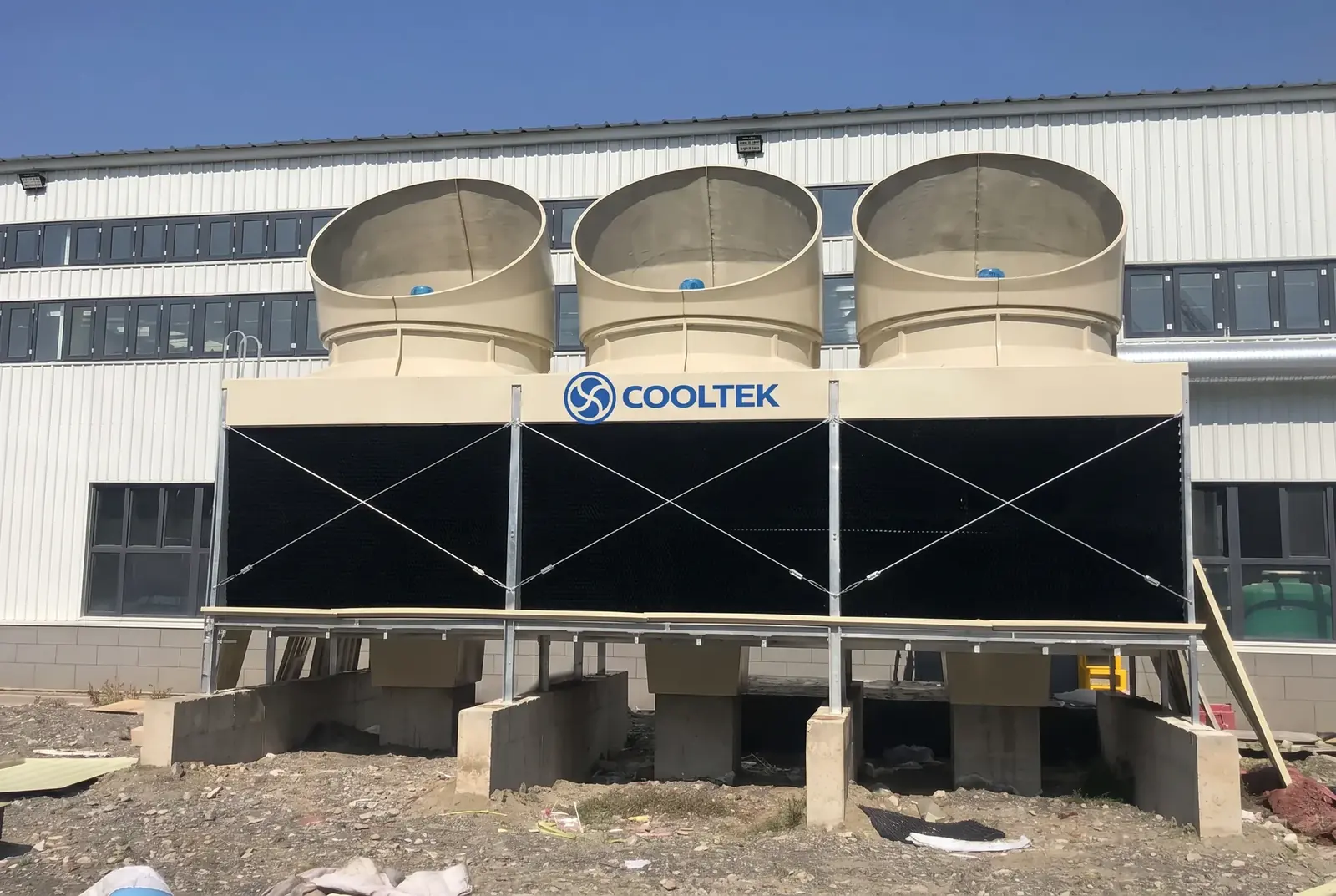
Quang Điện Dubhe Hưng Yên factory, 6× LH-700RT rooftop parallel installation
1. Project Background & Cooling Challenges
1.1 Temperature Control Requirements for Precision Optoelectronics
In optoelectronics component manufacturing, cooling water temperature changes cause thermal expansion and contraction that affects optical alignment precision. For typical optical glass with a thermal expansion coefficient of ~7×10⁻⁶/°C, a 1°C temperature change produces ~0.7μm dimensional change in a 100mm optical component — sufficient to affect nanometer-precision optical assembly. Therefore, outlet temperature stability of ±0.5°C is the key metric for ensuring precision optoelectronics mass production yield.
1.2 Noise Compliance Challenge for Rooftop Installation
The factory is located in Hưng Yên Province industrial zone with nearby residential areas. QCVN 26:2025 sets industrial zone boundary noise limits at 70dB(A) daytime and 55dB(A) nighttime. Rooftop-installed cooling towers at 20–25 meters height have longer noise propagation paths than ground-level installation, but also require consideration of noise dispersion to surrounding areas.
1.3 Rooftop Load and Space Constraints
The factory rooftop has limited area and must meet building structural load requirements. Six LH-700RT units have a total operating weight of approximately 60–72 tonnes, requiring rational distribution across rooftop structural beams to avoid concentrated loads exceeding design allowable values.
2. COOLTEK Solution
2.1 LH-700RT Modular Parallel Configuration
COOLTEK provides 6× LH-700RT counterflow towers for Dubhe, totaling 4200RT. The modular configuration advantages: each unit operates independently, so when one unit fails or requires maintenance, the remaining 5 continue operating, achieving system availability ≥ 83%; simultaneously, operating unit count can be flexibly adjusted based on seasonal load changes for energy-efficient operation.
2.2 Low-Noise Fan & QCVN 26:2025 Compliance
The LH series standard features low-speed large-diameter fans (typically below 350rpm), with noise source sound pressure level below 65dB(A). The rooftop installation position has sufficient distance from the site boundary, combined with 45° air deflectors to optimize airflow direction, keeping boundary noise within QCVN 26:2025 industrial zone daytime 70dB(A) limit. The project passed Vietnam's environmental authority audit on first submission with no rectification required.
| Parameter | Value |
|---|---|
| Product Model | LH-700RT Counterflow Tower |
| Units | 6 rooftop parallel |
| Total Capacity | 4200RT |
| Installation Location | Factory Rooftop |
| Noise Standard | Passed QCVN 26:2025 |
| Outlet Temperature Stability | ±0.5°C |
3. Project Results
- Outlet temperature stability ±0.5°C, sustained year-round across all seasons, ensuring precision optoelectronics process yield
- Passed QCVN 26:2025 noise audit on first submission, no rectification needed, saving ~3 months of rectification time
- Optimal rooftop space utilization: 6-unit modular configuration rationally distributes load, meeting structural requirements
- System availability ≥ 83%: Single unit maintenance does not affect production continuity
Case data source: COOLTEK Project Delivery Report (2024). Noise testing conducted per QCVN 26:2025 standard.